
 Posted by
 There is something special about eating a tomato that you grow yourself. It tastes sweet and fresh. The tomato is warm from the sun, and the juice runs down your chin. This taste is very different from store tomatoes, which are often dry and bland.
To be honest, I killed my first three tomato plants. I gave them too much water. I thought I was helping, but I was actually harming them. Later, I learned that tomatoes do not like too much water. The good thing is, once you understand their needs, tomato plants are very forgiving.
Growing tomatoes is not difficult. You do not need a big garden or expensive tools. You do not need to be an expert. You only need good soil, enough sunlight, water, and some patience. Anyone can grow tomatoes, even on a small balcony.
In this guide, you will learn everything step by step. You will learn how to choose seeds, how to grow the plants, and how to harvest tomatoes. It does not matter if you have a backyard or just a few pots. You can grow tomatoes anywhere. Once you eat your own tomatoes, you will never enjoy store tomatoes the same way again.
Understanding Tomatoes: The Foundation
Before you stick a seed in dirt, let’s talk about what tomatoes actually are. Because not all tomatoes are created equal.
Determinate vs Indeterminate – Easy to Understand
This may sound difficult, but it is very simple.
Determinate tomatoes
These plants grow to a fixed height and then stop growing. They make all their tomatoes at the same time and then finish. They are usually about 3–4 feet tall. These are good if you want many tomatoes at once for making sauce or storing.
Indeterminate tomatoes
These plants keep growing all season. They keep making flowers and tomatoes until cold weather comes. They can grow very tall, around 6–8 feet or even more. These are great if you want tomatoes again and again during summer.
Best choice for beginners
Most beginners should choose indeterminate tomatoes. If you make a mistake early, you can still get tomatoes later. The plant keeps producing, so you get many chances to learn and succeed.
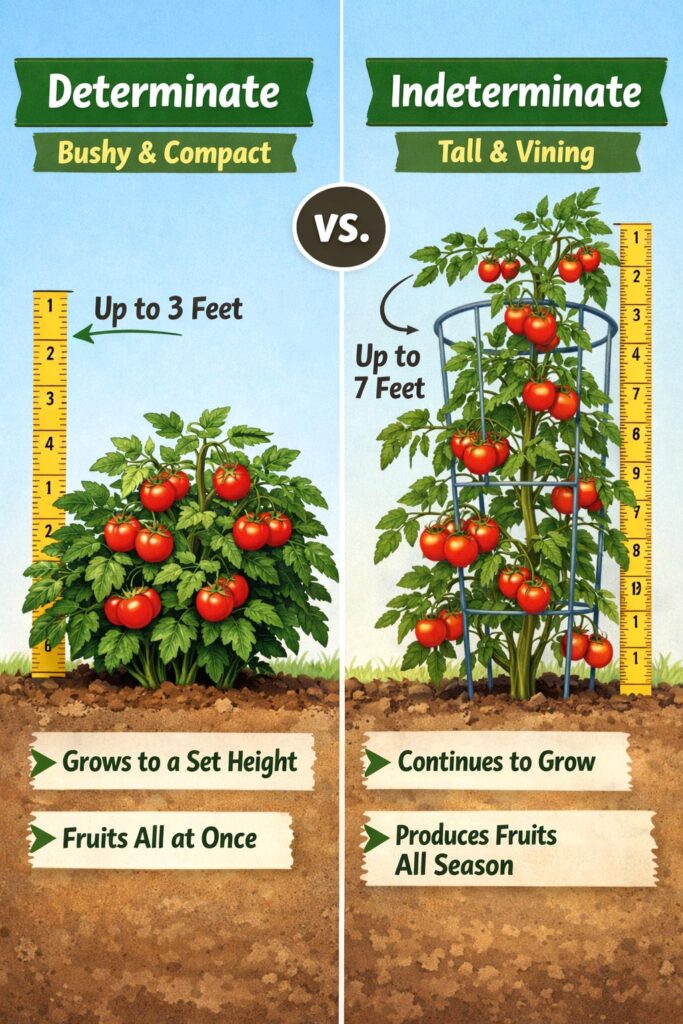
Determinate vs Indeterminate Tomatoes Explained | Plant Height & Growth Comparison Guide
Choosing Your First Tomato Varieties
If you are new to growing tomatoes, start with easy and reliable types.
For Eating Fresh
Early Girl
This tomato grows fast, in about 52 days. It is strong, reliable, and does not get sick easily. It is a very safe choice for beginners.
Celebrity
This plant handles heat and stress well. It gives a lot of tomatoes and tastes good.
Sun Gold
This is a small cherry tomato. It is very sweet and loved by many people, especially kids.
For Cooking
Roma
This is a classic tomato for sauce. It has thick flesh and less juice, which is perfect for cooking.
San Marzano
This tomato is famous for Italian dishes. It has rich flavor and is great for sauces.
For Something Special
Brandywine
This tomato is very big. It looks impressive and tastes great.
Cherokee Purple
This tomato has a dark, purple color and a strong, rich taste. It is great for showing off.
Best Choice for Beginners
A great option for beginners is the Burpee Heirloom Tomato Seed Collection.
It gives you 5–6 different tomato types to try. All seeds are non-GMO. If one type does not grow well, you still have others. This makes learning easier and less stressful.

Different Tomato Varieties for Your Garden
How to Start Tomato Seeds Indoors | Easy Step-by-Step Seed Starting Guide
Starting from Seed
Growing tomatoes from seed saves money and gives you more choices. It also feels very good to grow a plant from the very beginning.
When to Start Seeds Indoors
Start tomato seeds 6 to 8 weeks before the last frost in your area.
If you do not know the last frost date, search it online using your zip code.
In most parts of the US, seeds are started in March or April.
The Seed Starting Process
What You Need
- Seed starting mix
- Small containers with holes at the bottom
- Grow light or a very sunny window
- Spray bottle for watering
- Patience
Do not use normal garden soil. It is too heavy for small seeds.
Step by Step
- Fill containers with slightly wet seed starting mix
- Plant seeds about 1 fourth inch deep
- Put 2 to 3 seeds in each container
- Cover containers with plastic to keep moisture
- Remove the cover when seeds sprout
- Keep the area warm. 70 to 80 degrees is best
- Wait 5 to 10 days for seeds to grow
Small green plants will start coming out of the soil. This is the beginning of your tomato journey.

How to Start Tomato Seeds Indoors
Seedling Care – Don’t Kill Them Now
After the seeds sprout, many people make mistakes at this stage. Follow these simple tips to keep plants healthy.
Light
Seedlings need strong light for 14 to 16 hours every day. A normal window is usually not enough. A simple LED grow light works well. Keep the light close to the plants, about 2 to 3 inches above them.
Water
Soil should be moist, not wet. Too much water can kill plants. Check the soil with your finger.
If the top soil feels dry, water it.
If it still feels damp, wait.
Air circulation
Fresh air helps plants grow strong. Use a small fan near the plants for a few hours each day. This also helps stop disease.
Thinning
When plants have 2 to 3 real leaves, remove the weak ones. Keep only the strongest plant in each pot. It feels hard to do, but it helps the plant grow better.
Transplanting to Bigger Pots
When seedlings are 3 to 4 inches tall, move them to bigger pots that are 4 to 6 inches wide.
Plant them deep in the soil, up to the lowest leaves.
Tomato stems grow extra roots under the soil.
More roots make the plant stronger and healthier.

How to Transplant Tomato Seedlings Correctly
Preparing Your Growing Space
Whether you plant tomatoes in the ground, raised beds, or pots, they all need the right conditions to grow well.
Sunlight
Tomatoes need at least 6 to 8 hours of direct sunlight every day.
More sunlight means more tomatoes.
A shady place will not work well. The plant may grow, but it will give very few tomatoes.
Soil Requirements
Good soil is very important for healthy tomato plants.
The soil should be
- Well draining so water does not stay
- Rich in organic matter like compost
- Slightly acidic with pH between 6.0 and 6.8
- Loose and soft so roots can grow easily
For Ground Planting
Before planting, mix 2 to 3 inches of compost into the soil.
If the soil is heavy and sticky like clay, add perlite or peat moss to help water drain better.
For Container Planting
Always use good quality potting mix.
Do not use garden soil in pots because it becomes hard and holds too much water.
Fabric grow bags are a good choice. They allow air to reach roots, stop roots from circling, and can be moved to sunny spots easily.

How to Prepare Garden Soil with Compost
Container Size Matters
Don’t cheap out on container size. Small pots = small harvests.
Minimum sizes:
- Cherry tomatoes: 5 gallons
- Regular tomatoes: 10-15 gallons
- Massive heirlooms: 20 gallons
Bigger is always better with containers. More soil = more nutrients + more water retention = happier plants.
Planting Time
This is the stage when tomato plants move into the ground or big pots.
When to Plant Tomatoes Outside
Plant tomatoes two weeks after the last frost.
The soil should also be warm. Soil temperature should be around 60 degrees.
Cold soil is bad for tomato plants. It makes them weak and can cause disease.
Planting too early may feel exciting, but it slows the plant later.
A plant planted at the right time will grow faster and stronger than one planted too early.
Hardening Off
Plants grown indoors are very soft. They need time to get used to sun, wind, and outdoor weather. This process is called hardening off.
Do not skip this step.
Hardening Off Schedule
- Day 1 and 2
Keep plants outside in shade for 2 to 3 hours - Day 3 and 4
Give partial sunlight for 4 to 5 hours - Day 5 and 6
Give full sunlight for about 6 hours - Day 7 and later
Keep plants outside all day and bring them in at night
After this, plants are ready to be planted.
If you skip hardening off, plants can get damaged by sun and wind and may stop growing properly.

Hardening Off Tomato Seedlings Before Planting
Planting Depth and Spacing
Tomatoes grow best when planted deep in the soil.
Remove the lower leaves from the plant.
Bury the stem deep in the soil. You can bury about two thirds of the plant.
When the stem is under soil, it grows extra roots.
More roots make the plant stronger and help it produce more tomatoes.
Spacing Between Plants
Proper spacing is very important.
- Determinate tomatoes
Plant them about 2 feet apart - Indeterminate tomatoes
Plant them about 3 to 4 feet apart - Container planting
Use one plant per pot
Why Spacing Matters
Plants that are too close together cause problems.
- Air cannot move well
- Disease spreads faster
- Plants fight for water and nutrients
Give tomato plants enough space so they stay healthy and grow well.

How to Plant Tomato Seedlings Deep for Strong Roots
Support Structures
Tomato plants need support to stay upright and healthy. Without support, plants fall over and fruits touch the ground.
Here are support options that actually work.
Option 1 Tomato Cages
Tomato cages are the most common support.
Thin wire cages from local stores are weak. They only work for very small plants. Bigger tomato plants will bend or break them.
Strong cages are a much better choice. Tall and sturdy cages can hold large plants with many tomatoes. These cages may cost more, but they last for many years and support heavy plants well.
How to Use Tomato Cages
- Put the cage in the ground at planting time
- Place it around the small plant
- Push it deep into the soil so it does not fall
Do not wait until the plant is big.
Trying to add a cage later can damage the plant and is very difficult.
Good support early helps tomato plants grow straight and produce better fruit.

Best Tomato Cages That Actually Support Heavy Plants
Option 2 Stakes and Twine
This is a simple and clean method.
Place a wooden or metal stake that is 6 to 8 feet tall next to each tomato plant.
As the plant grows, tie the main stem to the stake.
Use soft garden twine or strips of old cloth. Do not tie too tight.
Pros
- Low cost
- Easy to set up
- Takes less space
Cons
- Needs weekly tying
- Works best when plants are pruned often
Option 3 Trellis Systems
This method is great when planting tomatoes in rows.
Set strong posts at both ends of the row.
Stretch wire or strong twine between the posts.
As plants grow, gently weave them through the lines. This method is called Florida weave.
Pros
- Supports many plants at once
- Good air flow between plants
Cons
- Takes time to set up at the start
- Works best for determinate tomatoes
Both methods work well. Choose the one that fits your space and time.
Support Comparison Table
| Method | Cost | Best For | Maintenance | Lifespan |
|---|---|---|---|---|
| Premium Cages | $$$ | Indeterminate varieties | Low – set and forget | 10+ years |
| Cheap Wire Cages | $ | Small determinates | Medium – may need reinforcing | 2-3 years |
| Stakes + Twine | $$ | Any variety | High – weekly tying | Stakes last years, replace twine yearly |
| Trellis System | $$ | Row planting | Medium – weaving required | 5-10 years |
Watering
Watering tomatoes the right way is very important. Many plants die because of too much water.
How Much Water Tomatoes Need
Tomatoes need about 1 to 2 inches of water per week.
It is better to water deeply a few times than to water a little every day.
Why Deep Watering Is Better
Deep watering helps roots grow deep into the soil.
Deep roots
- Find more nutrients
- Handle dry weather better
- Hold the plant firmly
Shallow daily watering keeps roots near the surface. These plants become weak and need constant water.
Simple Watering Schedule
- Water deeply 2 to 3 times per week
- Plants in pots may need water every day in hot weather
- Let the soil dry a little between watering
Signs of Too Much Water
- Yellow leaves
- Wilting plants
- Cracked tomatoes
- Root rot
Signs of Too Little Water
- Droopy leaves that recover after watering
- Black spot on the bottom of tomatoes
- Small tomatoes
- Curled leaves
Watch your plants closely. They will tell you when something is wrong.

Best Way to Water Tomato Plants
The Best Watering Method
Always water tomato plants at the base, not from above.
Wet leaves can cause disease.
Early morning is the best time to water.
This allows leaves to dry during the day.
Watering Tools That Work
- Soaker hoses
These slowly water the soil and are very easy to use - Drip irrigation
Takes more setup but works very well - Watering wand
Good choice for plants in pots - Regular garden hose
Works fine if you aim water at the soil
Mulch Helps a Lot
After planting, add 2 to 3 inches of mulch around each plant.
You can use straw, dry leaves, or wood chips.
Benefits of Mulch
- Keeps soil temperature stable
- Holds moisture in the soil
- Stops soil from splashing on leaves
- Reduces weeds
Mulch makes tomato care much easier.
Feeding Your Tomatoes
Tomatoes need regular feeding to grow well and produce fruit.
Fertilizer Basics
At planting time
Mix slow release fertilizer into the soil.
This helps roots grow strong.
During growth
Feed plants every 2 to 4 weeks after flowers appear.
An easy option for beginners is tomato fertilizer spikes.
You simply push them into the soil around the plant.
They slowly release nutrients and are hard to overuse.
NPK Ratios for Tomatoes
- Early growth
Higher nitrogen helps leaves grow well - Flowering and fruiting
More phosphorus and potassium help flowers and tomatoes form
Feeding tomatoes the right way leads to healthier plants and better harvests.

How to Fertilize Tomato Plants the Right Way
Organic vs Synthetic Fertilizer
Both organic and synthetic fertilizers work well. The difference is how they act in the soil.
Organic fertilizer
- Releases nutrients slowly
- Improves soil quality over time
- Better for soil life
- Costs more
Synthetic fertilizer
- Works very fast
- Costs less
- Does not improve soil quality
- Easy to overuse and damage plants
Many gardeners prefer organic fertilizer because it is safer and easier to manage.
Good Organic Fertilizer Options
- Compost
Easy to use and always helpful - Fish emulsion
Smells bad but works very well - Worm castings
Very rich and great for plants - Composted manure
Adds nutrients and improves soil
Pruning and Maintenance
Pruning depends on the type of tomato plant.
- Indeterminate tomatoes need pruning
- Determinate tomatoes need very little pruning
How to Prune Indeterminate Tomatoes
Remove suckers
Suckers are small shoots that grow between the main stem and branches.
Remove them when they are small so the plant puts energy into fruit.
Remove lower leaves
After the plant is strong, remove leaves near the soil.
This improves air flow and reduces disease.
Top the plant late in season
About four weeks before frost, cut the top of the plant.
This helps existing tomatoes ripen faster.
What Not to Prune
- Do not remove healthy green leaves
- Do not over prune
- Leaves protect fruit from sun and help make food
Simple rule
If you can see through the plant easily, you have pruned enough.
Common Problems and Solutions
Tomato plants sometimes have problems. Most are easy to fix.
Yellow Leaves
Possible reasons
- Old lower leaves turning yellow is normal
- Too much water
- Not enough nitrogen
- Disease
What to do
- Remove yellow leaves
- Fix watering schedule
- Add nitrogen fertilizer if needed
Blossom End Rot
This looks like a black spot on the bottom of tomatoes.
It is caused by uneven watering, not lack of calcium in most cases.
How to Prevent It
- Water regularly and evenly
- Do not let soil dry out fully
- Use mulch to keep moisture steady
- Do not use too much nitrogen fertilizer
- Add calcium only if soil truly lacks it
With proper care, these problems become rare and easy to manage.

Common Tomato Plant Problems Explained
Pests
Tomato plants can attract insects. Most problems are easy to control.
Hornworms
These are large green caterpillars. They can eat many leaves very fast.
Remove them by hand when you see them. You can also use BT spray to control them.
Aphids
These are very small insects that suck plant juice.
Wash them off with a strong spray of water or use insect soap.
Whiteflies
These small flying insects are more annoying than harmful.
Yellow sticky traps help control them.
Diseases
Tomatoes can get diseases, especially in wet conditions.
Early blight
This causes brown spots on lower leaves.
Remove damaged leaves, use mulch, and water only at the soil level.
Late blight
This disease spreads very fast and can kill plants.
Remove infected plants right away and do not put them in compost.
Disease Prevention Tips
Prevention works better than fixing problems later.
- Give plants enough space for air flow
- Water at the soil level, not on leaves
- Change planting spots each year
- Choose disease resistant varieties
Growing Tomatoes in Containers
Yes, tomatoes grow very well in pots.
Containers give you more control and work great for balconies and patios.
Container Requirements
Size
- Cherry tomatoes need at least 5 gallons
- Regular tomatoes need 10 to 15 gallons
Bigger containers give better results.
Drainage
Pots must have holes at the bottom.
No drainage causes root rot and plant death.
Material
Fabric grow bags are very good.
They allow air to reach roots and stop roots from circling.
Plastic pots also work.
Clay pots dry out very fast.
Choose containers that hold enough soil and drain well for healthy tomato plants.

Grow Tomatoes in Containers on Your Patio
Container Growing Tips
Tomatoes in containers need a little extra care.
Water more often
Containers dry out faster than garden soil.
In hot summer weather, watering every day is normal.
Fertilize regularly
Water washes nutrients out of pots.
Feed container tomatoes every 2 weeks.
Choose the right varieties
Small or determinate tomatoes grow better in pots.
Look for patio or dwarf types.
Best Tomatoes for Containers
- Patio Princess
- Tiny Tim
- Tumbling Tom
This one is great for hanging baskets - Bush Early Girl
Companion Planting
Some plants grow well with tomatoes and help them stay healthy.
Good Neighbors
Basil
Grows well with tomatoes and helps keep insects away.
Marigolds
Help stop aphids and other pests. They also add color.
Carrots
Their roots grow deep, so they do not compete with tomatoes.
Lettuce
Grows well in shade under tomato plants.
Onions and garlic
Help repel aphids and spider mites.
Bad Neighbors
Some plants should not be grown near tomatoes.
Potatoes
They get the same diseases as tomatoes.
Fennel
Stops other plants from growing well.
Cabbage family plants
Like cabbage and broccoli. They compete for nutrients.
Corn
Attracts tomato hornworms.
Planting the right neighbors helps tomatoes grow better and stay healthier.

Best Companion Plants for Tomatoes
Harvesting
Harvesting is the most rewarding part of growing tomatoes.
How to Know Tomatoes Are Ready
Color is the first sign, but not the only one.
Color
The color depends on the variety.
Red tomatoes should be fully red.
Yellow tomatoes should look golden.
Purple tomatoes should be deep in color.
Feel
Gently squeeze the tomato.
It should feel firm with a little softness.
Very hard means it is not ready.
Very soft means it is overripe.
Ease
Ripe tomatoes come off the plant easily.
They should twist off with light pressure.
How to Harvest Tomatoes
- Gently twist and pull the tomato
- Or use clean scissors to cut the stem
- Do not pull hard, this can damage the plant
Best Time to Pick
Pick tomatoes when they are fully colored but still firm.
They will continue to soften after picking.
Green Tomatoes and Frost
If frost is coming, pick all tomatoes even if they are green.
Place them indoors at room temperature.
They will slowly ripen on the counter.

Harvesting Ripe Tomatoes from the Garden
YYield Expectations
How many tomatoes can you expect from one plant depends on the type.
- Cherry tomatoes
About 20 to 30 pounds per plant - Regular slicing tomatoes
About 10 to 20 pounds per plant - Large heirloom tomatoes
About 10 to 15 pounds per plant
This is a lot of tomatoes.
Plan ahead for fresh eating, cooking, storing, or sharing with others.
Extending the Growing Season
You can grow tomatoes earlier and longer with a few simple tricks.
Starting Earlier
These tools help plants grow sooner.
- Water filled plant covers
Let you plant about 6 weeks earlier - Plastic mulch
Warms the soil faster - Row covers
Protect plants from late frost
Growing Later into Fall
To protect plants in cold weather.
- Cover plants with sheets when frost is expected
- Pick all tomatoes before a hard freeze
- Pull plants out and hang them upside down indoors
Tomatoes will ripen slowly this way
Growing Tomatoes Indoors
Tomatoes can grow indoors all year, but it is not easy.
- Strong grow lights are needed
- Lights must stay on 14 to 16 hours daily
- Small or compact varieties work best
For most people, it is easier to store summer tomatoes and wait for the next season.
Common Beginner Mistakes and Fixes
Mistake 1 Planting too early
Fix
Wait until soil is warm enough. Being patient helps plants grow better.
Mistake 2 Plants too close together
Fix
Follow spacing rules so air can move and disease stays low.
Mistake 3 Uneven watering
Fix
Water on a schedule and use mulch to keep moisture steady.
Mistake 4 Feeding at the wrong time
Fix
Do not overfeed early. Start fertilizing when flowers appear.
Mistake 5 No plant support
Fix
Add cages or stakes when planting, not later.
Avoiding these mistakes makes tomato growing much easier and more successful.

Tomato Growing Mistakes to Avoid
The Complete Growing Timeline
This timeline shows what growing tomatoes looks like from start to finish.
Week 0
Start seeds indoors
This is 6 to 8 weeks before the last frost
Week 2
Small seedlings appear
Week 4
Move seedlings to bigger pots
Week 6 to 8
Harden off plants and prepare the garden
Week 8
Plant tomatoes outside after frost is over
Week 10
Add cages or stakes and start feeding plants
Week 12 to 14
First flowers appear
Week 16 to 18
First tomatoes begin to form
Week 20 to 24
Start harvesting tomatoes
Week 24 to 32
Peak harvest time
Week 32 and later
Keep harvesting until frost
Total growing time
From seed to harvest takes about 5 to 6 months
Money Saving Tips for Tomato Growers
Growing tomatoes can be low cost if you plan well.
Ways to Save Money
- Grow from seed instead of buying plants
- Make compost at home instead of buying fertilizer
- Make your own cages using wire
- Collect rainwater for watering
- Save seeds from heirloom tomatoes
- Share seeds with friends
Things Worth Spending Money On
- Good quality seeds
- Good potting soil
- Strong cages that last many years
- Mulch to save water and prevent disease
Investment vs Return
First Year Costs
- Seeds
About 15 dollars - Containers
About 22 dollars - Support cages
About 30 dollars - Soil
About 12 dollars - Fertilizer
About 10 dollars - Basic tools
About 12 dollars
Total cost
About 101 dollars
Harvest Value
- 5 plants
- About 15 pounds per plant
- Total harvest around 75 pounds
Store price is about 3 dollars per pound.
That equals about 225 dollars worth of tomatoes.
Savings in first year
About 124 dollars
Year Two and After
- Only seeds and fertilizer are needed
- Cost is about 10 to 20 dollars per year
- Containers, cages, and tools are reused
Each year, growing tomatoes becomes cheaper and more rewarding.
Your Tomato Growing Starter Kit
Ready to start? Here’s everything you need:
The Complete Beginner Setup ($101)
| Item | Product | Cost |
|---|---|---|
| Seeds | Burpee Heirloom Collection | $15 |
| Containers | VIVOSUN 10 Gallon Grow Bags (5-pack) | $22 |
| Support | Ultomato Cages (3-pack) | $30 |
| Soil | Organic Potting Mix (2 cu ft) | $12 |
| Fertilizer | Jobe’s Organic Tomato Spikes | $10 |
| Tools | Hand trowel and pruning shears | $12 |
| Total | $101 |
This setup grows 5 plants and produces 50-100 lbs. of tomatoes in your first season.

Tomato Growing Starter Kit Checklist
Frequently Asked Questions
How long does it take to grow tomatoes from seed
From seed to harvest, tomatoes take about 5 to 6 months.
Seeds sprout in 5 to 10 days.
Seedlings grow indoors for 6 to 8 weeks.
After planting outside, tomatoes take about 60 to 85 days to harvest.
Cherry tomatoes grow fastest. Large heirloom tomatoes take more time.
What is the best soil for growing tomatoes
Tomatoes grow best in soil that drains well and is rich in nutrients.
Soil pH should be between 6.0 and 6.8.
For garden planting
Mix 2 to 3 inches of compost into the soil.
For containers
Use good quality potting mix made for vegetables.
It drains better than garden soil.
How much sunlight do tomato plants need
Tomatoes need at least 6 to 8 hours of direct sunlight every day.
More sunlight means more tomatoes.
Plants in shade will grow but produce fewer fruits.
A sunny south facing area is best.
How often should I water tomato plants
Tomatoes need about 1 to 2 inches of water per week.
Water deeply 2 to 3 times a week instead of a little every day.
Plants in containers may need water every day in hot weather.
Let the soil dry slightly between watering.
Even watering helps prevent problems like cracked fruit and blossom end rot.
When is the best time to plant tomatoes
Plant tomatoes outside about 2 weeks after the last frost.
Soil temperature should be warm, around 60 degrees.
Seeds are started indoors 6 to 8 weeks before this time.
Planting too early in cold soil can harm the plant.
Should I prune tomato plants
Indeterminate tomatoes should be pruned.
Remove small shoots and lower leaves to improve air flow and fruit growth.
Determinate tomatoes do not need much pruning because they stop growing on their own.
What are determinate and indeterminate tomatoes
Determinate tomatoes
- Grow to about 3 to 4 feet
- Produce fruit all at once
- Good for cooking and storing
Indeterminate tomatoes
- Keep growing all season
- Produce tomatoes again and again
- Better for beginners and fresh eating
How do I support tomato plants
Support should be added when planting.
You can use
- Tomato cages
- Stakes
- Trellis systems
Tall tomatoes need strong support to stay healthy and make harvesting easy.
Why are my tomato leaves turning yellow
Common reasons are
- Old lower leaves turning yellow is normal
- Too much water
- Lack of nitrogen
- Disease
Remove yellow leaves and fix watering or feeding if needed.
How do I prevent blossom end rot
Blossom end rot looks like a black spot on the bottom of tomatoes.
To prevent it
- Water evenly and regularly
- Use mulch to keep moisture steady
- Do not overuse nitrogen fertilizer
- Add calcium only if soil truly lacks it
Can I grow tomatoes in pots?
Yes, tomatoes grow very well in pots.
- Cherry tomatoes need at least 5 gallon pots
- Regular tomatoes need 10 to 15 gallon pots
- Pots must have drainage holes
Use good potting mix and water more often than garden plants.
What companion plants grow well with tomatoes
Good companion plants
- Basil
- Marigolds
- Carrots
- Lettuce
- Onions and garlic
Avoid planting tomatoes near
- Potatoes
- Fennel
- Cabbage family plants
- Corn
Final Thoughts
Growing tomatoes is not about being perfect. It is about learning.
Your first plant may struggle. You might overwater or forget support. This is normal. Most gardeners learn by making mistakes.
Tomato plants want to grow. Give them sunlight, water, good soil, and support. They will reward you with fresh tomatoes.
Start small if you are unsure. One or two plants are enough. Learn what works in your space and climate.
The first tomato you grow yourself will taste better than anything from the store.
The best time to start growing tomatoes was last year.
The next best time is now.