
 Posted by
 Introduction: Your Kitchen Can Be a Farm (Yes, Really)
Let me start with a confession.
A few years ago, I thought growing vegetables at home meant owning a big backyard, wearing muddy boots, and spending every weekend battling weeds. Then I tried growing lettuce on a windowsill.
That tiny experiment changed everything.
Fast forward to today, and I’m harvesting herbs from my kitchen, leafy greens from my balcony vegetable garden, and tomatoes from raised beds. No farm. No countryside retreat. Just smart systems, a little sunlight, and a few clever tricks.
If you’ve ever dreamed of growing unlimited vegetables at home, even in a studio apartment or a compact condo, you’re in the right place.
This guide is for you if you are:
- A young professional who loves stylish interiors but also wants fresh food
- Someone living in an apartment with limited outdoor space
- A beginner wondering how to start a vegetable garden in pots
- Or simply tired of paying premium prices for wilted greens
We’ll cover indoor vegetable gardening, container vegetable gardening, balcony setups, hydroponics vs soil, and how to turn tiny spaces into productive kitchen gardens.
Grab a coffee. Let’s grow.
What Does “Grow Unlimited Vegetables at Home” Really Mean?
Let’s clear something up first.
“Unlimited” does not mean infinite zucchini raining from the ceiling.
It means continuous harvest.
With the right setup, you can:
- Grow vegetables at home all year
- Harvest leafy greens every week
- Regrow certain vegetables after harvesting
- Stagger planting so something is always ready
This technique is called succession planting at home (continuous harvest), and it’s the secret sauce behind year-round vegetable gardening.
You’re not planting once and waiting months. You’re creating a cycle.
Think of it like Netflix episodes. One finishes; another starts.
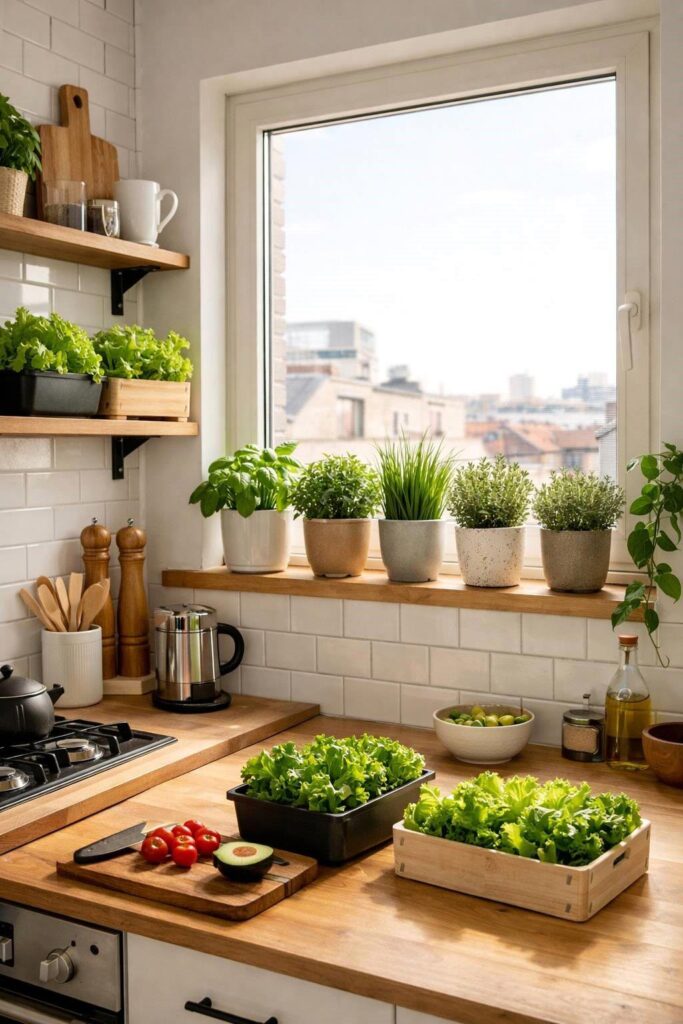
Sunlit Urban Kitchen Garden
The Three Main Ways to Grow Vegetables at Home
There are three core systems most home gardeners use. Each has its own personality.
1. Container Vegetable Gardening (Most Beginner-Friendly)
Perfect for balconies, patios, and sunny windows.
You grow in pots, planters, or fabric grow bags.
Pros
- Cheap to start
- Flexible layout
- Easy to move with sunlight
- Great for beginners
Cons
- Needs regular watering
- Limited root space for big plants
Ideal crops:
- Lettuce, spinach, kale
- Herbs
- Cherry tomatoes
- Peppers
- Radishes
This is how most people start their home vegetable garden.
2. Raised Bed Vegetable Garden (Maximum Yield Outdoors)
If you have a terrace, backyard, or shared outdoor space, raised beds are a game changer.
They allow deeper roots, better drainage, and higher yields.
Pros
- Bigger harvests
- Better soil control
- Less bending (your back will thank you)
Cons
- Needs outdoor space
- Higher upfront cost
Best for:
- Tomatoes
- Cucumbers
- Beans
- Okra
- Eggplant
- Gourds
If your goal is feeding 1 to 4 people weekly, raised beds are your fastest path.
3. Hydroponic Vegetable Garden (Indoor, High-Tech, Very Cool)
No soil. Just water, nutrients, and grow lights for vegetables.
This is indoor hydroponic gardening for vegetables, and yes, it feels futuristic.
Pros
- Super-fast growth
- No soil mess
- Works without sunlight
- Year-round growing
Cons
- Higher startup cost
- Needs electricity
Perfect for:
- Leafy greens
- Herbs
- Compact veggies
This is how people grow lettuce indoors year-round.
Hydroponics vs Soil Vegetables at Home (Quick Comparison)
| Feature | Soil Containers | Raised Beds | Hydroponics |
|---|---|---|---|
| Space needed | Small | Medium to large | Very small |
| Setup cost | Low | Medium | High |
| Growth speed | Normal | Normal | Fast |
| Indoor friendly | Yes | No | Yes |
| Best for | Beginners | Big harvests | Year-round indoor |
My honest take? Mix them.
Use containers or raised beds outdoors, and hydroponics indoors. That’s how you build a truly unlimited system.
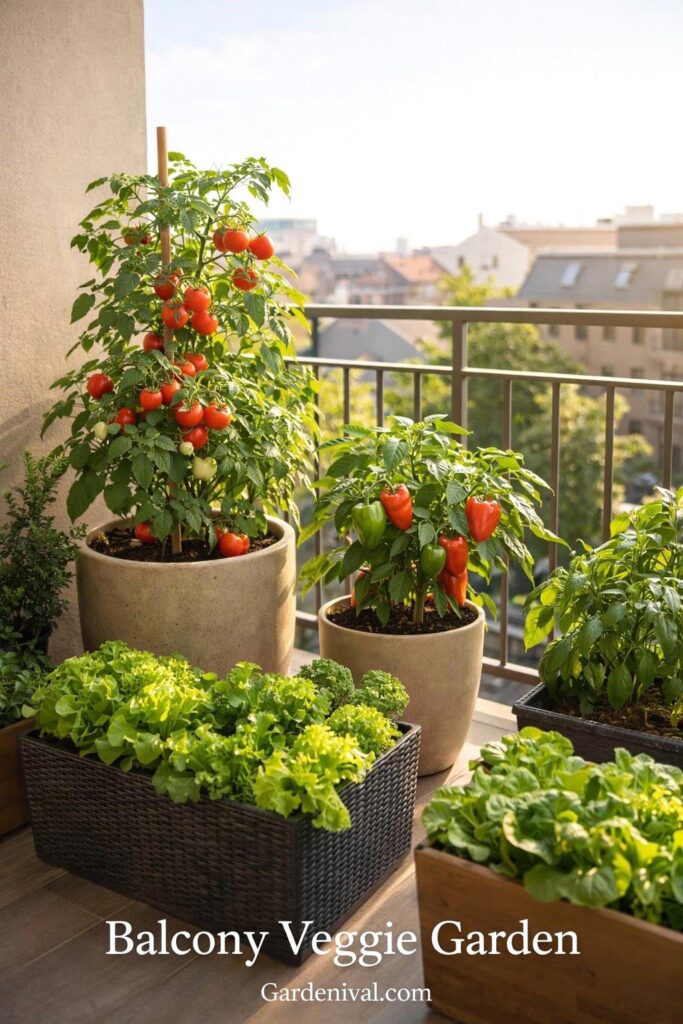
Vegetables That Regrow After Harvesting (Your Secret Weapon)
Want vegetables that keep giving?
Start here.
These are classic cut-and-come-again crops:
- Lettuce
- Spinach
- Kale
- Swiss chard
- Green onions
- Celery
- Bok choy
- Herbs like basil and mint
Cut the outer leaves. Leave the center. They grow back.
It feels illegal. But it’s gardening.
Fastest Growing Vegetables to Grow at Home
If patience is not your strong suit (same), try these:
- Radishes (20 to 30 days)
- Lettuce (30 days baby greens)
- Spinach (30 to 40 days)
- Arugula (25 days)
- Green onions (regrow in water)
These are also the best vegetables for beginners at home.
Quick wins build confidence.
How Much Sunlight Do You Really Need?
Most vegetables want 6 to 8 hours of light daily.
But city apartments rarely offer that.
Here’s the workaround:
- Leafy greens: 3 to 5 hours
- Herbs: 4 to 6 hours
- Fruiting plants: 6+ hours
No sun?
Use the best grow light for indoor vegetables. Full-spectrum LED grow lights mimic sunlight and work wonders for indoor vegetable gardening.
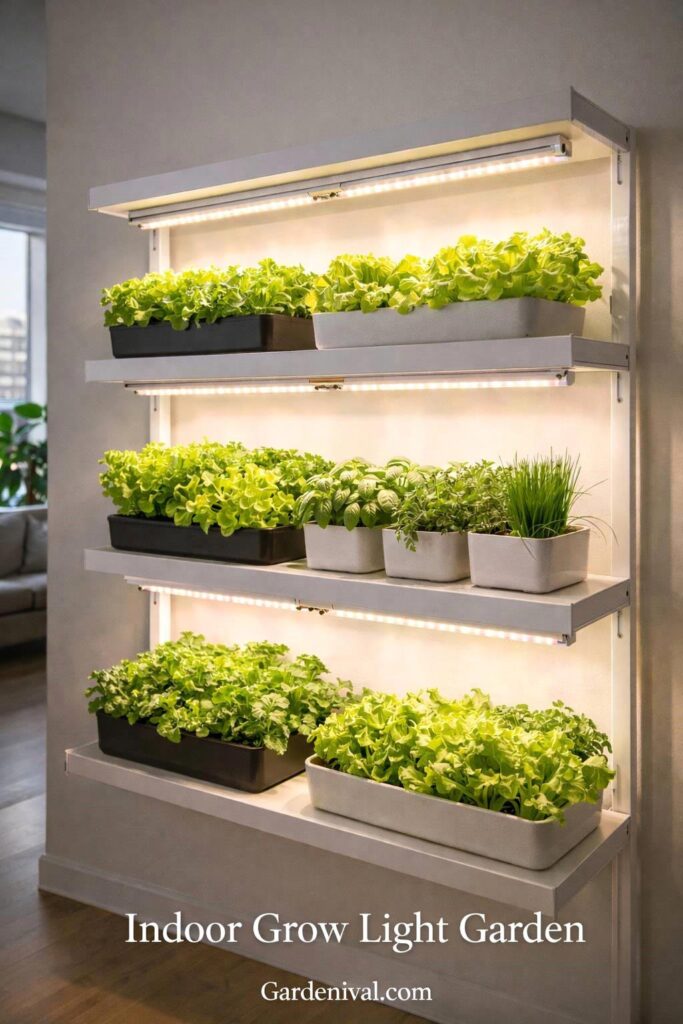
Best Soil Mix for Container Vegetables (Simple Recipe)
Never use straight garden soil in pots.
It compacts. Roots suffocate.
Use this instead:
- 40% coco coir or peat moss
- 40% compost
- 20% perlite or sand
That’s your best soil mix for container vegetables.
Light. Airy. Nutrient-rich.
Your plants will notice.
Watering: Summer vs Winter
One of the most common mistakes?
Overwatering.
Here’s a simple rule:
- Summer: Check daily. Water when top inch feels dry.
- Winter: Every 3 to 5 days, depending on indoor heating.
Always water deeply until it drains out the bottom.
Roots grow where water goes.
Fertilizer: Organic or Synthetic?
Both work.
I personally lean organic because it improves soil health long-term.
Options:
- Compost tea every 2 weeks
- Fish emulsion for leafy growth
- Balanced liquid fertilizer for fruiting plants
Feed lightly but regularly.
Think snacks, not feasts.
Why Are My Plants Flowering but Not Producing Vegetables?
This one frustrates everyone.
Common reasons:
- Too much nitrogen (lots of leaves, no fruits)
- Poor pollination
- Temperature stress
- Lack of potassium and phosphorus
Fix it by:
- Switching to a bloom fertilizer
- Hand-pollinating with a soft brush
- Keeping plants out of extreme heat
Plants are moody. Treat them gently.
Organic Pest Control for Vegetable Plants
If you grow food, pests will RSVP.
The trick is staying ahead.
Try this:
- Neem oil spray weekly
- Soap water for aphids
- Sticky traps for fungus gnats
- Companion planting (basil near tomatoes, marigolds everywhere)
This approach keeps your kitchen garden at home chemical-free.
Companion Planting for Home Vegetable Garden
Some plants are best friends.
Examples:
- Tomatoes + basil
- Lettuce + carrots
- Beans + cucumbers
- Herbs + everything
They repel pests and boost growth.
It’s plant networking.
How Many Plants Do You Need to Feed 1 to 4 People?
Rough guide:
For 1 person:
- 4 lettuce plants
- 2 tomato plants
- 3 herb pots
For 2 people:
- Double that
For 4 people:
- Add raised beds or hydroponics
This is where combining systems shines.
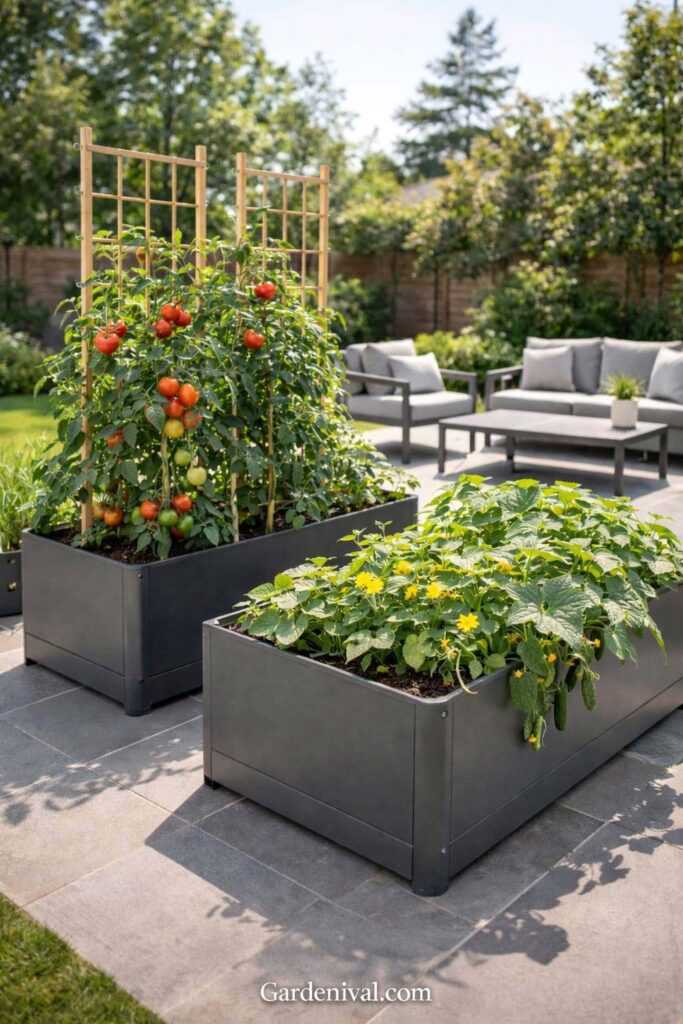
Modern Patio Raised Bed Garden
Two Tools That Make “Unlimited Vegetables” Real
Let’s talk gear. These two setups are built for continuous harvest.
Gardyn Home Vertical Hydroponic System
Why it works:
- Grows up to 30 plants indoors
- Automated watering and lighting
- App monitoring
- Perfect for herbs and leafy greens
Best for anyone who wants indoor hydroponic garden for vegetables without daily maintenance.
Official product page: Gardyn Home 4 Vertical Hydroponics Growing System Kit
This is how many people grow lettuce indoors year-round.
Vego Garden 10-in-1 Modular Metal Raised Garden Bed Kit
Why it works:
- Modular layouts for any space
- Durable metal design
- Excellent drainage
- Ideal for big outdoor harvests
Perfect for balconies, terraces, and backyards when you want tomatoes, beans, cucumbers, and more.
Official product page: Vego Garden Raised Garden Bed Kit
FAQs: Real Questions From Real Home Gardeners
What does grow unlimited vegetables at home really mean?
It means setting up systems that allow continuous planting and harvesting, both indoors and outdoors.
Which vegetables regrow after harvest the best?
Lettuce, spinach, kale, green onions, celery, bok choy, and most herbs.
What are the easiest vegetables to grow at home?
Lettuce, radishes, spinach, herbs, cherry tomatoes.
Can I grow vegetables year-round indoors without sunlight?
Yes, using full-spectrum grow lights or hydroponic systems.
What’s better for maximum yield?
Raised beds for outdoors, hydroponics for indoors. Containers for flexibility.
Which vegetables grow fastest?
Radishes, arugula, lettuce, spinach.
How do I prevent pests naturally?
Neem oil, soap spray, sticky traps, and companion planting.
What soil mix is best for containers?
Coco coir or peat, compost, and perlite.
How often should I water?
Daily checks in summer. Every few days in winter.
How do I save seeds?
Let one healthy plant mature fully, dry seeds, store in paper envelopes.
How many plants feed a family?
Combine indoor greens with outdoor fruiting plants for best results.
Conclusion: Small Space, Big Harvest Energy
Here’s the truth.
You do not need acres of land to grow vegetables at home.
You need:
- A few containers
- Some light (natural or artificial)
- The right soil or system
- And a willingness to experiment
Start with lettuce on your windowsill. Add herbs to your kitchen counter. Try tomatoes on your balcony. Maybe install a hydroponic tower later.
Before you know it, you’ll be practicing year-round vegetable gardening without even thinking about it.
And nothing, absolutely nothing, beats cooking dinner with greens you picked five minutes ago.
If this guide helped you, save it, share it, and start planting this weekend. Your future self (and your grocery bill) will thank you.