
 Posted by
 Growing vegetables at home is one of the most satisfying things you can do in your backyard.
You plant a tiny seed. Weeks later it becomes fresh tomatoes, crisp lettuce, or sweet peppers sitting on your dinner plate. There is something deeply rewarding about that process.
But here is the truth most beginner gardeners learn quickly.
A messy garden layout leads to messy results.
Plants compete for space. Some vegetables block sunlight. Others grow poorly because their roots do not have enough room.
That is exactly why raised bed vegetable garden layout ideas have become so popular among modern gardeners.
Raised beds make gardening organized, productive, and surprisingly easy to manage. Instead of random planting, you design a structured garden system where every plant has a purpose and place.
With the right layout, you can grow more vegetables in less space, improve soil health, reduce weeds, and create a backyard garden that looks as beautiful as it is productive.
In this guide you will discover 7 smart raised bed vegetable garden layout ideas that help you grow more food while keeping your backyard neat and efficient.
Whether you are a beginner or an experienced gardener, these layouts can transform a simple backyard into a thriving vegetable garden.
Quick Summary Table
| Layout Idea | Best For | Key Benefit |
|---|---|---|
| Classic Grid Layout | Beginner gardeners | Easy organization |
| Square Foot Gardening | Small gardens | Maximizes planting space |
| Companion Plant Layout | Natural pest control | Healthier vegetables |
| Crop Rotation Layout | Soil health | Prevents nutrient loss |
| U Shape Raised Bed Layout | Easy access | Comfortable gardening |
| Mixed Herb and Vegetable Layout | Kitchen gardens | Functional and beautiful |
| Modern Symmetrical Layout | Stylish gardens | Visual appeal and productivity |

Raised Bed Vegetable Garden Layout Overview
Why Raised Bed Garden Layouts Work So Well
If you have ever tried planting vegetables directly in the ground, you probably noticed a few common problems.
The soil may be too compact. Weeds appear everywhere. Drainage becomes unpredictable.
Raised beds solve these issues in a simple but powerful way.
Better Soil Control
Raised beds allow you to fill the bed with nutrient rich soil tailored for vegetables.
This creates ideal growing conditions for roots.
Improved Drainage
Because raised beds sit above ground level, water drains more easily and prevents root rot.
Easier Maintenance
Gardening becomes more comfortable when plants are organized inside structured beds instead of scattered across a large plot.
Higher Vegetable Yields
When plants receive proper spacing, sunlight, and soil nutrients, they grow stronger and produce better harvests.
In fact many gardeners notice their yields increase significantly after switching to raised bed layouts.
What Size Raised Bed Is Best for Vegetables
Before choosing a layout, it helps to understand the ideal raised bed size.
Most experienced gardeners follow a simple rule.
Raised beds should be wide enough to grow multiple plants but narrow enough to reach the center easily.
| Raised Bed Dimension | Why It Works |
|---|---|
| 4 feet wide | Easy to reach from both sides |
| 8 feet long | Efficient use of space |
| 12 to 18 inches deep | Ideal root depth for vegetables |
This size allows you to plant a variety of vegetables without stepping into the bed and compacting the soil.
1. Classic Grid Raised Bed Garden Layout
One of the simplest raised bed garden layout ideas is the classic grid system.
The bed is divided into equal sections, almost like a checkerboard.
Each square contains a specific vegetable crop.
Why This Layout Works
A grid layout keeps planting organized and prevents overcrowding.
You can dedicate each section to different vegetables like:
- Lettuce
- Spinach
- Carrots
- Radishes
- Onions
This method is especially helpful for beginners learning how different vegetables grow.
Designer Tip
Use thin wooden strips or garden string to divide the bed into visible squares. This helps maintain neat planting patterns.

Classic Grid Raised Bed Vegetable Layout
2. Square Foot Raised Bed Gardening Layout
The square foot gardening layout is one of the most efficient planting systems ever created.
Instead of spacing plants randomly, the bed is divided into one foot squares.
Each square contains a specific number of plants depending on the crop.
| Vegetable | Plants Per Square Foot |
|---|---|
| Lettuce | 4 |
| Carrots | 16 |
| Tomatoes | 1 |
| Peppers | 1 |
| Radishes | 16 |
This layout allows you to grow a surprisingly large amount of vegetables in a small garden space.
Why Gardeners Love Square Foot Gardening
- Maximizes space in small yards
- Reduces weeds
- Simplifies crop planning
- Easy to maintain
Many urban gardeners rely on this system to grow food even in compact backyard spaces.
Product Recommendation
If you are starting your first raised bed garden, a sturdy planter system can make setup much easier.
1. Raised Garden Bed Planter
Why It Is Highly Relevant
Raised planter beds provide organized growing space and allow gardeners to control soil quality more easily.
Key Benefits
- Elevated design reduces bending and back strain
- Durable natural wood construction
- Large planting area for vegetables and herbs
- Built in drainage holes
- Beginner friendly assembly
Best For
- Small backyard vegetable gardens
- Patio gardening
- Beginner gardeners
Elevated planter boxes make gardening accessible and organized, especially for gardeners working with limited backyard space.
3. Companion Planting Raised Bed Layout
Some vegetables grow better when planted near certain neighbors.
This concept is called companion planting.
For example:
| Vegetable | Best Companion |
|---|---|
| Tomatoes | Basil |
| Carrots | Onions |
| Cucumbers | Radishes |
| Lettuce | Chives |
Companion planting helps:
- Improve plant growth
- Repel pests naturally
- Increase vegetable yields
Many experienced gardeners design entire raised bed layouts around companion planting strategies.

Companion Planting Raised Bed Layout
4. Crop Rotation Raised Bed Garden Layout
One of the smartest strategies in vegetable gardening is crop rotation.
Many beginners plant the same vegetables in the same bed every year. At first things look fine. But after a few seasons the soil becomes weak and plants start producing smaller harvests.
That happens because certain vegetables pull specific nutrients from the soil.
Crop rotation solves this problem.
Instead of planting the same vegetables in the same raised bed every season, you rotate crops between beds.
How Crop Rotation Works
Vegetables are grouped into families. Each group uses different nutrients and helps maintain soil balance.
| Plant Family | Common Vegetables |
|---|---|
| Leafy greens | Lettuce spinach kale |
| Root vegetables | Carrots beets radishes |
| Fruit vegetables | Tomatoes peppers cucumbers |
| Legumes | Beans peas |
Each year you move these groups to different raised beds.
Why This Layout Improves Harvests
Crop rotation helps by:
- Preventing nutrient depletion
- Reducing soil diseases
- Improving soil fertility
- Increasing vegetable yields
If you plan a raised bed vegetable garden layout for long term gardening, crop rotation is one of the most powerful strategies you can use.

Crop Rotation Raised Bed Vegetable Layout
5. U Shape Raised Bed Garden Layout
A U shape raised bed layout is perfect for gardeners who want easy access to every plant.
Instead of placing beds in straight rows, the beds form a U shaped arrangement around a central walkway.
This design allows you to stand in the center and reach all the beds comfortably.
Why Gardeners Love This Layout
The U shape layout provides several advantages.
- Easier access to plants
- Efficient watering and harvesting
- Comfortable working space
- Great for small backyard gardens
This layout is often used in raised bed vegetable garden planning guides because it balances space efficiency with convenience.
Designer Tip
Keep pathways between beds at least 24 to 30 inches wide so you can walk comfortably while carrying tools or harvest baskets.

U Shape Raised Bed Garden Layout
6. Mixed Herb and Vegetable Raised Bed Layout
Some of the most productive raised bed gardens combine vegetables and herbs together.
This layout is both practical and beautiful.
Imagine walking outside and harvesting:
- Tomatoes
- Basil
- Rosemary
- Peppers
- Lettuce
All from the same garden bed.
Why Herbs Improve Vegetable Gardens
Many herbs naturally repel pests that damage vegetables.
For example:
| Herb | Helps Protect |
|---|---|
| Basil | Tomatoes |
| Rosemary | Beans |
| Mint | Cabbage |
| Dill | Cucumbers |
This layout also creates a kitchen friendly garden where fresh ingredients are always within reach.
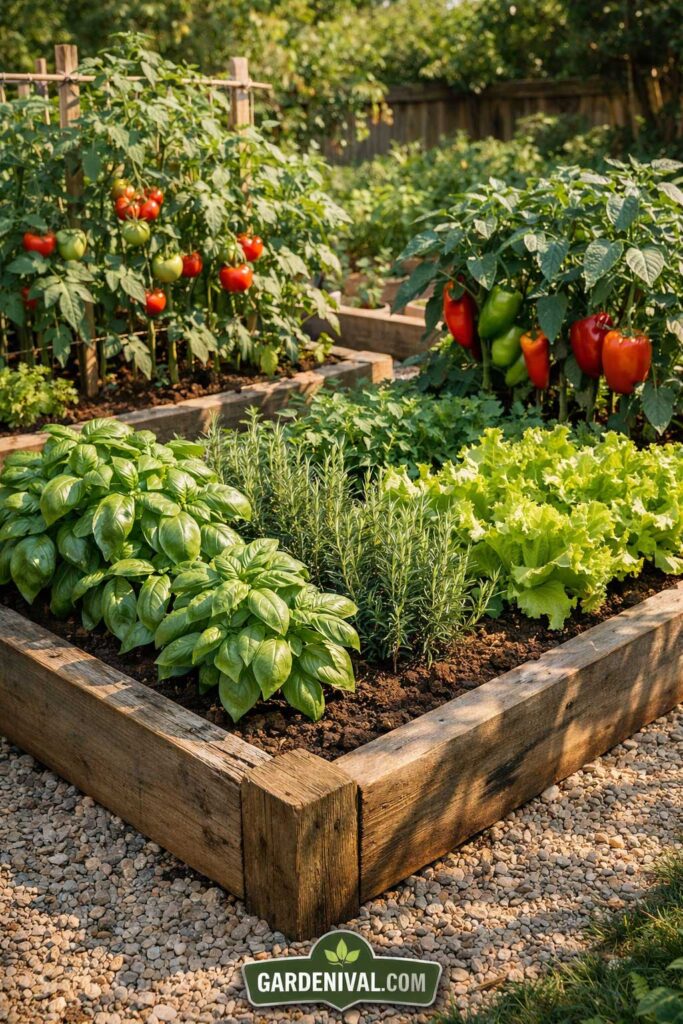
Mixed Herb and Vegetable Raised Bed Garden
Product Recommendation
If you want a durable raised bed system that allows flexible layouts, modular garden beds are an excellent option.
1. Vego Garden Modular Metal Raised Garden Bed Kit
Why It Is Highly Relevant
Modular raised beds allow gardeners to design custom garden layouts while maintaining strong long lasting structures.
Key Benefits
- Modular layout system for custom garden design
- Rust resistant coated metal panels
- Long lifespan up to 20 years
- Deep bed design ideal for root vegetables
- Expandable system for growing gardens
Best For
- Backyard vegetable garden planning
- Long term raised bed gardening
- Organized garden layouts
Search Term
modular raised garden bed kit
Modular beds allow gardeners to experiment with different raised bed vegetable garden layout ideas while maintaining a clean and structured garden design.
7. Modern Symmetrical Raised Bed Garden Layout
For gardeners who care about both productivity and visual appeal, a symmetrical raised bed layout is a fantastic option.
This design places garden beds in balanced geometric patterns.
Common designs include:
- Parallel garden rows
- Square garden grids
- Mirror image layouts
- Central walkway gardens
The result looks almost like a landscaped outdoor room.
Benefits of a Symmetrical Garden Layout
- Creates visually beautiful backyard gardens
- Makes watering systems easier to install
- Improves airflow between plants
- Simplifies maintenance
Many modern backyard gardens combine this layout with stone pathways and decorative edging.

Modern Symmetrical Raised Bed Garden Layout
How to Maximize Space in a Raised Bed Garden
Efficient layouts help gardeners grow more vegetables even in smaller backyards.
Here are a few simple strategies.
Use Vertical Gardening
Install trellises for plants like:
- Cucumbers
- Beans
- Tomatoes
Vertical growth saves valuable ground space.
Plant Fast Growing Crops
Vegetables like radishes and lettuce grow quickly and can be harvested multiple times in one season.
Practice Succession Planting
After harvesting one crop, immediately plant another in the same space.
This keeps beds productive throughout the growing season.
Frequently Asked Questions
What is the best layout for a raised bed vegetable garden
The best layout depends on space and gardening goals. Popular layouts include square foot gardening, grid layouts, and companion planting systems because they maximize productivity.
How do you plan a raised bed vegetable garden layout
Start by measuring your garden space, choosing bed sizes, planning pathways, and grouping vegetables based on sunlight needs and companion planting.
How many plants can fit in a raised garden bed
The number depends on plant size. A standard 4 by 8 foot bed can grow dozens of smaller plants like lettuce or around 8 to 10 larger plants like tomatoes.
What vegetables grow best in raised beds
Vegetables such as tomatoes, peppers, lettuce, carrots, cucumbers, and herbs grow extremely well in raised beds due to improved soil drainage and nutrient control.
How far apart should raised garden beds be placed
Most gardeners leave pathways of about 24 to 36 inches between beds to allow comfortable walking and easy access.
How deep should a raised bed be for vegetables
Most vegetables grow well in beds that are 12 to 18 inches deep, although root crops may benefit from deeper soil.
Can raised beds increase vegetable yield
Yes. Raised beds improve soil quality, drainage, and plant spacing which often leads to healthier plants and higher harvest yields.
Conclusion
Raised beds have completely transformed modern backyard vegetable gardening.
Instead of scattered planting and unpredictable results, gardeners can create structured layouts that maximize space, improve soil health, and produce larger harvests.
From square foot gardening and companion planting layouts to modern symmetrical garden designs, the right layout helps every plant receive the sunlight, nutrients, and space it needs.
Even a small backyard can become a productive vegetable garden when beds are arranged thoughtfully.
If you are starting your own raised bed garden, begin with a simple layout and expand over time. With the right planning, your backyard can easily become a thriving source of fresh vegetables throughout the growing season.