
 Posted by
 Introduction
You plant seeds with excitement. You water regularly. You imagine baskets full of fresh vegetables. And then… nothing grows the way you expected. Leaves turn yellow. Plants stay small. Harvests feel disappointing. If this sounds familiar, you are not alone. Many beginners and even experienced gardeners face moments where their vegetable garden is failing, and it can feel incredibly frustrating.
Here is the truth I have learned over years of gardening. A struggling vegetable garden is rarely a mystery. Most problems come from a few common issues such as soil health, watering habits, sunlight levels, or overcrowding. The good news is that almost every problem has a fix.
This guide walks you through the real reasons gardens fail and the fastest ways to bring them back to life. Whether you grow vegetables in a backyard, a raised bed, or containers, you will learn practical strategies that actually work.
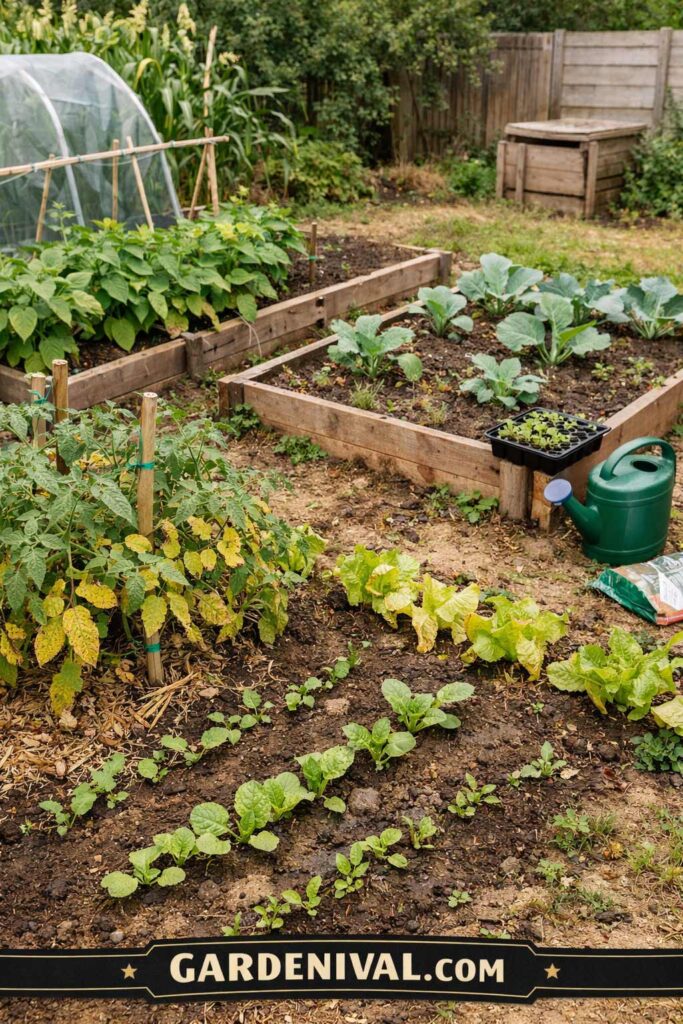
Struggling Backyard Vegetable Garden
The Most Common Reason a Vegetable Garden Is Failing
Many people assume pests or bad weather are the main causes, but in reality most gardens fail because several small problems happen at the same time.
The biggest issues include:
- Poor soil quality
- Overwatering or underwatering
- Not enough sunlight
- Overcrowded planting
- Incorrect fertilizing
Understanding these basics answers one of the most common questions: why is my vegetable garden failing even though I water regularly. Water alone cannot fix poor soil or lack of sunlight.
Problem 1 – Poor Soil Is Quietly Killing Your Plants
Healthy soil is the foundation of every successful garden. If the soil lacks nutrients or drains poorly, vegetables struggle to grow even when everything else seems correct.
Signs your soil might be the problem
- Water sits on the surface too long
- Plants stay small despite fertilizing
- Roots look weak or shallow
Many beginners plant directly into heavy ground soil without improving it. Over time, roots become compacted and plants stop thriving.
Fast Fix
- Add compost or organic matter
- Use raised beds for better drainage
- Mix soil with perlite or coco coir
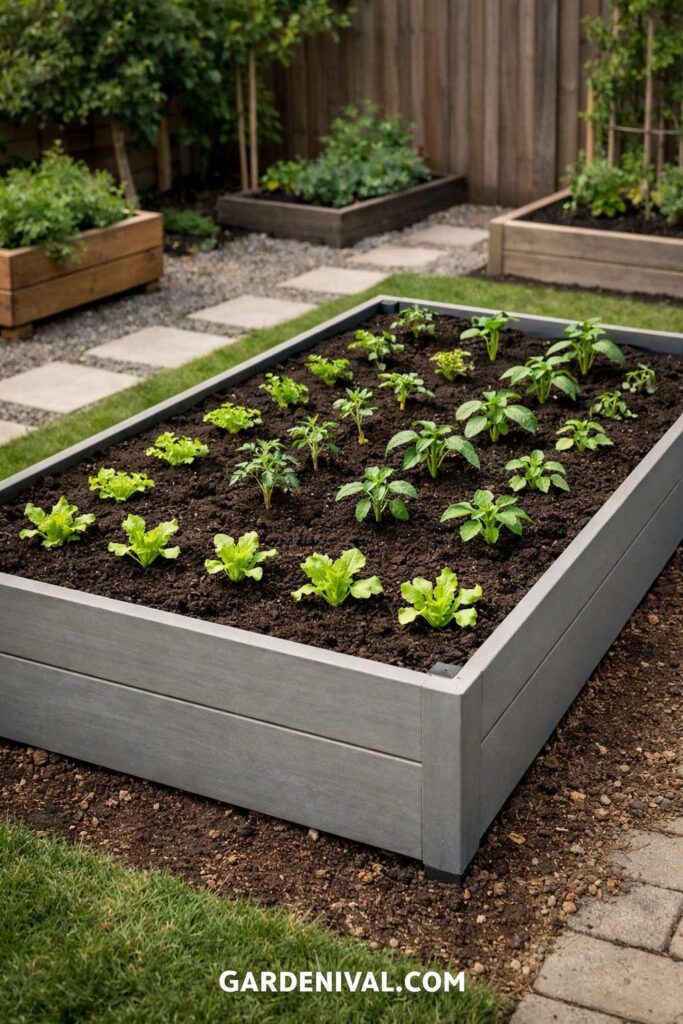
Raised Bed Soil Improvement Setup
Problem 2 – Watering Too Much or Too Little
Watering mistakes are one of the top causes of a struggling vegetable garden. Many gardeners water daily thinking it helps, but too much water suffocates roots.
Overwatering signs
- Yellow leaves
- Mushy stems
- Slow growth
Underwatering signs
- Dry cracked soil
- Wilting during midday
- Small vegetables
Instead of watering on a fixed schedule, check the soil with your finger. If the top inch feels dry, it is usually time to water.
Quick Watering Guide
| Plant Type | Watering Frequency |
|---|---|
| Tomatoes | 2 to 3 times per week |
| Leafy Greens | Light watering every few days |
| Root Vegetables | Deep watering once weekly |
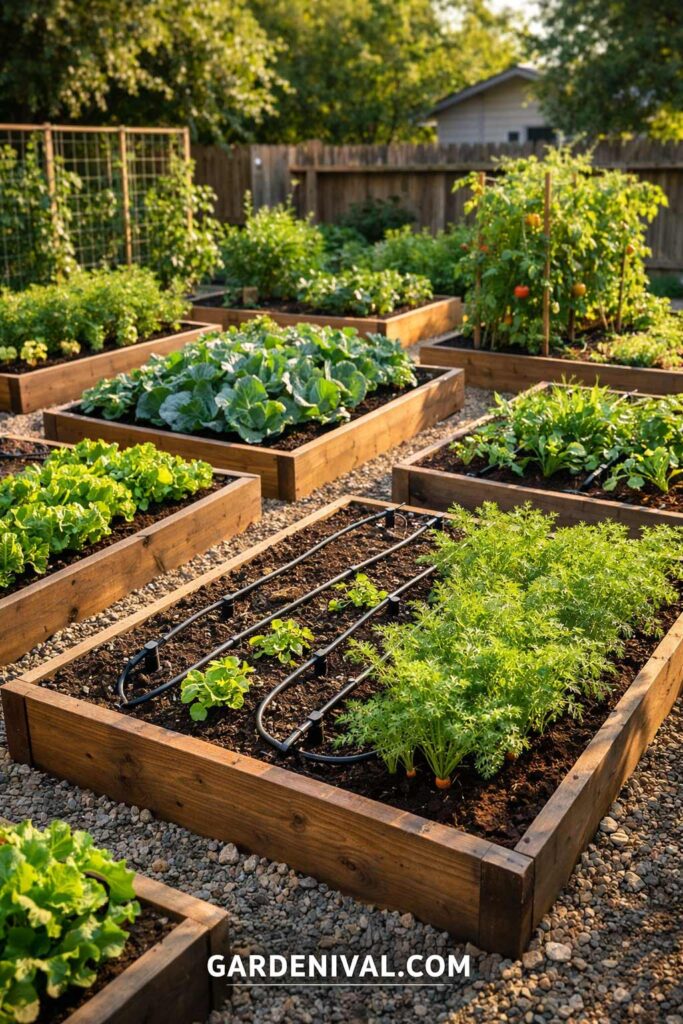
Drip Irrigation Vegetable Garden Setup
Problem 3 – Not Enough Sunlight
Vegetables are sun lovers. Most edible plants need at least six to eight hours of direct sunlight daily. When a vegetable garden is not growing, poor light exposure is often the hidden reason.
If your garden receives shade from fences or buildings, plants may grow tall and thin instead of strong and productive.
How to Fix Low Sunlight
- Move containers toward brighter areas
- Use reflective surfaces to bounce light
- Grow shade tolerant crops like spinach or lettuce
Understanding sunlight needs helps answer another common question: how much sunlight vegetables really need to grow properly. The answer depends on the crop, but more light usually means better harvests.
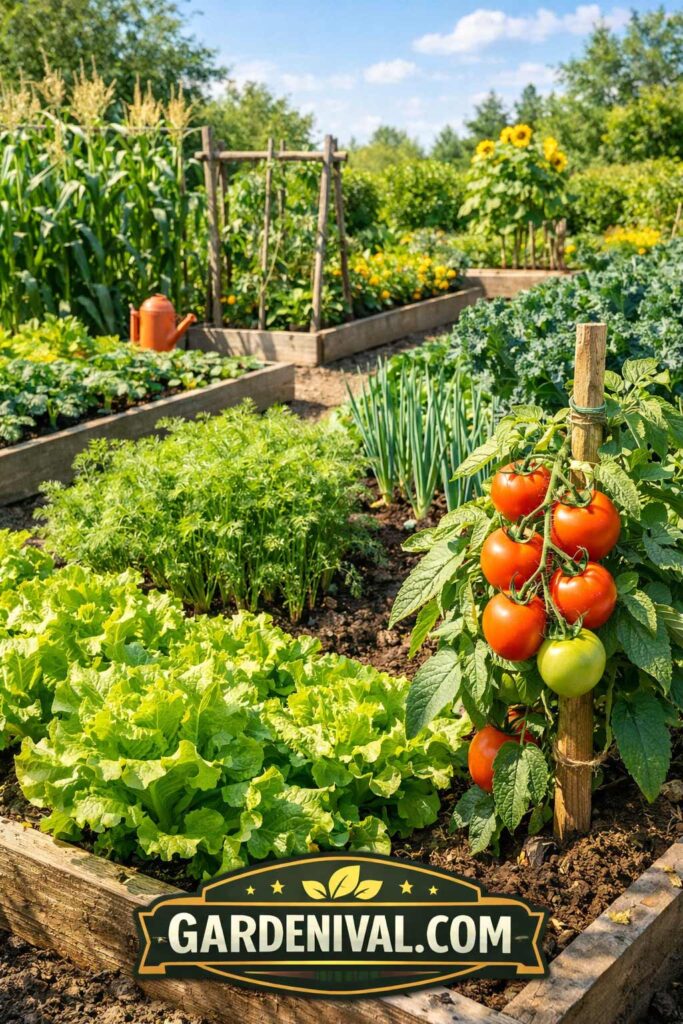
Sunlight Exposure Vegetable Garden Layout
Problem 4 – Overcrowding Plants Without Realizing It
It is easy to plant too many seeds in a small space. After all, we all want more vegetables. But overcrowding causes competition for nutrients, airflow, and sunlight.
Signs of overcrowding include:
- Thin weak stems
- Small leaves
- Increased pest problems
Spacing plants properly allows air circulation and stronger root growth. When thinning seedlings, think of it as giving the strongest plants room to succeed.
Problem 5 – Fertilizer Mistakes That Slow Growth
Many gardeners believe fertilizer solves everything. In reality, too much fertilizer can burn roots and stop production.
Common fertilizer mistakes
- Applying fertilizer every week
- Using high nitrogen products during fruiting stages
- Ignoring soil testing
A balanced feeding schedule works better than constant fertilizing. Vegetables need nutrients, but they also need time to absorb them.
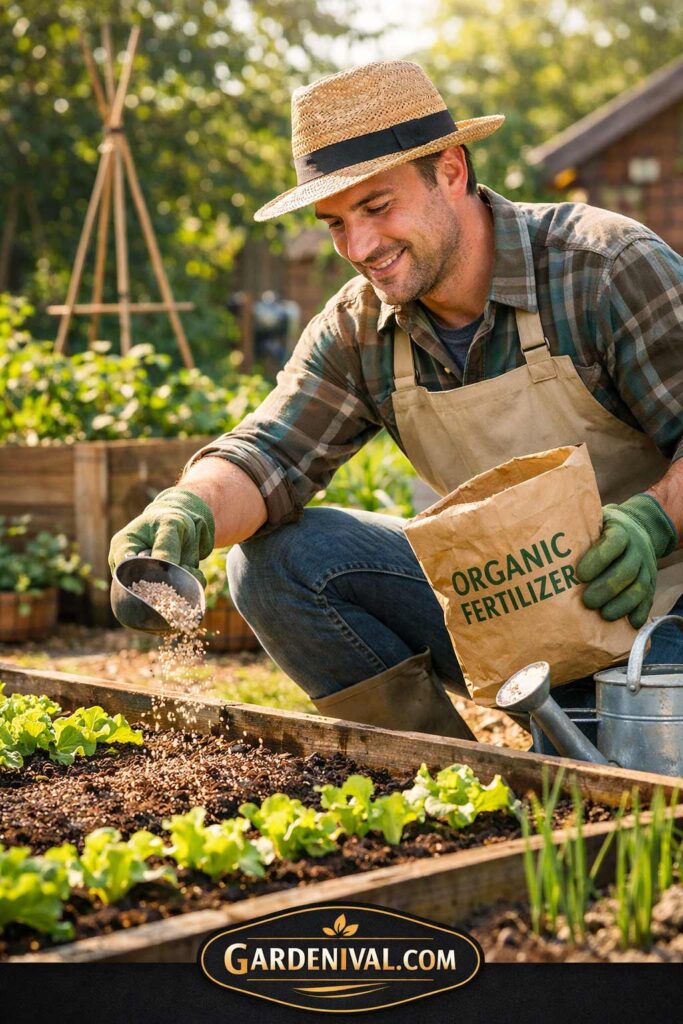
Balanced Organic Fertilizing Setup
Problem 6 – Seedlings Dying After Transplanting
Many readers ask why seedlings die after transplanting even when they looked healthy indoors. The main reason is transplant shock.
Seedlings grown inside need time to adjust to outdoor conditions such as wind, sunlight, and temperature changes.
How to Prevent Transplant Shock
- Harden off seedlings for one week outdoors
- Plant during cooler evening hours
- Water deeply after planting
This simple adjustment can completely change the success rate of a beginner vegetable garden.
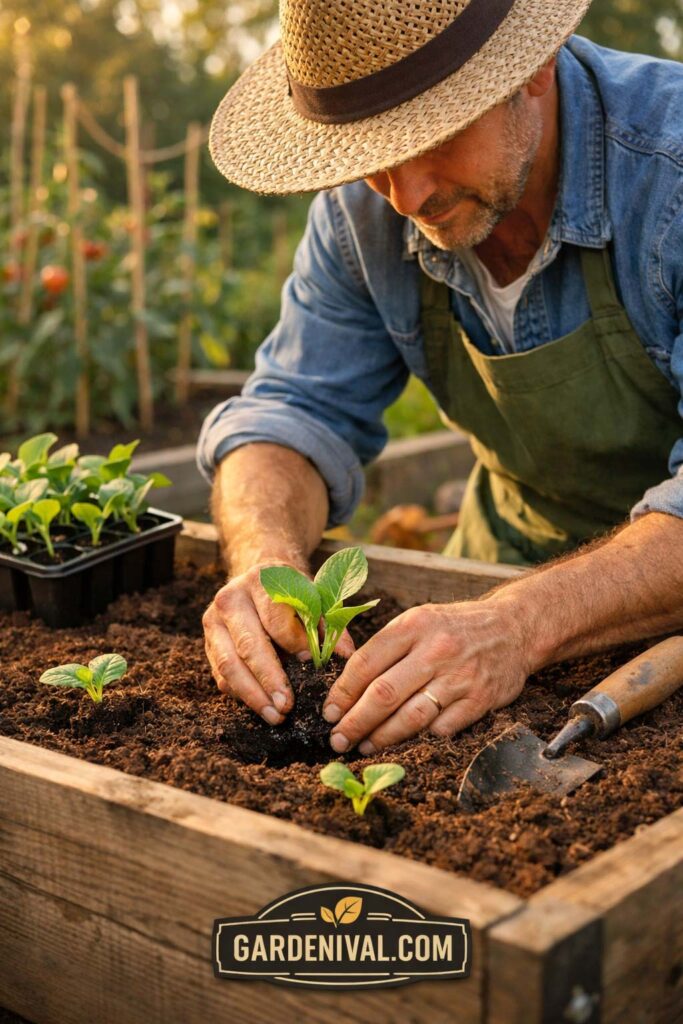
Seedling Transplanting Garden Scene
Problem 7 – Ignoring Early Signs of Pests and Disease
Pests rarely appear overnight. Most vegetable garden problems start small. A few chewed leaves or tiny spots may not seem serious, but early action prevents bigger issues later.
Common pests include:
- Aphids
- Caterpillars
- Whiteflies
Regularly checking the underside of leaves helps catch problems before they spread.
Problem 8 – Growing the Wrong Plants for Your Climate
Sometimes a vegetable garden failing has nothing to do with your skills. It comes down to plant selection. Many beginners grow vegetables that simply do not match their local weather patterns.
For example:
- Cool season crops struggle in hot climates
- Heat loving plants fail during early spring planting
- Some varieties require longer growing seasons
Instead of forcing plants to adapt, choose vegetables suited to your region. Seed packets usually list recommended planting seasons. Following that simple guideline can dramatically improve success.
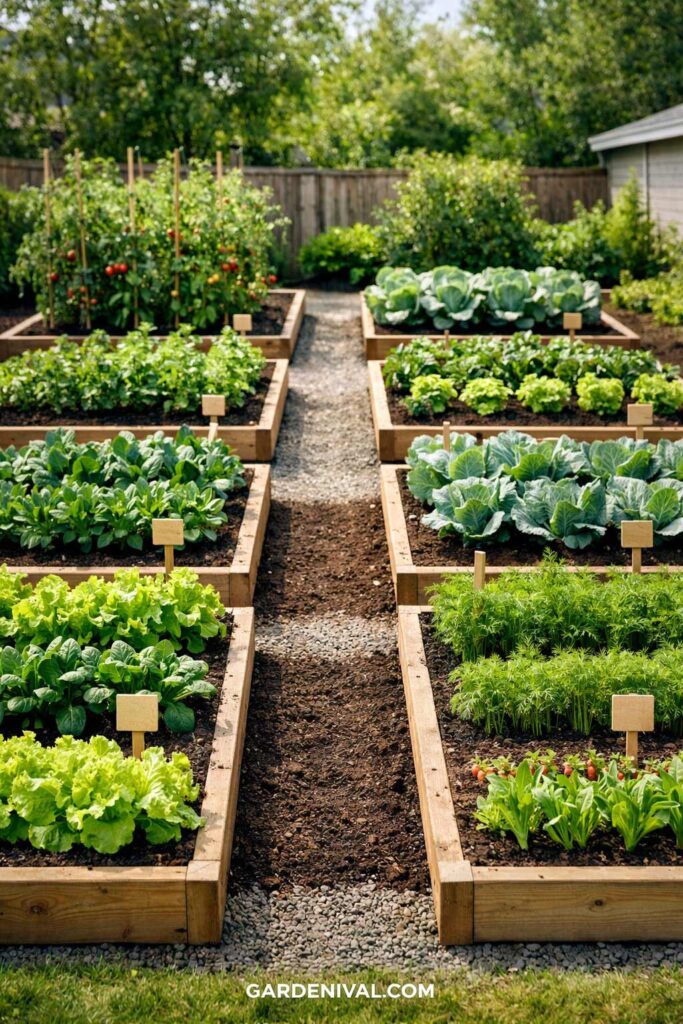
Seasonal Vegetable Planting Layout
Problem 9 – Poor Airflow and Dense Plant Layouts
A crowded garden may look lush at first, but poor airflow creates perfect conditions for fungal diseases. Leaves stay wet longer, pests spread easily, and growth slows.
If you notice:
- Powdery white spots
- Yellowing leaves near the base
- Mold on soil surface
You may need to prune or space plants further apart.
Quick Fix Tips
- Remove lower leaves touching soil
- Use vertical supports like trellises
- Space tomato plants at least 18 to 24 inches apart
Good airflow is one of the easiest ways to revive a struggling vegetable garden quickly.
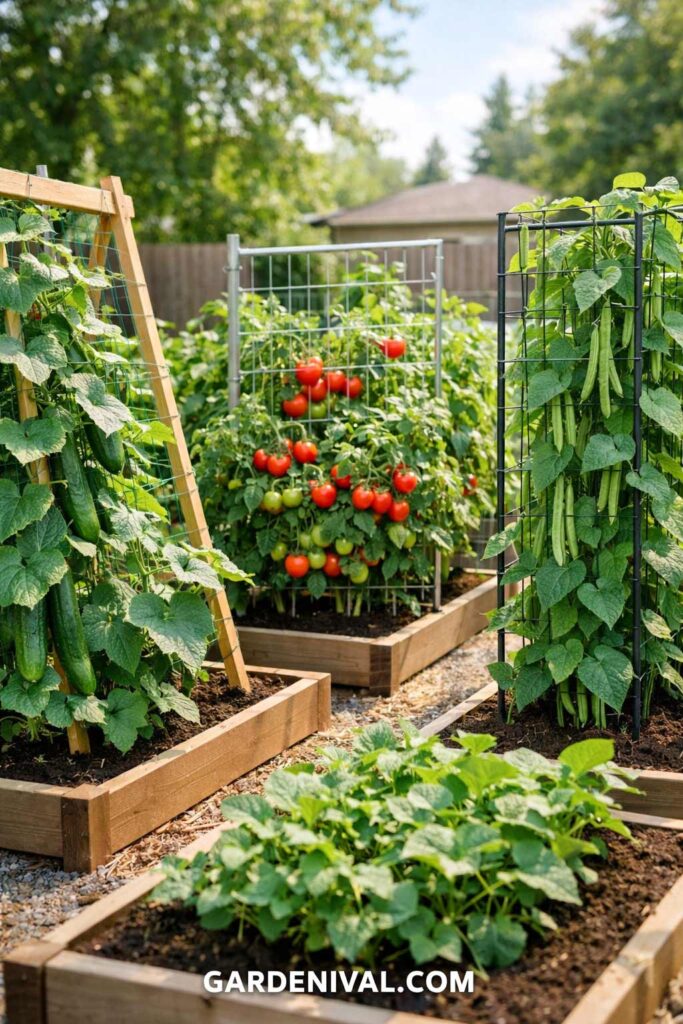
Trellis Supported Vegetable Plants
Problem 10 – Starting Too Big Instead of Starting Smart
A common beginner mistake is planting too many vegetables at once. It feels exciting at first, but managing a large garden requires time, consistent watering, and regular maintenance.
If your garden feels overwhelming, simplify it.
Start with:
- Tomatoes
- Lettuce
- Herbs
- Peppers
Smaller setups often produce better harvests because you can focus on quality care instead of quantity.
Can Container Gardening Help If Your Backyard Garden Keeps Failing
Yes. Many gardeners switch to containers or raised beds when traditional soil causes problems.
Container gardening works well because:
- You control soil quality
- Drainage improves instantly
- Plants receive consistent nutrients
If your backyard soil is heavy clay or rocky, moving vegetables into containers may be the fastest recovery strategy.
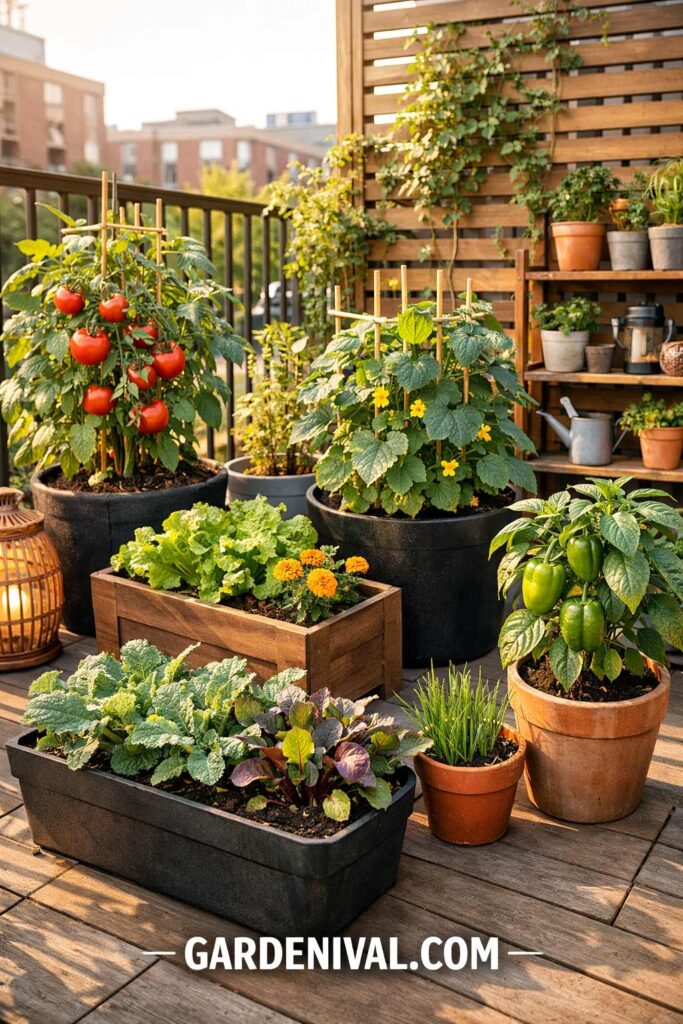
Container Vegetable Garden Setup
Beginner Habits That Instantly Improve Vegetable Harvests
Sometimes success comes from small daily habits rather than major changes.
Simple habits that work
- Check soil moisture before watering
- Remove dead leaves weekly
- Rotate crops each season
- Add compost regularly
These routines build healthier soil and reduce stress on plants over time.
Top Product Recommendations for Vegetable Garden Failing
1. Raised Garden Bed Kit or Soil Improvement Planter System
Why it fits vegetable garden failing topics
Raised beds allow you to start fresh with nutrient rich soil, improve drainage, and avoid compacted ground conditions that slow root growth.
Best For
Backyard gardeners, beginners, and urban homesteaders looking to fix soil issues quickly.
2. Drip Irrigation Starter Kit
Why it fits vegetable garden failing topics
Consistent watering prevents common problems like yellow leaves, root rot, or dry soil stress. Drip systems deliver moisture directly where plants need it.
Best For
Raised beds, container gardens, and sustainable watering setups.
Frequently Asked Questions About Vegetable Garden Failing
Why is my vegetable garden failing even though I water regularly
Water alone cannot fix poor soil or lack of sunlight. Check drainage and nutrient levels.
What are the most common mistakes that cause vegetable gardens to fail
Overwatering, overcrowding, planting in shade, and using poor soil are the biggest issues.
How do I fix poor soil in a vegetable garden
Add compost, organic matter, or switch to raised beds for better control.
Why are my vegetables growing slowly or not producing
Low sunlight, improper fertilizing, or root stress are common reasons.
Can too much fertilizer damage a vegetable garden
Yes. Excess fertilizer burns roots and reduces plant productivity.
How do pests cause vegetable garden failure and how do I stop them
Pests weaken plants by feeding on leaves and stems. Early inspection and natural treatments help prevent damage.
How do I revive a struggling vegetable garden
Improve soil, adjust watering habits, increase sunlight exposure, and remove overcrowded plants.
Conclusion
A vegetable garden failing does not mean you are doing something wrong. Gardening is a learning process, and every challenge teaches you something valuable. Most struggling gardens improve quickly once you adjust soil quality, watering routines, and plant spacing.
Instead of starting over completely, focus on small changes first. Improve drainage, check sunlight levels, and simplify your planting plan. Over time, these adjustments transform frustration into growth.
The goal is not perfection. It is progress. With the right approach, your garden can move from struggling to thriving faster than you might expect.