 Posted by
 Introduction
Imagine stepping into your backyard and picking fresh vegetables for dinner. Herbs grow just a few feet away from your kitchen door. Rainwater collected from your roof waters the garden, and compost made from kitchen scraps feeds the soil.
This is the beauty of a self-sufficient backyard homestead.
You do not need acres of land or a rural farm to start living a more independent lifestyle. Many people are creating productive gardens right in suburban and urban backyards. With the right planning, even a modest space can produce vegetables, herbs, fruits, and other resources that support your household.
Backyard homesteading is not about perfection. It is about building systems that slowly make your home more resilient and sustainable.
In this guide you will learn how to build a self sufficient backyard homestead step by step, even if you are a complete beginner. We will explore layout planning, food production, composting, water collection, and practical strategies used by modern homesteaders.
By the end you will have a clear roadmap for turning your backyard into a productive ecosystem that grows food, reduces waste, and supports a more sustainable lifestyle.

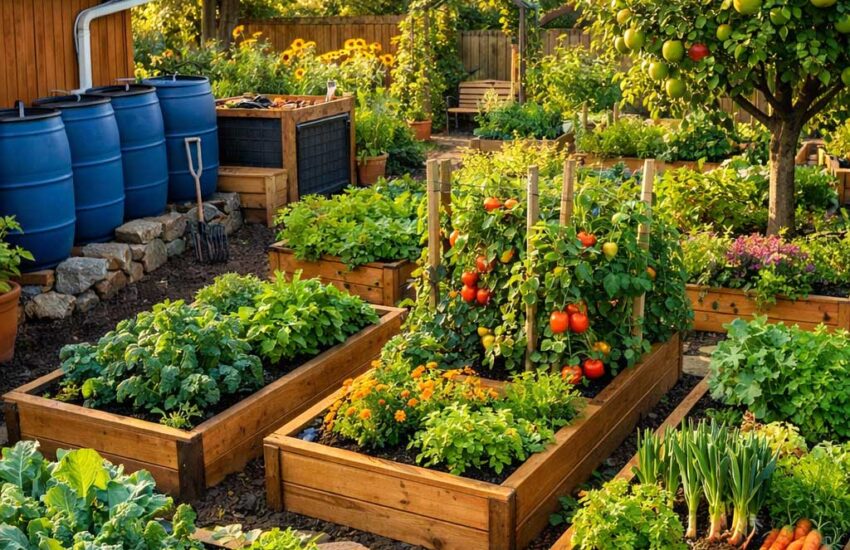
Self Sufficient Backyard Homestead Layout Inspiration
What Is a Self-Sufficient Backyard Homestead
A self sufficient backyard homestead is a home garden system designed to produce food and resources for the household.
Rather than relying completely on grocery stores, homesteaders grow vegetables, fruits, herbs, and sometimes raise small livestock such as chickens.
The goal is not full independence overnight. It is building small systems that work together.
Common elements of backyard homesteading
- Vegetable gardens
- Fruit trees and berry plants
- Compost systems
- Rainwater collection
- Herb gardens
- Small livestock such as chickens
- Food preservation methods
These systems create a backyard food production garden that becomes more productive each year.
How Much Land Do You Need for a Backyard Homestead
One of the biggest myths is that homesteading requires large farmland.
In reality, a small backyard homestead can be surprisingly productive.
Example production potential
| Backyard Size | Possible Food Production |
|---|---|
| Small patio or balcony | Herbs and container vegetables |
| Small suburban yard | Raised beds, herbs, berry bushes |
| Medium backyard | Vegetables, fruit trees, chickens |
| Large backyard | Food forest, livestock, greenhouse |
Even a small backyard can support urban homesteading for beginners with the right design.

Small Backyard Homestead Garden Setup
Step 1 Plan Your Backyard Homestead Layout
Good homesteads begin with thoughtful planning.
A productive garden layout ensures that sunlight, water, and space are used efficiently.
Key layout zones
| Homestead Zone | Purpose |
|---|---|
| Vegetable beds | Primary food production |
| Herb garden | Culinary herbs and medicinal plants |
| Compost zone | Recycling kitchen and garden waste |
| Water collection | Rainwater harvesting system |
| Fruit trees | Long term food production |
Planning these zones early improves your homestead garden planning and prevents space conflicts later.
Step 2 Build a High Yield Vegetable Garden
Vegetables are the foundation of most backyard homestead ideas.
Start with crops that produce well and grow easily.
Best vegetables for beginners
- Tomatoes
- Lettuce
- Cucumbers
- Zucchini
- Green beans
- Spinach
- Peppers
These crops perform well in a backyard vegetable garden for self sufficiency.
Vegetable productivity guide
| Vegetable | Harvest Potential |
|---|---|
| Tomatoes | High yield over months |
| Zucchini | Continuous production |
| Lettuce | Quick harvest cycles |
| Beans | High protein crop |
| Cucumbers | Strong seasonal yield |
Planting multiple harvest cycles is a common strategy in high yield backyard vegetable garden planning.

Productive Vegetable Homestead Garden
Step 3 Grow Fruit Trees and Perennial Crops
Perennial plants are powerful assets in a self reliant backyard garden.
Unlike annual vegetables, fruit trees return year after year.
Good backyard fruit trees
- Apple
- Peach
- Cherry
- Lemon
- Fig
Berry plants are also excellent additions.
Productive berry plants
- Strawberries
- Blueberries
- Raspberries
- Blackberries
These plants create a mini backyard fruit tree garden that produces food for many years.
Step 4 Compost Kitchen and Garden Waste
Composting is one of the most important systems in a zero waste backyard homestead.
It transforms food scraps into nutrient rich soil.
Materials that compost well
- Vegetable scraps
- Coffee grounds
- Egg shells
- Grass clippings
- Dry leaves
Compost balance table
| Green Materials | Brown Materials |
|---|---|
| Kitchen scraps | Dry leaves |
| Fresh grass | Cardboard |
| Vegetable waste | Straw |
Balancing these materials helps compost break down faster.
Step 5 Collect Rainwater for Garden Irrigation
Water independence is another core principle of sustainable backyard gardening tips.
Rain barrels allow you to collect water directly from roof gutters.
Benefits of rainwater harvesting
- Reduces water bills
- Provides natural irrigation
- Supports drought resilience
- Conserves local water resources
Many modern homesteads rely on rainwater harvesting for gardens.

Backyard Rainwater Harvesting System
Step 6 Consider Backyard Chickens for Eggs
Chickens are one of the most popular additions to backyard homesteading.
They provide eggs, natural fertilizer, and pest control.
Benefits of backyard chickens
- Fresh eggs
- Natural insect control
- Manure for compost
- Educational for families
However, always check local regulations before adding animals to a backyard homestead.
Step 7 Design a Permaculture Style Food System
Permaculture focuses on designing gardens that mimic natural ecosystems.
A permaculture backyard garden design combines vegetables, trees, herbs, and beneficial insects.
Permaculture principles
- Plant diversity
- Soil protection
- Water conservation
- Natural pest control
These principles create long term sustainability in a modern homesteading lifestyle.
Product Recommendations for Backyard Homesteading
1. Outdoor Tumbling Composter
Why it is highly relevant
Composting turns kitchen scraps and yard waste into nutrient rich fertilizer that improves soil health.
Key benefits
- Dual chamber compost design
- Faster compost production
- Durable outdoor construction
- Keeps pests away
Best for vegetable gardens and sustainable homestead systems.
2. Rain Wizard Rain Barrel
Why it is highly relevant
Rainwater collection is a major step toward building a self sufficient backyard homestead.
Key benefits
- Collects rainwater from roof gutters
- Reduces household water usage
- Provides free irrigation water
- Supports sustainable gardening
Best for vegetable gardens and fruit trees.
How to Grow Enough Food in a Backyard Garden
Many beginners wonder if a backyard can really produce meaningful food.
The answer is yes. The key is maximizing productivity using smart planting strategies.
Techniques that increase garden yield
- Succession planting
- Vertical gardening
- Companion planting
- Intensive planting
- Crop rotation
These strategies are often used in high yield backyard vegetable garden systems.
Example intensive planting layout
| Garden Bed Size | Crops You Can Grow |
|---|---|
| 4 x 4 raised bed | Lettuce, spinach, carrots |
| 4 x 8 raised bed | Tomatoes, peppers, cucumbers |
| Vertical trellis bed | Beans, peas, cucumbers |
This approach allows a small backyard to produce a surprising amount of food.

High Yield Backyard Vegetable Garden
Tools Needed for a Backyard Homestead
Homesteading does not require dozens of expensive tools.
A small set of reliable tools can support most urban homestead garden activities.
Essential homestead tools
- Hand trowel
- Garden hoe
- Pruning shears
- Watering can or hose
- Compost bin
- Garden rake
Tool usage guide
| Tool | Purpose |
|---|---|
| Hand trowel | Planting seedlings |
| Garden hoe | Soil preparation |
| Pruning shears | Trimming plants |
| Garden rake | Leveling soil |
| Compost bin | Recycling organic waste |
Starting simple helps beginners focus on building their self-sufficient garden setup gradually.
How to Make a Backyard Garden More Sustainable
Sustainability is a core part of modern homesteading lifestyle.
A truly productive homestead focuses on reducing waste and improving soil health.
Sustainable gardening practices
- Composting organic waste
- Mulching soil to retain moisture
- Collecting rainwater
- Rotating crops yearly
- Growing pollinator friendly plants
These methods help build a sustainable backyard garden that requires fewer external resources.

Sustainable Backyard Homestead Garden
Common Mistakes Beginners Make in Backyard Homesteading
Every gardener makes mistakes at the beginning. The key is learning quickly.
Mistakes to avoid
Planting too much at once
Many beginners try to grow everything in the first season.
Ignoring soil quality
Healthy soil is the foundation of every productive backyard food production garden.
Overwatering plants
Too much water can harm roots and encourage disease.
Poor garden layout
Crowded beds limit sunlight and airflow.
Starting small and expanding slowly is the best strategy for beginner homestead gardening tips.
Designing a Productive Backyard Homestead Layout
A thoughtful layout allows your garden systems to work together.
Efficient homestead layout zones
| Zone | Function |
|---|---|
| Vegetable garden | Food production |
| Compost area | Soil fertility |
| Rainwater storage | Irrigation system |
| Fruit trees | Long term harvest |
| Herb garden | Daily kitchen use |
Combining these areas creates a functional homestead garden layout plan that supports self-sufficiency.

Organized Backyard Homestead Layout
Can a Backyard Homestead Reduce Grocery Bills
One of the biggest motivations for backyard homesteading is food savings.
While a homestead may not eliminate grocery bills entirely, it can significantly reduce them.
Foods commonly produced at home
- Tomatoes
- Herbs
- Lettuce
- Eggs from backyard chickens
- Zucchini
- Peppers
These crops are frequently harvested throughout the growing season and can offset grocery expenses.
Frequently Asked Questions
What is a self-sufficient backyard homestead
A self sufficient backyard homestead is a home garden system designed to grow food, recycle waste, and produce resources such as vegetables, fruits, and eggs.
How do I start a self-sufficient backyard homestead
Begin with a small vegetable garden, compost system, and rainwater collection. Expand gradually as you gain experience.
How much land do you need for a backyard homestead
Even a small backyard can support raised beds, herbs, and fruit trees.
What can you grow in a backyard homestead
Common crops include vegetables, herbs, fruit trees, berries, and leafy greens.
Can you be self-sufficient in a small backyard
While full independence may be difficult, small backyards can produce a significant portion of household food.
What animals are best for a backyard homestead
Chickens are the most common because they provide eggs and help control pests.
What vegetables are best for homesteading
High yielding crops such as tomatoes, beans, lettuce, zucchini, and cucumbers are popular choices.
Conclusion
A self sufficient backyard homestead is more than a garden. It is a system that produces food, improves soil health, and reduces household waste.
You do not need large farmland or complicated equipment to begin. Start with a few raised beds, grow simple vegetables, and gradually add systems like composting and rainwater harvesting.
Over time your backyard will evolve into a thriving ecosystem that supports your home with fresh food and sustainable resources.
The most important step is simply starting.
Plant the first garden bed, learn from the process, and allow your backyard homestead to grow year after year.