
 Posted by
 Introduction
If you have ever looked at a small backyard or balcony and wondered how you could possibly grow enough food there, potato towers might feel like a secret gardening hack. I still remember the first time I saw one. It looked simply, almost too simple, yet the harvest was surprisingly generous. That is the magic behind potato tower growing tips for small gardens. Instead of spreading potatoes across wide garden beds, you grow them vertically, stacking soil as the plants grow upward.
Vertical potato growing has become incredibly popular with urban gardeners because it saves space while still producing a rewarding harvest. Whether you have a compact yard, a patio, or even a sunny balcony, a well designed tower can turn a small corner into a productive mini garden. But here is the truth many beginners do not realize. Potato towers only work well when you understand soil layering, watering balance, and the right varieties.
In this detailed guide, you will learn seven practical tips that help you maximize harvest while keeping your tower healthy and easy to maintain.

Potato Tower Growing Setup for Small Gardens
Why Potato Towers Are Perfect for Small Space Gardening
Before jumping into the tips, it helps to understand why potato towers work so well. Traditional potato rows take up a lot of horizontal space. Towers, on the other hand, encourage vertical potato growing by adding soil layers as stems grow taller. This method keeps the footprint small while still allowing tubers to develop.
Benefits of potato tower gardening
- Maximizes limited garden space
- Makes harvesting easier
- Keeps soil contained and organized
- Works well for container potato growing
Table: Traditional Beds vs Potato Towers
| Growing Method | Space Needed | Harvest Ease |
|---|---|---|
| Ground beds | Large area | Digging required |
| Potato towers | Compact space | Easy layer harvesting |
Many gardeners choose potato towers because they fit perfectly into backyard potato tower garden layouts without overwhelming the space.

Vertical Potato Growing Comparison Layout
Tip 1 – Choose the Right Potato Variety for Vertical Growing
Not every potato grows well in a tower. Some varieties produce tubers mainly near the base, while others continue forming along the stem. For small space potato gardening, selecting the right type makes a huge difference.
Best varieties for potato towers
- Fingerling potatoes
- Yukon Gold
- Red Pontiac
These varieties adapt well to container environments and tend to perform reliably in stacked soil systems.

Seed Potatoes Ready for Tower Planting
Tip 2 – Use a Layered Soil and Compost Mix
One of the biggest mistakes beginners make is using heavy garden soil alone. Potato tower setup ideas work best when soil is light and breathable.
Ideal soil mix
- 40 percent compost
- 40 percent loose garden soil
- 20 percent straw or coco coir
This layered soil potato tower method improves drainage and encourages strong root growth.
Table: Soil Component Benefits
| Ingredient | Purpose |
|---|---|
| Compost | Nutrients and moisture |
| Garden soil | Structure |
| Straw or coir | Airflow and drainage |
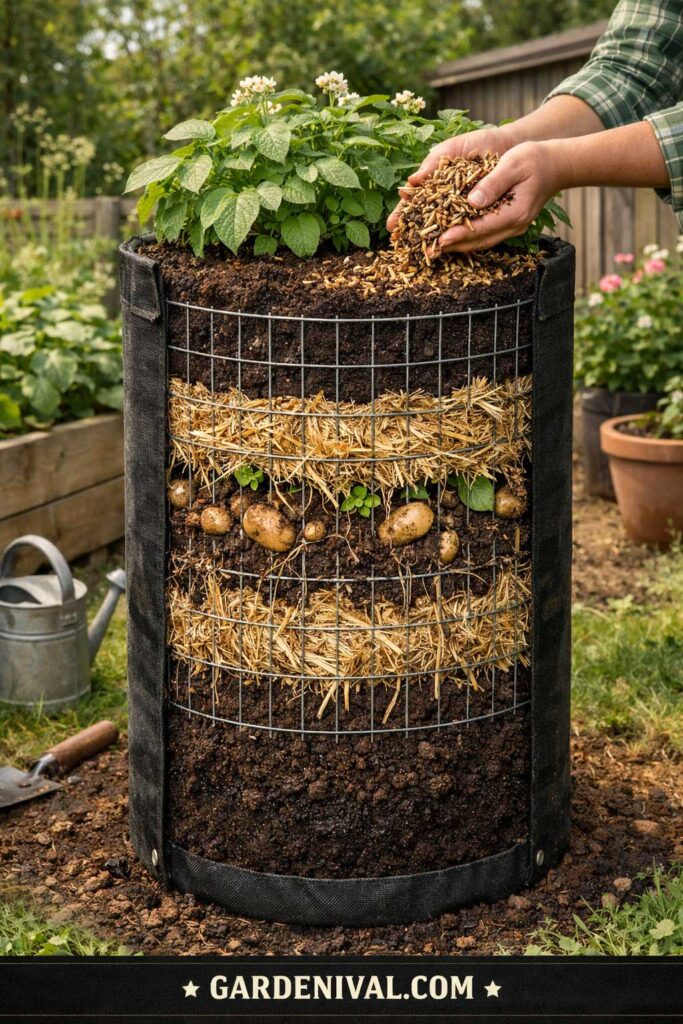
Layered Soil Potato Tower Method
Tip 3 – Build Towers That Allow Proper Drainage and Airflow
DIY wire mesh potato tower guide styles are popular because they allow airflow from all sides. Towers that trap too much moisture can lead to root rot, especially in humid climates.
Good tower materials
- Wire mesh cylinders
- Wooden slat boxes
- Stackable plastic planters
Airflow keeps roots healthy and prevents overheating during warm weather.

DIY Wire Mesh Potato Tower Design
Tip 4 – Water Consistently but Avoid Overwatering
Potato tower watering tips are essential because towers dry out faster than ground beds. When growing potatoes vertically, moisture drains downward quickly, so the top layers may need more frequent watering.
Smart watering strategy
- Water slowly from the top
- Check soil moisture two inches deep
- Avoid soggy soil at the base

Watering a Vertical Potato Tower
Tip 5 – Add Soil Gradually as Plants Grow
One of the most exciting parts of potato tower gardening is watching the plants grow taller while you keep adding soil layers. This encourages more tuber formation along the stem.
Layering method
- Start with 6 inches of soil
- Add more when plants reach 8 to 10 inches
- Leave top leaves exposed

Stacking Soil in Potato Tower Planter
Tip 6 – Give Your Potato Tower Enough Sunlight and Space
Sunlight plays a bigger role in vertical potato growing than many beginners expect. Even though towers save ground space, they still need strong light to produce healthy foliage and larger tubers.
Most potato tower growing tips for small gardens recommend placing towers where they receive at least six to eight hours of direct sun each day. Without enough sunlight, plants may grow tall but produce fewer potatoes.
Smart placement ideas
- Position towers on the south or west side of your yard
- Avoid placing towers too close to tall fences or walls
- Rotate containers occasionally if sunlight is uneven

Sunny Backyard Potato Tower Placement
Tip 7 – Harvest at the Right Time for Maximum Yield
Knowing when to harvest makes a huge difference in both flavor and quantity. Many new gardeners ask if potato towers really increase yield. The answer depends largely on timing and plant health.
Harvest signs to watch for
- Yellowing or dying leaves
- Flowering stage ending
- Soil loosening around tower edges
One of my favorite parts of potato tower gardening is how easy harvesting becomes. Instead of digging into heavy ground soil, you can simply remove layers and collect potatoes as you go.
Table: Harvest Timing Guide
| Plant Stage | What to Expect |
|---|---|
| Early flowering | Small new potatoes |
| Mature foliage | Full size tubers |
| Drying leaves | Ready for harvest |

Potato Tower Harvest Process
Top Product Recommendations
1. Homyhoo 10 Gallon Potato Grow Bag Planter
Where to buy:
This breathable fabric grow bag is a great alternative to traditional towers, especially for balcony potato tower gardening or compact patio spaces. The harvest flap allows you to check tubers without disturbing the entire plant, which makes container potato growing much easier.
Why it works
- Improves airflow and drainage
- Lightweight and beginner friendly
- Ideal for small garden potato planter ideas
2. Potato Stackable Tower Planter
Where to buy:
Stackable planters simplify the layering process used in many DIY potato tower ideas. Each level can be lifted during harvest, making it a clean and organized option for modern urban gardeners.
Why it works
- Perfect for vertical potato growing setups
- Easy harvesting without digging
- Designed for compact backyard or balcony use
Frequently Asked Questions
How do potato towers work for growing potatoes
Potato towers use layers of soil and compost added as plants grow taller. This encourages tubers to form along buried stems while saving space.
Are potato towers good for small gardens and balconies
Yes. Towers are ideal for small space potato gardening because they grow vertically and take up minimal ground area.
What soil mix works best for potato towers
A light mix of compost, loose soil, and straw or coco coir provides good drainage and nutrients.
How often should you water a potato tower
Check moisture frequently because towers dry out faster than ground beds. Water when the top few inches of soil feel dry.
Can you grow potatoes in grow bags instead of towers
Absolutely. Grow bags work similarly and are popular for balcony or patio gardening.
How much sun do potato towers need
At least six to eight hours of direct sunlight helps plants grow strong and produce larger harvests.
What common mistakes should beginners avoid with potato towers
Using heavy soil, overwatering, or planting in too much shade can reduce yield and cause plant stress.
Conclusion
Potato tower growing tips for small gardens are all about working smarter with limited space. By choosing the right potato varieties, building towers with good airflow, layering soil gradually, and maintaining proper watering, you can turn even a small patio or backyard corner into a productive vertical garden.
What I love most about potato towers is how flexible they are. Whether you prefer DIY wire mesh designs, stackable planters, or simple grow bags, the concept stays the same. Grow upward, keep the soil light, and harvest with ease. If you are looking for a space saving garden project that feels both practical and rewarding, a potato tower might be one of the most satisfying ways to start.