
 Posted by
 Introduction
Every gardener eventually faces the same frustrating problem.
You plant healthy vegetables, water them carefully, and wait patiently for them to grow. Then suddenly pests appear. Aphids attack the leaves, caterpillars chew through plants, and whiteflies start spreading across the garden.
Many gardeners immediately think about pesticides. But there is a natural and much smarter solution used in organic gardening for centuries.
That solution is companion planting for pest control.
Companion planting simply means growing certain plants together so they help each other. Some plants naturally repel harmful insects. Others attract beneficial insects that eat pests.
When these plants grow near vegetables, they create a natural defense system in the garden.
This technique is extremely popular in organic gardening because it reduces the need for chemical pesticides while improving plant health.
In this guide you will discover 9 companion planting combinations that naturally keep garden pests away, making your vegetable garden healthier and more productive.
These combinations are especially useful for:
- organic vegetable gardens
- beginner gardeners
- backyard vegetable beds
- small garden spaces
Quick Summary Table
| Companion Plants | Pest Controlled | Best For | Benefit |
|---|---|---|---|
| Tomatoes + Basil | Aphids, flies | Vegetable gardens | Improved growth |
| Carrots + Onions | Carrot flies | Garden beds | Pest confusion |
| Cabbage + Dill | Cabbage worms | Brassica crops | Attract beneficial insects |
| Cucumbers + Nasturtiums | Beetles, aphids | Garden borders | Natural pest trap |
| Lettuce + Chives | Aphids | Salad gardens | Repels insects |
| Beans + Marigolds | Nematodes | Vegetable beds | Soil protection |
| Roses + Lavender | Aphids | Flower gardens | Natural repellent |
| Tomatoes + Marigolds | Whiteflies | Tomato plants | Pest deterrent |
| Peppers + Basil | Thrips | Container gardens | Growth boost |
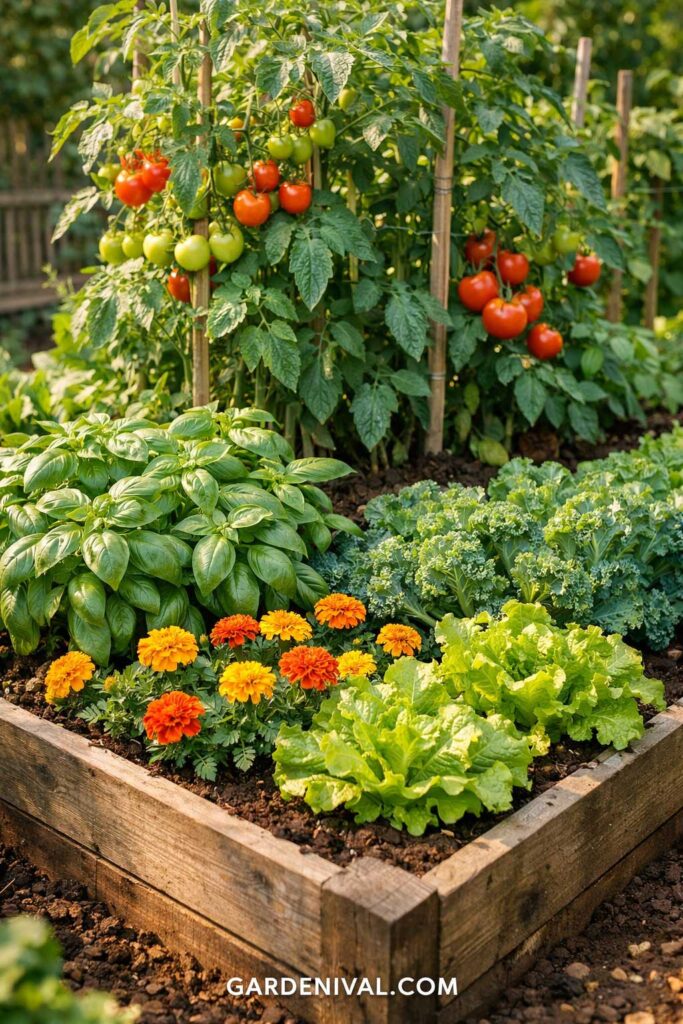
Companion Planting Vegetable Garden Layout
Companion Planting Combos That Naturally Control Garden Pests
1. Tomatoes and Basil
One of the most famous companion planting combinations is tomatoes and basil.
Gardeners have used this pairing for generations because basil helps repel several insects that commonly attack tomato plants.
The strong scent produced by basil can confuse pests such as:
- aphids
- whiteflies
- tomato hornworms
When basil grows close to tomatoes, it masks the scent that pests use to locate tomato plants.
Another benefit is that basil may improve tomato growth and flavor.
This combination is extremely popular in companion planting vegetables because both plants thrive in similar growing conditions.
They both require:
- warm temperatures
- full sunlight
- well draining soil
For best results, plant basil around the base of tomato plants in your garden bed.

Tomatoes and Basil Companion Planting
2. Carrots and Onions
Carrots and onions are another powerful companion planting pair.
These plants help each other by confusing pests that rely on scent to find their host plants.
Carrot flies are attracted to the smell of carrots, while onion flies are attracted to onions.
When both crops grow together, the strong scent of onions helps mask the smell of carrots, making it harder for pests to locate their target.
This method is known as pest confusion planting.
Benefits include:
- reduced carrot fly damage
- improved garden diversity
- efficient use of garden space
Carrots and onions also grow well together because they occupy different root depths in the soil.

Carrots and Onions Companion Garden
3. Cabbage and Dill
Cabbage plants are often attacked by cabbage worms and cabbage moths.
However, planting dill near cabbage can help reduce this problem.
Dill attracts beneficial insects such as parasitic wasps. These tiny insects prey on cabbage worms and help control their population naturally.
This is a great example of how beneficial companion plants work in organic gardening.
Advantages include:
- natural pest control
- improved garden biodiversity
- healthier cabbage crops
Dill also attracts pollinators that benefit many other plants in the garden.

Cabbage and Dill Companion Plants
4. Cucumbers and Nasturtiums
Nasturtiums are often called a trap crop in companion planting.
A trap crop attracts pests away from your main vegetables, protecting the plants you want to harvest.
When planted near cucumbers, nasturtiums attract pests such as:
- aphids
- cucumber beetles
These insects prefer the nasturtium plants, leaving cucumber vines safer.
Nasturtiums also add beautiful color to the garden while supporting beneficial insects.
This makes them one of the best flowers that repel bugs in gardens.

Cucumbers and Nasturtiums Companion Garden
Product Recommendations
While companion planting is one of the best natural pest control methods, many gardeners combine it with a few helpful tools to improve results. These tools help gardeners understand plant combinations and manage pests without using harsh chemicals.
Two useful resources for organic gardeners are a companion planting guide book and organic neem oil spray.
1. Companion Planting Vegetable Garden Guidebook
Learning which plants grow well together can dramatically improve the health of your vegetable garden.
A companion planting guide book explains the relationships between vegetables, herbs, and flowers so you can design your garden more effectively.
These books often include:
- companion planting charts
- vegetable pairing guides
- pest prevention strategies
- garden layout ideas
One of the most popular companion planting books is Carrots Love Tomatoes, which explains how plant combinations can naturally improve plant growth and reduce pest problems.
Why this book is useful
- helps beginners understand plant relationships
- provides easy companion planting charts
- teaches organic pest control techniques
Best For
- beginner gardeners
- organic gardening enthusiasts
- vegetable garden planning
2. Neem Oil Organic Pest Control Spray
Neem oil is a natural plant based pesticide widely used in organic gardening.
It is extracted from the neem tree and helps control many common garden pests without harming beneficial insects when used properly.
Neem oil works well against pests such as:
- aphids
- whiteflies
- spider mites
- beetles
Many gardeners combine companion planting for pest control with occasional neem oil treatments for stronger protection.
Why neem oil works well
- plant based organic pesticide
- safe for organic gardens
- controls multiple insect pests
Best For
- vegetable gardens
- organic pest control
- protecting plants from insects
More Companion Planting Combinations
5. Lettuce and Chives
Lettuce plants are often attacked by aphids, which can quickly damage the leaves.
Planting chives near lettuce can help reduce this problem.
Chives produce a mild onion scent that repels aphids and other insects that feed on leafy vegetables.
Advantages of this combination include:
- natural aphid control
- improved garden diversity
- compact companion planting pair
This pairing works particularly well in small vegetable garden beds and container gardens.

Lettuce and Chives Companion Planting
6. Beans and Marigolds
Marigolds are famous for their pest repelling properties.
Their roots release natural chemicals that help repel soil pests such as nematodes.
When planted near beans or other vegetables, marigolds create a protective environment in the soil.
Benefits of marigolds include:
- natural soil pest control
- attracts beneficial insects
- bright decorative flowers
Because of these advantages, marigolds are often recommended in organic vegetable garden pest control methods.
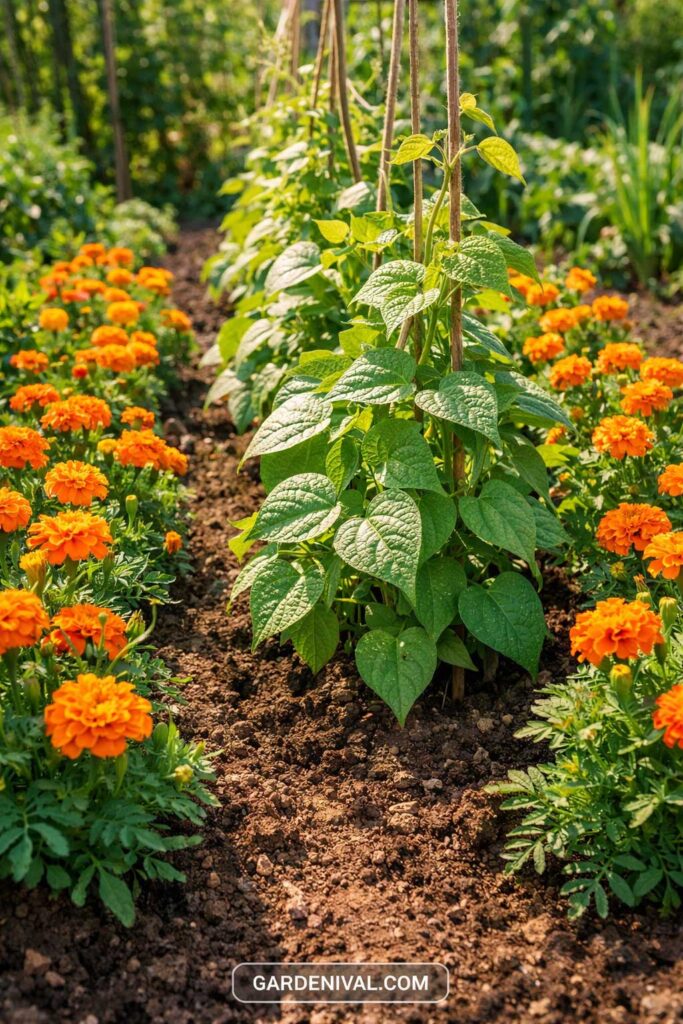
Beans and Marigolds Companion Garden
7. Roses and Lavender
Lavender is well known for its strong fragrance, which helps repel insects.
When planted near roses, lavender helps deter pests such as aphids and beetles that often attack rose bushes.
Lavender also attracts beneficial pollinators such as bees and butterflies.
Advantages include:
- natural insect repellent
- improved pollination
- beautiful garden fragrance
This combination is ideal for flower gardens and decorative landscapes.

Roses and Lavender Garden
8. Tomatoes and Marigolds
Tomatoes and marigolds are another classic companion planting combination.
Marigolds help repel whiteflies and nematodes that often damage tomato plants.
Their strong scent confuses insects and discourages them from settling near tomato crops.
Many organic gardeners plant marigolds around the edges of tomato beds to create a natural pest barrier.
Benefits include:
- reduced insect damage
- improved soil protection
- attractive garden flowers
This combination is widely recommended in vegetable companion planting guides.

Tomatoes and Marigolds Garden
9. Peppers and Basil
Peppers benefit greatly from basil planted nearby.
Just like with tomatoes, basil helps repel insects that attack pepper plants.
It can deter pests such as:
- thrips
- aphids
- spider mites
This pairing also works well because both plants enjoy warm conditions and similar watering schedules.
Benefits include:
- improved pest protection
- easy companion planting combination
- ideal for container gardening
Peppers and basil are perfect companions for small urban vegetable gardens.

Peppers and Basil Companion Garden
Companion Planting Tips for Pest Control
| Tip | Why It Works |
|---|---|
| Plant herbs near vegetables | Strong scents repel insects |
| Mix flowers with vegetables | Attract beneficial insects |
| Use diverse plant combinations | Reduces pest outbreaks |
| Rotate crops each season | Prevents pest buildup |
| Maintain healthy soil | Strong plants resist pests |
These simple practices can significantly improve organic pest control in vegetable gardens.
FAQs
What is companion planting and how does it help control pests
Companion planting is the practice of growing certain plants together so they protect each other from pests or improve growth.
Which plants repel pests in vegetable gardens
Plants such as marigolds, basil, lavender, rosemary, and mint are commonly used to repel insects.
Does companion planting really keep insects away
Yes. Many plants produce scents or chemicals that repel pests or attract beneficial insects.
What herbs repel pests naturally in gardens
Herbs such as basil, mint, rosemary, and chives are known for repelling insects.
Can companion planting replace pesticides
Companion planting can significantly reduce pest problems, but sometimes additional natural pest control methods are still helpful.
Which companion plants repel aphids
Plants such as chives, marigolds, and lavender help repel aphids.
What are the easiest companion plants for beginners
Basil, marigolds, nasturtiums, and dill are some of the easiest companion plants for beginner gardeners.
Conclusion
Companion planting is one of the most effective and natural ways to control pests in a garden.
By pairing vegetables with herbs and flowers that repel insects or attract beneficial predators, gardeners can create a balanced ecosystem that protects crops naturally.
Combinations such as tomatoes and basil, cucumbers and nasturtiums, and beans with marigolds show how powerful plant partnerships can be.
With thoughtful planning, companion planting can help you grow healthier vegetables while reducing the need for chemical pesticides.