 Posted by
 You water. You fertilize. You wait.
And still… your vegetable garden underperforms.
If you have ever looked at your plants and thought, why am I not getting more food from this space, you are asking the exact right question.
Because here is the truth most beginners miss. High yield vegetable gardening is rarely about working harder. It is about working smarter. Small changes in soil, spacing, timing, and structure can dramatically increase vegetable garden yield without expanding your garden at all.
In this guide, I will walk you through five simple fixes that consistently boost vegetable garden harvest. These are practical, research-backed strategies that home gardeners use to maximize vegetable garden production in both small beds and larger backyard plots.
By the end, you will know exactly how to grow more vegetables using smarter systems, not guesswork.
Why Most Vegetable Gardens Underproduce
Before we fix anything, we need to diagnose the problem.
Low production usually comes down to one or more of these hidden issues:
- Poor soil structure
- Incorrect plant spacing
- Inconsistent watering
- Nutrient imbalance
- Lack of succession planting
- Short growing window
The good news is that every one of these can be corrected.
And the five fixes below directly target the biggest yield killers.
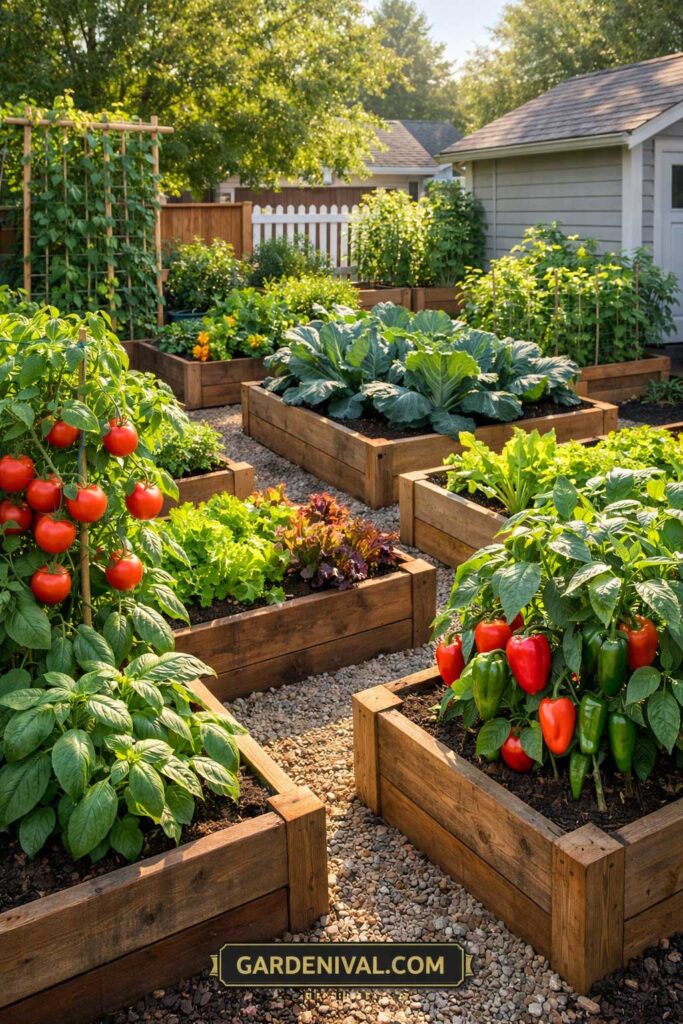
Productive Backyard Vegetable Garden Overview
Fix 1 – Upgrade Your Soil Before Anything Else
If you only do one thing to improve vegetable garden yield, do this.
Soil is the engine of your garden. Weak soil equals weak harvests.
Signs Your Soil Is Limiting Production
- Plants look pale or stunted
- Water sits on the surface
- Soil feels hard or dusty
- Yields decline each season
Most gardeners try to fix poor growth with more fertilizer. That is like putting premium gas into a clogged engine.
You need structure first.
Soil Preparation for Vegetable Garden Success
To increase garden harvest naturally, focus on these fundamentals:
Add organic matter yearly
- Finished compost
- Aged manure
- Leaf mold
- Worm castings
Improve soil texture
| Soil Type | Problem | Simple Fix |
|---|---|---|
| Clay | Poor drainage | Add compost and coarse organic matter |
| Sandy | Dries too fast | Add compost and mulch |
| Compacted | Roots struggle | Loosen and amend deeply |
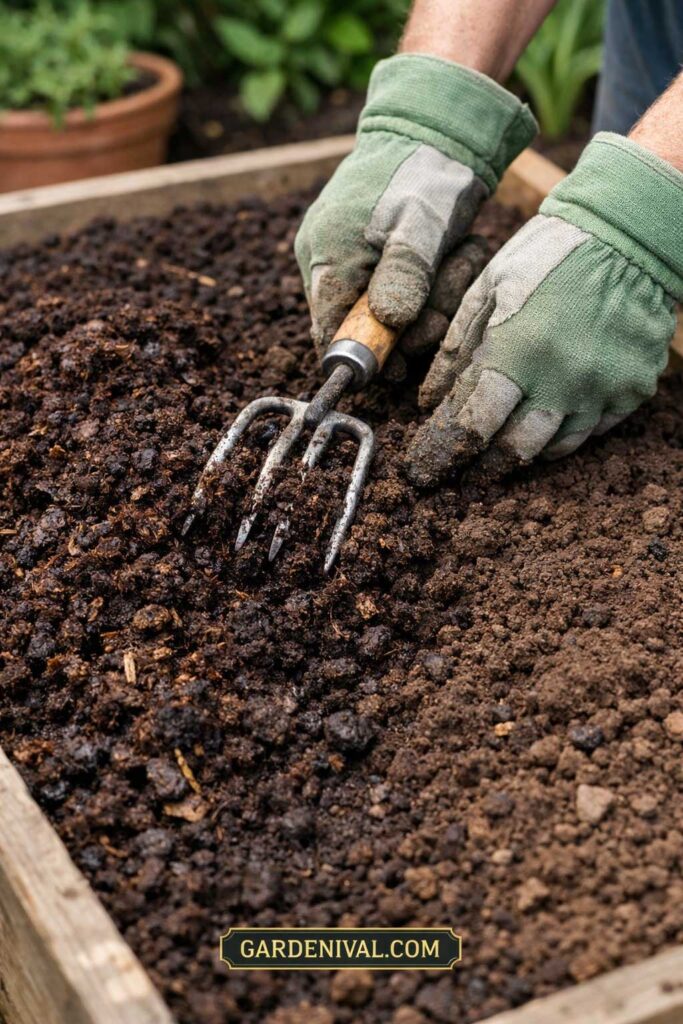
Amending Vegetable Garden Soil
Healthy soil alone can boost vegetable garden harvest by a surprising margin.
Fix 2 – Space Plants for Maximum Yield Not Maximum Quantity
This is one of the most common beginner mistakes.
People pack plants too tightly thinking more plants equal more food.
Often the opposite happens.
Overcrowding leads to:
- Poor airflow
- Increased disease
- Smaller fruits
- Nutrient competition
- Lower overall yield
Spacing Plants for Maximum Yield
High yield vegetable gardening focuses on productive spacing, not dense spacing.
Here is a quick reference:
| Crop | Common Mistake | Better Spacing |
|---|---|---|
| Tomatoes | 12 inches | 18 to 24 inches |
| Peppers | 8 inches | 12 to 18 inches |
| Zucchini | Crowded hills | 24 to 36 inches |
| Lettuce | Random scatter | 8 to 10 inches |
When plants have room, roots expand and production increases.
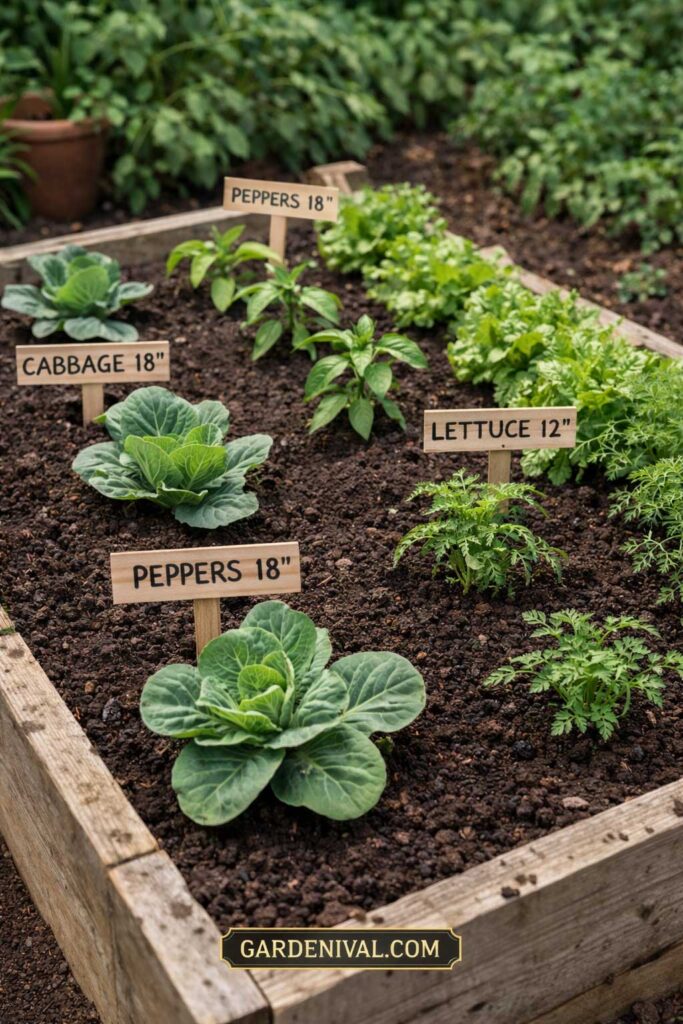
Proper Vegetable Plant Spacing
Fix 3 – Follow a Smart Watering Schedule
Watering is where many gardens quietly lose productivity.
Too little water stresses plants. Too much suffocates roots.
Watering Schedule for Vegetable Gardens
Instead of frequent shallow watering, aim for deep, consistent moisture.
General rule
- Most vegetables need about 1 to 1.5 inches of water per week
- Water deeply 2 to 3 times weekly
- Adjust for heat and soil type
Signs Your Watering Needs Adjustment
Underwatering:
- Wilting midday that does not recover
- Small fruit size
- Bitter leafy greens
Overwatering:
- Yellowing leaves
- Mushy stems
- Slow growth despite moist soil
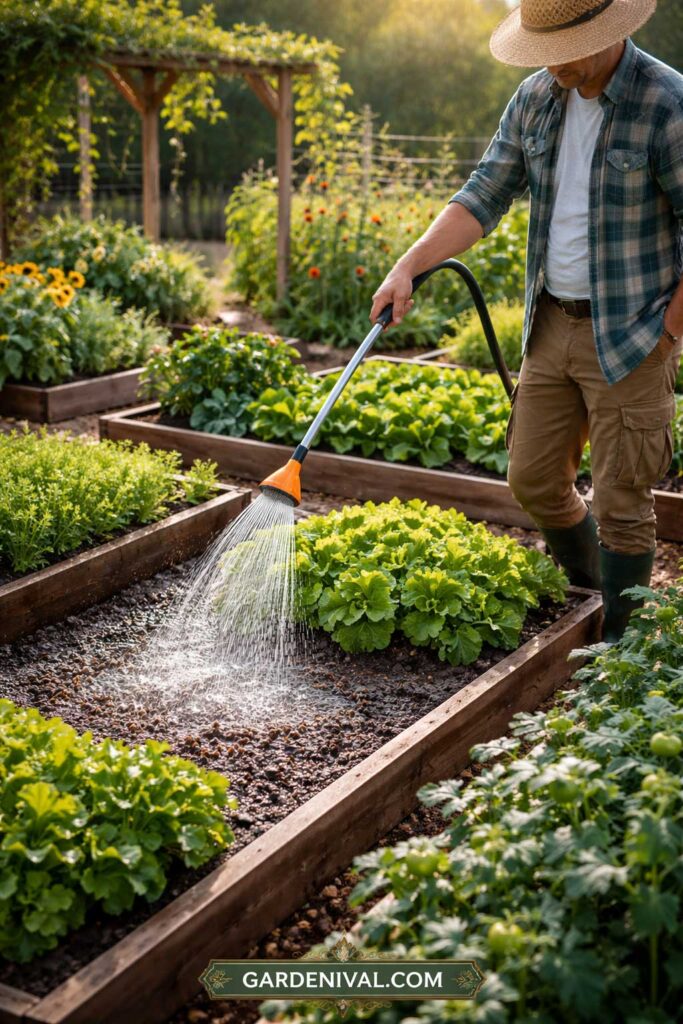
Deep Watering Vegetable Garden Beds
Consistent moisture is one of the fastest ways to maximize vegetable garden production.
Fix 4 – Use Succession Planting for Continuous Harvest
If your garden produces heavily once and then slows down, this fix is for you.
Succession planting for continuous harvest keeps beds productive all season.
Instead of planting everything once, you stagger planting dates.
How Succession Planting Works
Example with bush beans:
- First planting early spring
- Second planting three weeks later
- Third planting mid summer
Now your harvest window triples.
Crops Perfect for Succession Planting
- Lettuce
- Radishes
- Beans
- Beets
- Spinach
- Carrots
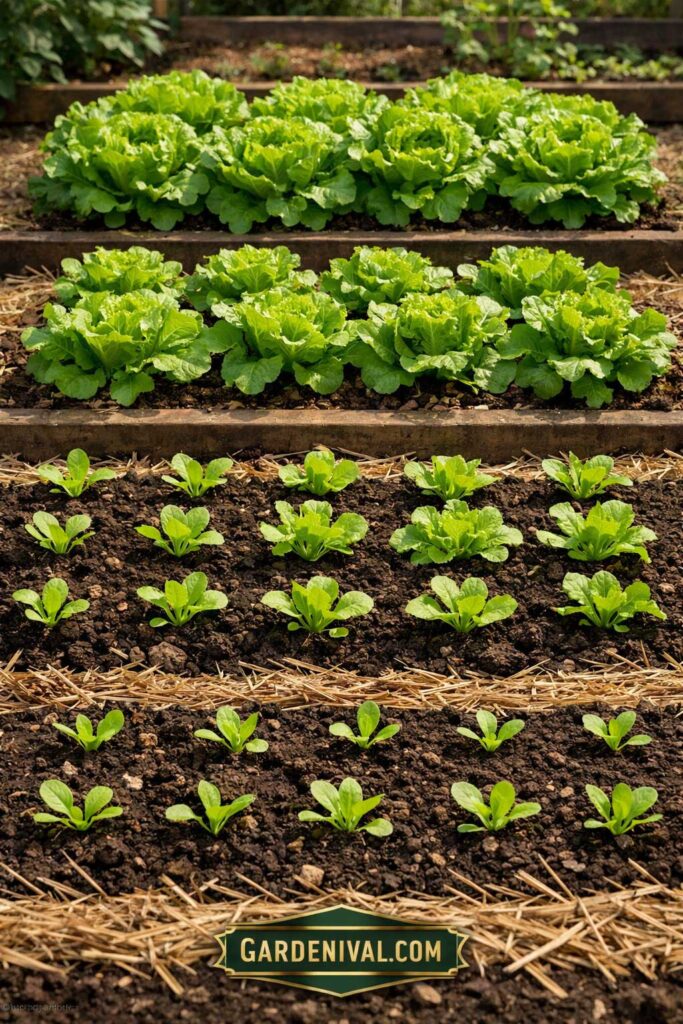
Succession Planting Growth Stages
This is one of the most powerful organic ways to increase garden yield.
Fix 5 – Extend Your Growing Season
Want a bigger harvest without a bigger garden?
Grow longer.
Extending the season is how experienced gardeners quietly boost vegetable garden productivity.
Simple Season Extension Tools
- Floating row covers
- Low tunnels
- Cold frames
- Mulch layers
- Raised beds
Raised bed gardening yield benefits are especially noticeable in spring because soil warms earlier.
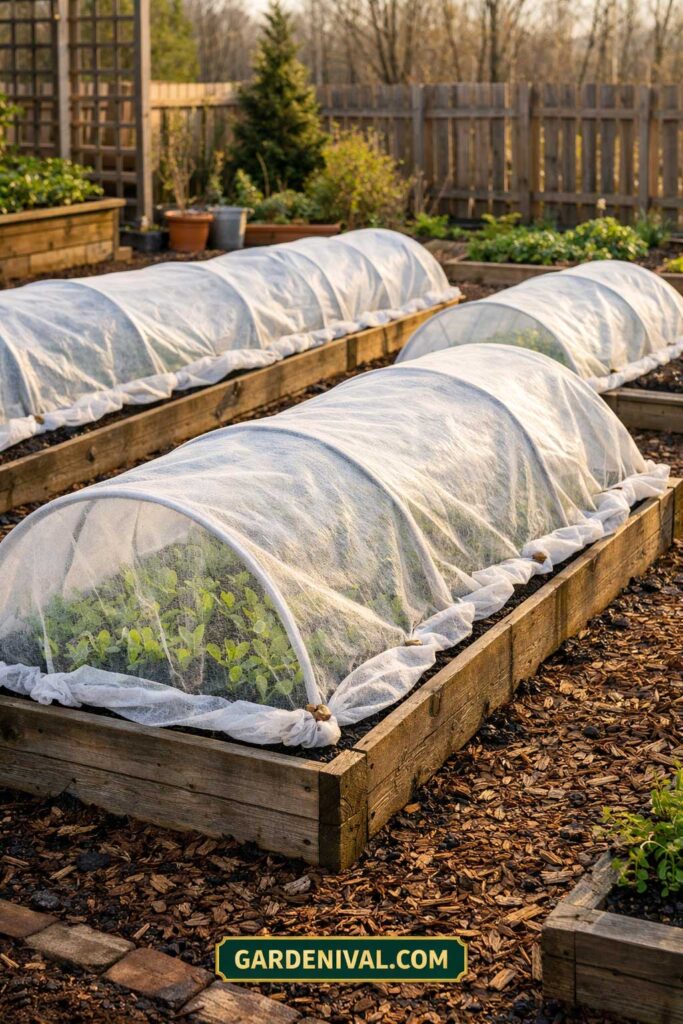
Season Extension with Low Tunnel
Choosing the Best Fertilizer for Higher Vegetable Yield
Once your soil structure is solid, nutrition becomes the next lever.
But here is where many gardeners accidentally reduce production. They overfeed nitrogen and end up with beautiful leaves and very few vegetables.
To truly increase vegetable garden yield, your feeding strategy must match plant growth stages.
Understanding the NPK Balance
- Nitrogen supports leafy growth
- Phosphorus supports roots and flowers
- Potassium supports fruit development
For example, tomatoes that get too much nitrogen grow huge plants with disappointing harvests.
Smart Fertilizing Timeline
| Growth Stage | What Plants Need | Recommended Approach |
|---|---|---|
| Early growth | Balanced nutrients | Compost or balanced organic fertilizer |
| Flowering | More phosphorus | Bloom booster fertilizer |
| Fruiting | Higher potassium | Tomato or fruiting blend |
When should you fertilize vegetables during the growing season
- Light feeding at planting
- Side dress mid season
- Liquid feed during heavy production
This schedule helps maximize vegetable garden production without overloading the soil.
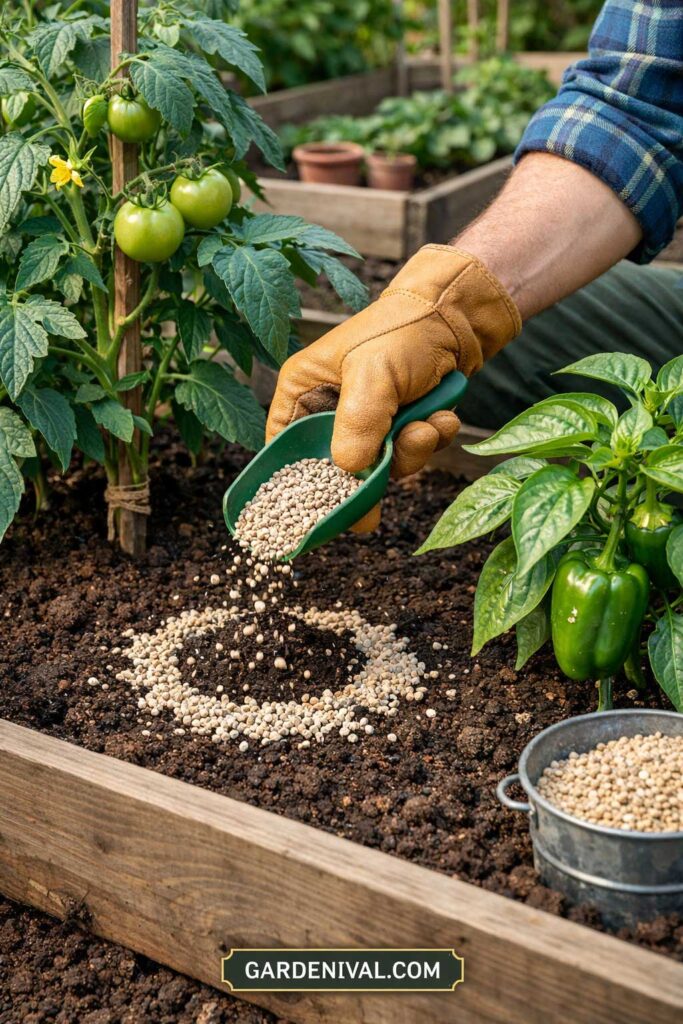
Fertilizing Vegetable Garden Properly
Companion Planting for Better Harvest
Does companion planting really improve vegetable yield
Short answer. Yes when done correctly.
Companion planting works by:
- Attracting beneficial insects
- Repelling pests
- Improving pollination
- Maximizing space
Proven Companion Pairings
| Main Crop | Helpful Companion | Benefit |
|---|---|---|
| Tomatoes | Basil | Pest reduction and growth boost |
| Carrots | Onions | Repels carrot flies |
| Cucumbers | Nasturtiums | Attracts pollinators |
| Cabbage | Dill | Attracts beneficial insects |
Companion planting for better harvest is not magic, but it consistently supports healthier, more productive plants.
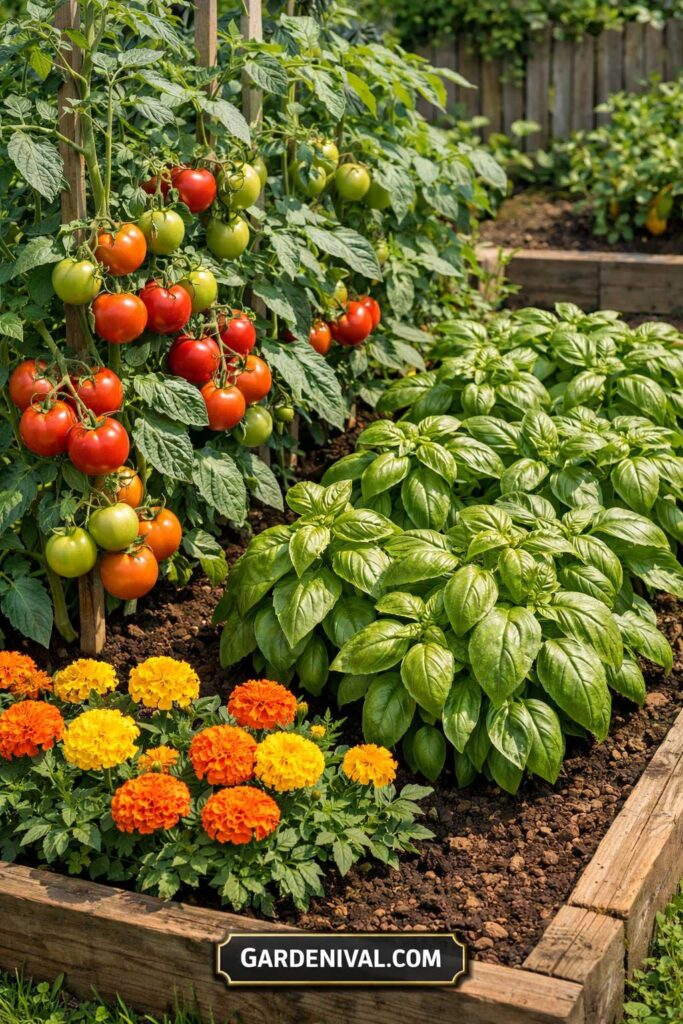
Companion Planting Vegetable Bed
Pruning Techniques That Increase Production
Does pruning vegetable plants increase production
For many crops, absolutely.
Strategic pruning directs energy toward fruit instead of excess foliage.
Crops That Benefit Most from Pruning
- Indeterminate tomatoes
- Peppers
- Cucumbers on trellis
- Zucchini leaf thinning
Basic Tomato Pruning Rule
Remove suckers growing between the main stem and branches on indeterminate varieties. This improves airflow and fruit size.
However, do not over prune. Plants still need leaves to fuel growth.
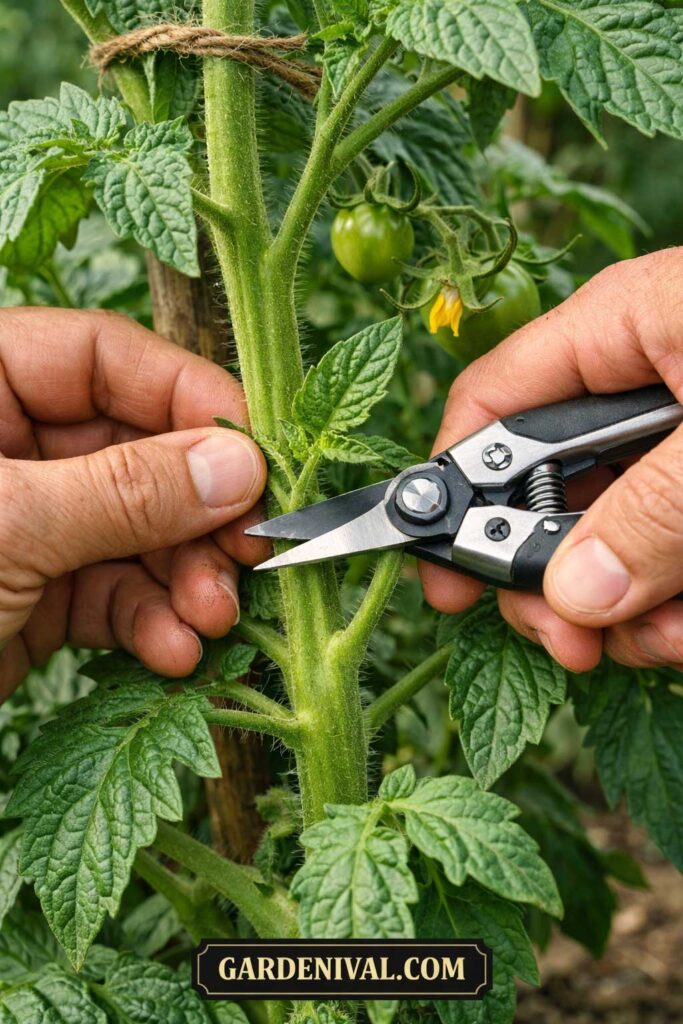
Pruning Tomato Suckers
High Yield Crops for Home Gardens
If your goal is to get bigger harvest from garden space, crop choice matters.
Some vegetables simply produce more per square foot.
Reliable High Yield Crops
- Pole beans
- Cherry tomatoes
- Zucchini
- Leaf lettuce
- Swiss chard
- Cucumbers
- Peppers
Best Choices for Small Spaces
| Crop | Why It Performs Well |
|---|---|
| Pole beans | Vertical growth saves space |
| Leaf lettuce | Cut and come again harvest |
| Cherry tomatoes | Heavy continuous production |
| Swiss chard | Long harvest window |
Choosing the right plants is one of the smartest vegetable garden productivity tips beginners overlook.
Container Vegetable Gardening High Yield Tips
You can absolutely increase vegetable yield in small garden spaces and containers.
The key is precision.
Container Rules for Maximum Production
- Use containers at least 12 inches deep
- Use high quality potting mix
- Feed more frequently than in-ground beds
- Water consistently
- Choose compact high yield varieties
Containers dry faster and lose nutrients quicker, so attention to detail matters more.
Top Product Recommendations That Boost Garden Yield
1. Modular Raised Garden Bed Kit
Why this works
Raised beds improve drainage, warm soil earlier, and give you full control over soil quality. All three factors directly boost vegetable garden harvest.
Recommended specs
- Cedar or galvanized steel
- Minimum 12 inch soil depth
- Modular 4 by 4 or 4 by 8 layout
- Open bottom design
Best for
Gardeners who want to maximize vegetable production in limited backyard space.
2. Digital Soil Test Kit and pH Meter
Why this works
Soil imbalance is the hidden reason many gardens underperform. Testing allows precise corrections that improve plant uptake and yield.
Recommended features
- Digital pH and moisture meter
- NPK nutrient testing
- Fast probe readings
- Optional lab test support
Best for
Gardeners who want data driven fertilizing and consistent results.
Frequently Asked Questions About Increasing Vegetable Garden Yield
How can I increase the yield of my vegetable garden naturally
Focus on improving soil with compost, spacing plants properly, watering deeply, and using succession planting.
What causes low vegetable garden production
The most common causes are poor soil health, overcrowding, inconsistent watering, and nutrient imbalance.
Which fertilizers help vegetables produce more
Balanced organic fertilizers early in the season followed by phosphorus and potassium focused feeds during flowering and fruiting work best.
How often should I water for maximum vegetable yield
Most gardens need about one to one and a half inches of water weekly, applied deeply rather than frequently.
Does raised bed gardening increase yield
Yes. Raised beds improve drainage, soil warmth, and root growth which often leads to earlier and larger harvests.
How do I space plants for maximum production
Follow recommended spacing on seed packets and avoid overcrowding. Proper airflow and root room increase overall productivity.
How can I extend the growing season for bigger harvests
Use row covers, low tunnels, mulch, and raised beds to start earlier in spring and grow later into fall.
Conclusion
If your vegetable garden has been underperforming, do not rush to plant more.
Instead, optimize what you already have.
When you:
- Build rich living soil
- Space plants correctly
- Water deeply and consistently
- Feed at the right time
- Use succession planting
- Extend your season
You transform average beds into high yield vegetable gardening systems.
The difference is rarely luck. It is usually structure.
Start with one fix this week. Then stack the others. By mid season, you will likely notice stronger growth, healthier plants, and a noticeably bigger harvest.
Your garden already has the potential.
Now you know how to unlock it.