
 Posted by
 If you think you need a big backyard to grow a beautiful, productive garden, let me stop you right there.
Some of the most impressive gardens I have ever seen were tucked into tiny balconies, narrow patios, and even sunny apartment windows. The secret was never space. It was strategy.
Container gardening tips for small spaces are exploding in popularity right now, especially among young professionals and apartment dwellers who want fresh herbs, vegetables, and greenery without a traditional yard. And honestly, once you understand how small space container gardening works, you start to realize how much potential is hiding in even the smallest corner.
In this guide, I will walk you through seven smart, practical strategies that can completely transform your tiny garden. We will cover how to start container gardening in small spaces, the best containers for small space gardening, watering and soil mistakes to avoid, and how to maximize yield even on a compact balcony.
Whether you are working with a small patio, apartment balcony, or just a sunny doorstep, these tips will help you build a container garden that looks stylish and performs like a pro setup.
Why Container Gardening Works So Well in Small Spaces
Before we jump into the tips, let’s quickly understand why container vegetable gardening is such a powerful solution.
Unlike traditional in ground beds, containers give you:
- Full control over soil quality
- Flexible placement for sunlight
- Better drainage management
- Easy mobility for seasonal changes
- Perfect fit for renters and apartments
Urban container gardening is basically gardening on your terms.
And when done right, it can produce surprisingly high yields from very little space.

Small Balcony Container Garden Setup
Tip 1 – Choose the Right Container Size First
If there is one mistake beginners make in container gardening for apartments, it is choosing containers that are too small.
Small pots dry out fast. Roots get cramped. Plants struggle.
What Size Containers Work Best
Here is a simple quick guide.
| Plant Type | Minimum Depth | Recommended Size |
|---|---|---|
| Herbs | 6 to 8 inches | Small pots |
| Leafy greens | 8 to 10 inches | Medium containers |
| Peppers | 10 to 12 inches | Large pots |
| Tomatoes | 12 to 18 inches | Extra large containers |
| Root vegetables | 10 to 14 inches | Deep containers |
If you want high yield container gardening tips that actually work, start with adequate root space.
How Deep Should Containers Be for Vegetables
Most vegetables perform best in containers at least 12 inches deep. Larger is almost always better in small space gardening ideas because it stabilizes moisture and nutrients.

Proper Container Sizes for Vegetables
Tip 2 – Use a High-Quality Container Gardening Soil Mix
Garden soil from your yard is not the right choice for containers.
It compacts. It drains poorly. And it can introduce pests.
Instead, you need a light, airy container gardening soil mix recipe that holds moisture but still drains well.
Ideal Container Soil Formula
A strong beginner container garden setup usually includes:
- High quality potting mix
- Compost for nutrients
- Perlite or vermiculite for aeration
- Optional coco coir for moisture balance
What Soil Is Best for Container Gardening
Look for potting mixes labeled for:
- Vegetable containers
- Raised beds
- Moisture control
Avoid heavy garden soil.
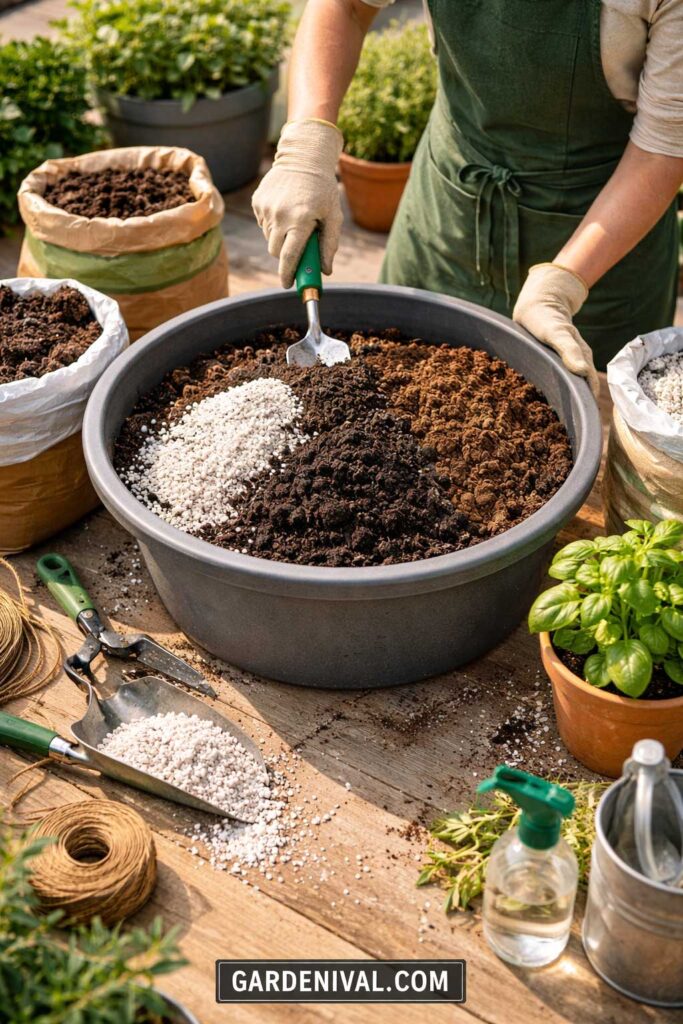
Mixing Container Potting Soil
Tip 3 – Master the Watering Schedule for Container Plants
Container plants dry out faster than in ground gardens. This is the number one reason beginners struggle.
How Often Should You Water Container Plants in Hot Weather
In warm conditions:
- Small pots may need daily watering
- Medium containers every one to two days
- Large containers every two to three days
But instead of guessing, check the soil.
Finger test
Stick your finger one inch into the soil.
- Dry = water
- Moist = wait
How to Prevent Container Plants from Drying Out
Smart balcony container gardening includes:
- Mulching the soil surface
- Using larger containers
- Grouping pots together
- Using self watering planters

Watering Container Plants Properly
Tip 4 – Maximize Vertical Space Like A Pro
When space is limited, think upward.
Vertical container gardening tips can double or even triple your growing area without expanding your footprint.
Smart Vertical Ideas
- Wall mounted planters
- Railing boxes
- Stackable containers
- Trellised tomatoes or cucumbers
- Hanging herb baskets
Small balcony vegetable garden ideas perform best when vertical layers are used strategically.

Vertical Container Garden Wall
Tip 5 – Choose High Yield Plants for Containers
Not all vegetables perform equally in containers.
If your goal is to maximize yield in container gardening, choose compact but productive crops.
Best Vegetables for Container Gardening
Top performers include:
- Cherry tomatoes
- Bush beans
- Leaf lettuce
- Spinach
- Peppers
- Green onions
- Compact cucumbers
- Swiss chard
These give the highest return per square foot.

High Yield Container Vegetable Garden
Tip 6 – Avoid the Most Common Container Gardening Mistakes
If you want your small space container gardening to actually thrive, you have to sidestep a few classic beginner mistakes. I have seen beautiful setups fail simply because of one small oversight.
Biggest Container Gardening Mistakes to Avoid
Using containers without drainage holes
Do containers need drainage holes? Absolutely yes. Without proper drainage, water sits at the bottom, roots suffocate, and plants decline quickly.
Choosing decorative but impractical pots
Pretty is nice. Functional is necessary. Always prioritize depth, drainage, and material over looks alone.
Overcrowding plants
Just like in ground beds, containers need breathing room. Too many plants in one pot reduces airflow and nutrients per plant.
Inconsistent watering
Container plants live in a controlled environment. They depend completely on you. Irregular watering is one of the fastest ways to reduce growth.
Ignoring sunlight patterns
Container gardening for apartments only works if your plants receive enough light. Most vegetables need:
- 6 to 8 hours of direct sun
- Herbs can tolerate slightly less
- Leafy greens can manage partial sun
Understanding your light conditions is one of the smartest container gardening tips for small spaces.
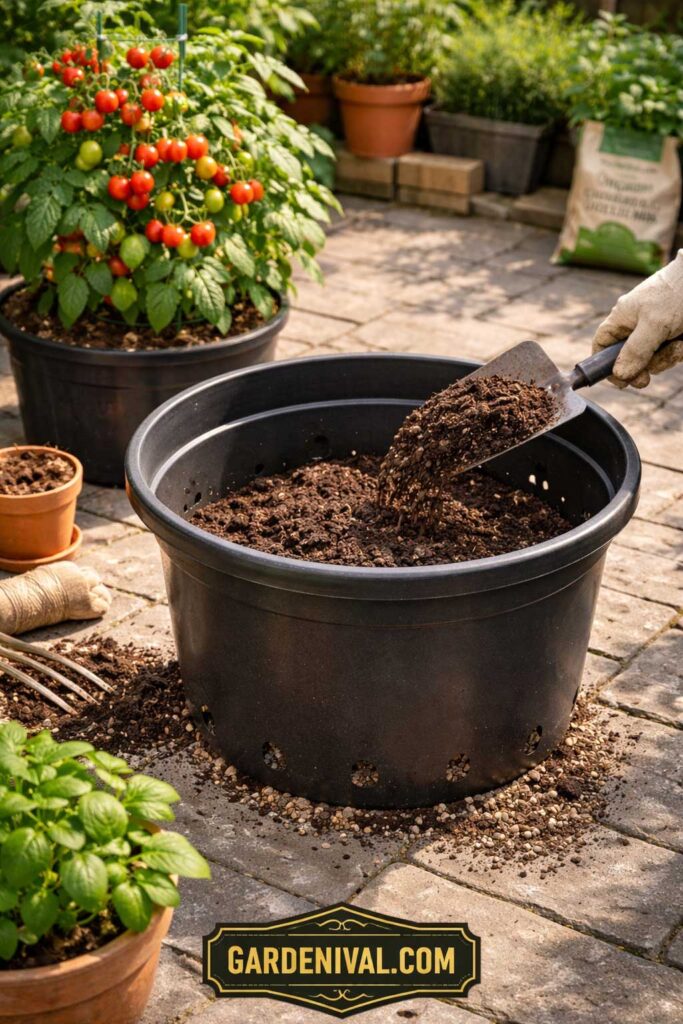
Proper Container Drainage Setup
Tip 7 – Feed Container Plants the Right Way
Containers run out of nutrients faster than garden beds. That means fertilizing is not optional if you want strong growth and high yields.
How to Fertilize Container Plants Properly
A simple schedule works best.
At planting
- Mix slow release fertilizer into the soil
Every 2 to 3 weeks
- Apply liquid fertilizer at half strength
During heavy fruiting
- Increase feeding slightly for tomatoes and peppers
Signs Your Containers Need Feeding
- Pale leaves
- Slow growth
- Small fruits
- Weak flowering
A consistent feeding routine is one of the most overlooked high yield container gardening tips.

Feeding Container Plants
Smart Container Gardening Layout for Small Patios
Layout is where design meets productivity.
A thoughtful container gardening layout for small patio spaces makes maintenance easier and increases growing capacity.
Simple Layout Strategy
- Tall plants at the back
- Medium containers in the middle
- Low herbs and greens in front
- Vertical structures on walls or railings
- Leave walking space clear
This layered approach creates both visual appeal and functional efficiency.
Space Saving Garden Container Ideas
- Corner tiered plant stands
- Railing planters
- Hanging baskets
- Stackable vertical towers
- Narrow rolling plant carts
Even the smallest patio can support a productive urban container gardening setup when layout is intentional.

Small Patio Container Garden Layout
Indoor Container Gardening Tips for Year-Round Greenery
Not every small space has outdoor access. The good news is indoor container gardening tips can keep your green habit alive year round.
Best Indoor Plants for Containers
- Herbs like basil and mint
- Leaf lettuce
- Microgreens
- Compact peppers
- Pothos and leafy houseplants
Indoor Success Rules
- Place near south or west facing windows
- Rotate plants weekly
- Use grow lights if sunlight is limited
- Avoid overwatering indoors
- Maintain airflow
Indoor container gardening for renters is becoming one of the fastest growing urban gardening trends.

Indoor Container Herb Garden
Top Product Recommendations for Small Space Container Gardening
1. Modular Self Watering Planter Box
Why this works
Container plants dry out quickly, especially in hot weather. Self watering planters maintain steady moisture and reduce daily maintenance.
Key benefits
- Consistent moisture control
- Reduces watering frequency
- Prevents root stress
- Ideal for balconies and patios
- Beginner friendly
Recommended features
- Built in reservoir
- Overflow protection
- UV resistant material
- 10 to 14 inch depth
- Lightweight design for apartments
Best for
Busy apartment gardeners and beginners who want reliable watering.
2. Fabric Grow Bags for Vegetables
Why this works
Fabric grow bags improve root aeration and prevent waterlogging, making them perfect for container vegetable gardening in tight spaces.
Key benefits
- Excellent drainage
- Healthier root systems
- Lightweight and portable
- Space efficient
- Budget friendly
Recommended specs
- Thick non woven fabric
- Reinforced handles
- 5 to 10 gallon size
- UV resistant stitching
- Wide stable base
Best for
Small balcony vegetable garden setups and renters needing flexible containers.
Frequently Asked Questions About Container Gardening for Small Spaces
What are the best container gardening tips for small spaces
Use appropriately sized containers, quality potting mix, consistent watering, vertical space, and high yield plants.
What vegetables grow best in containers in small spaces
Cherry tomatoes, peppers, lettuce, spinach, bush beans, and herbs perform exceptionally well in containers.
How often should I water container plants in hot weather
Check daily. Most containers need watering when the top inch of soil feels dry.
What size containers are best for small space gardening
Most vegetables perform best in containers at least 12 inches deep.
Can I grow a full vegetable garden in containers
Yes. With proper planning, sunlight, and feeding, containers can produce a surprisingly productive garden.
What soil is best for container gardening
Use a lightweight potting mix blended with compost and perlite for best drainage and nutrient balance.
Can I do vertical container gardening on a balcony
Absolutely. Vertical planters, railing boxes, and trellises are ideal for maximizing small balcony space.
Conclusion
Here is the truth.
You do not need a large yard to grow something beautiful and productive. With the right container gardening tips for small spaces, even the smallest balcony or patio can become a thriving green retreat.
When you:
- Choose the right container sizes
- Use quality soil
- Water consistently
- Grow vertically
- Select high yield plants
- Feed regularly
- Avoid beginner mistakes
Your tiny garden starts performing like a much larger one.
Start small. Observe your light. Adjust as you go. Container gardening rewards attention and consistency more than square footage.
And once you see that first healthy harvest from a simple pot, you will never look at small spaces the same way again.