
 Posted by
 Introduction
Let’s be honest. Most vegetable gardens look practical but not always beautiful. Rows of soil, plastic pots, and random layouts rarely match the cozy aesthetic many people want in modern homes. But something interesting is happening right now. Gardeners and designers are blending decorative landscaping with edible plants, creating small garden corners that feel intentional, stylish, and productive at the same time.
That idea is called foodscaping. Instead of separating flowers and vegetables, you mix them. Instead of hiding herbs in the backyard, you design a curated edible corner that feels like part of your home’s decor.
If you live in a small house, apartment patio, or balcony, aesthetic edible garden corners can completely change how your space looks and feels. You get fresh food, calming greenery, and a space that actually looks designed rather than improvised.
In this guide, I will walk you through 10 aesthetic edible garden corners that work beautifully in small homes. You will learn layout ideas, plant combinations, styling tips, and real strategies that make edible spaces look modern and organized.
Why Aesthetic Edible Garden Corners Are Trending
Before jumping into layouts, let’s understand why this trend is exploding right now.
People are moving away from large traditional vegetable patches. Instead, they want compact areas that feel curated. Designers now treat herbs and vegetables like decorative plants because many edible varieties already have stunning shapes, textures, and colors.
Think about it:
- Purple basil looks like a designer accent plant
- Swiss chard adds bold color like ornamental foliage
- Strawberries spilling from containers feel like living decor
When you combine these with clean containers, layered heights, and soft lighting, the result is both functional and beautiful.
What Makes an Edible Garden Corner Feel Aesthetic
| Element | Why It Matters |
|---|---|
| Layered Heights | Adds depth and visual structure |
| Neutral Containers | Keeps the space modern |
| Mixed Textures | Prevents the garden from looking messy |
| Intentional Spacing | Creates a calm and organized vibe |
| Edible Flowers | Adds color without sacrificing function |
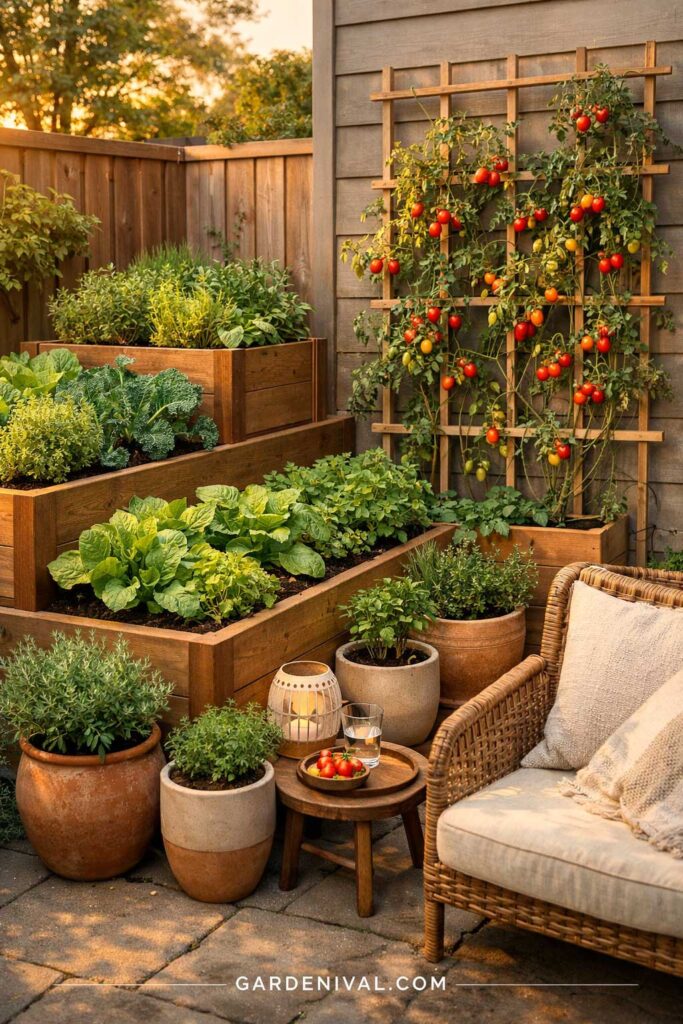
Minimal edible garden corner
Idea 1 – Minimalist Herb Wall Corner
If you have very limited space, a vertical herb wall is one of the easiest ways to start.
Instead of spreading plants across the floor, use wall mounted planters or stacked containers. Basil, thyme, mint, parsley, and oregano grow beautifully in vertical setups.
I like this idea because it instantly makes a garden feel organized. Vertical lines naturally look modern and intentional.
Design tips
- Keep pots neutral like beige or stone colors
- Space herbs evenly so the wall feels clean
- Add one trailing plant for softness
Idea 2 – Raised Bed Kitchen Garden Corner
Raised beds are not only practical, they look structured and designer friendly.
Modular raised beds help create geometric shapes that visually frame your edible plants. Mixing kale, lettuce, and edible flowers gives color without clutter.
Experts recommend raised beds because they improve drainage and make maintenance easier, especially in small spaces.
Why raised beds work for aesthetics
- Clear borders make the garden feel designed
- Soil stays contained and tidy
- Height adds visual layering
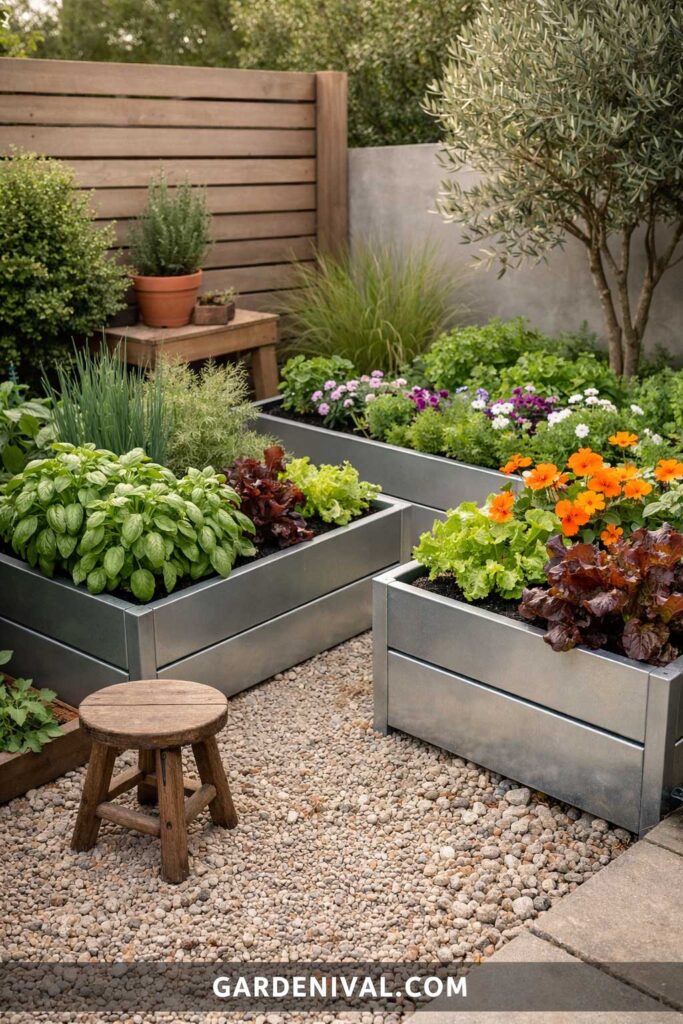
Structured raised bed foodscape
Idea 3 – Balcony Edible Garden with Layered Containers
Balconies are perfect for aesthetic edible garden corners because every inch matters.
Instead of random pots, create layers:
- Floor planters with tomatoes or peppers
- Mid level crates for greens
- Railing planters for herbs
This layered approach creates depth while keeping the layout functional.
Many urban gardeners love using Earth Box Sub Irrigated Planters because they maintain consistent watering and reduce maintenance stress.
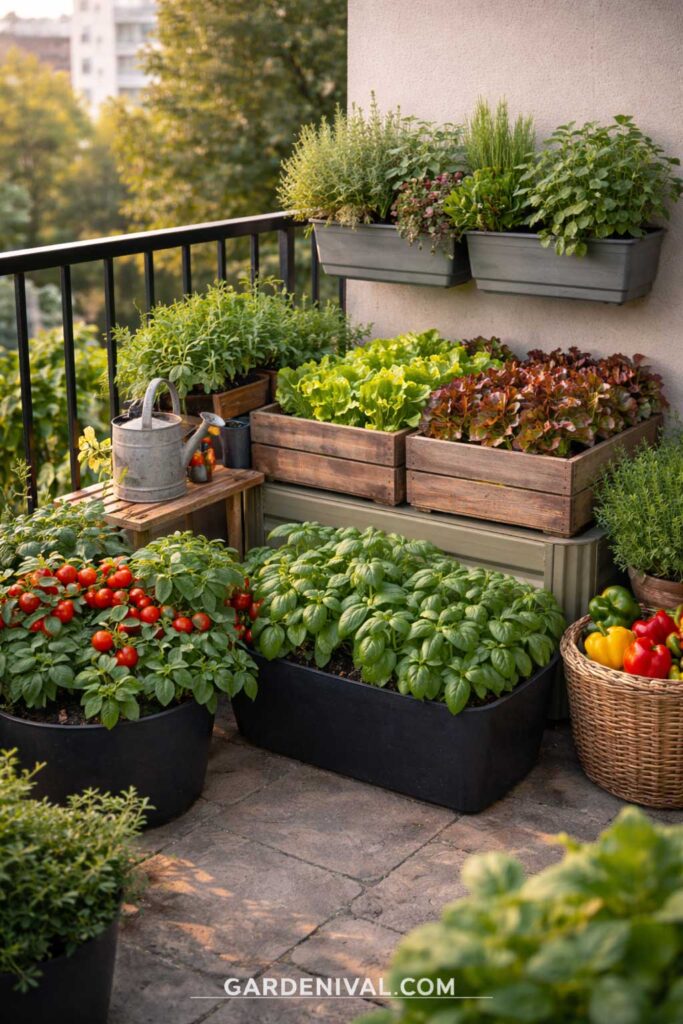
Balcony Edible Garden corner
Idea 4 – Cottage Style Edible Flower Corner
Want something softer and romantic? Mix edible flowers with vegetables.
Try combinations like:
- Nasturtium with cucumbers
- Calendula with lettuce
- Lavender near strawberries
The secret is blending color without losing structure. Too many flower types can feel chaotic, so repeat a few varieties instead of adding everything.
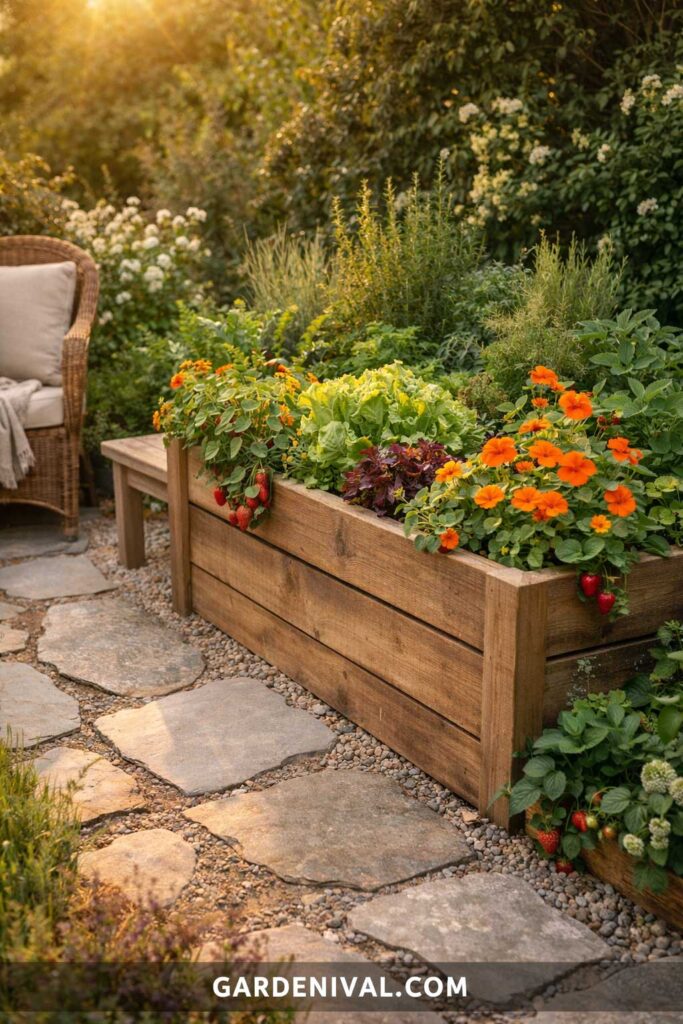
Cottage edible flower mix
Idea 5 – Modern Minimal Container Grid
This idea works great for patios.
Arrange containers in a grid layout using matching pots. Grow one plant type per container for a clean minimalist look.
Example layout:
| Container Row | Plant Choice |
|---|---|
| Front Row | Lettuce varieties |
| Middle Row | Basil and thyme |
| Back Row | Tomatoes or peppers |
Uniformity makes the garden feel curated instead of crowded.
Idea 6 – Cozy Window Side or Patio Wall Edible Garden Corner
Small homes often have unused sunny windows near patios or backyards.
Turn that space into a mini edible retreat:
- Add a small bench
- Place herb pots at varying heights
- Use warm string lights for evenings
Lighting plays a huge role in making edible spaces feel cozy and intentional.
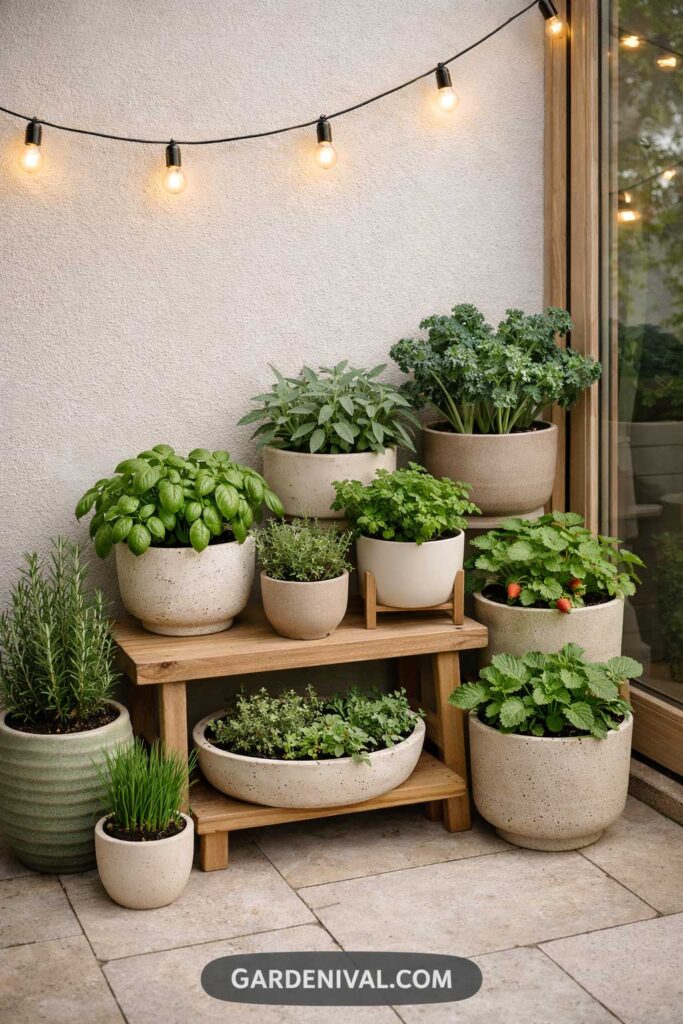
Cozy Edible Patio Wall corner
Idea 7 – Vertical Trellis Tomato Corner
Height changes everything in small spaces.
A simple trellis instantly adds visual drama and structure. Cherry tomatoes or climbing beans work beautifully here.
Instead of placing trellis randomly, frame it in a corner to create a focal point.
Benefits include:
- Better airflow
- Easy harvesting
- Strong visual height
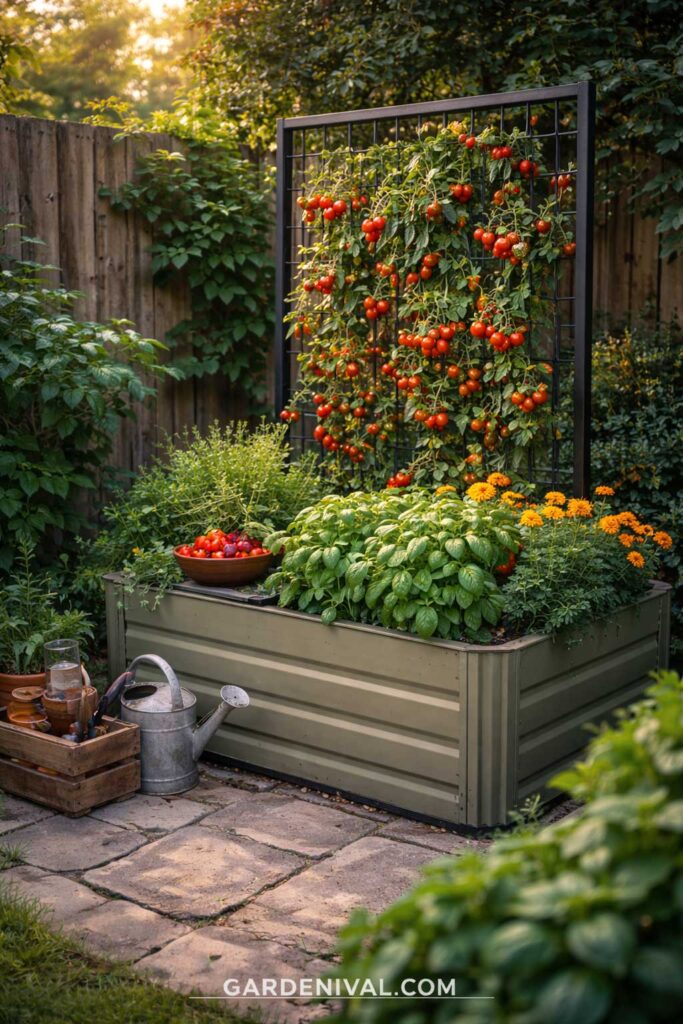
Vertical Trellis Tomato Corner
Idea 8 – Japandi Inspired Edible Garden Layout
Japandi style combines Scandinavian minimalism with Japanese calm aesthetics.
Use:
- Neutral gravel base
- Simple wooden planters
- Limited color palette
Plant choices could include rosemary, kale, shiso, and leafy greens.
This style works because it focuses on simplicity rather than abundance.
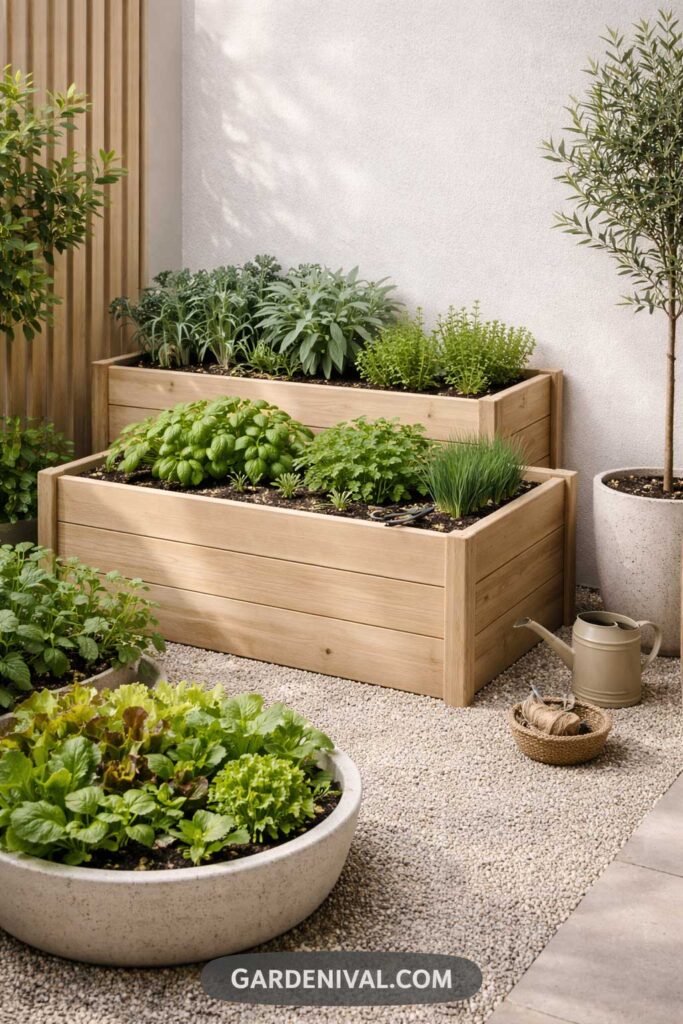
Japandi edible garden design
Idea 9 – Compact Patio Edible Lounge
One of my favorite ideas is combining seating with edible plants.
Place a small chair between two planter groups. Grow herbs nearby so the space smells fresh and inviting.
Designers often suggest using modular raised beds like Vego Garden kits because they create structured shapes that double as borders.
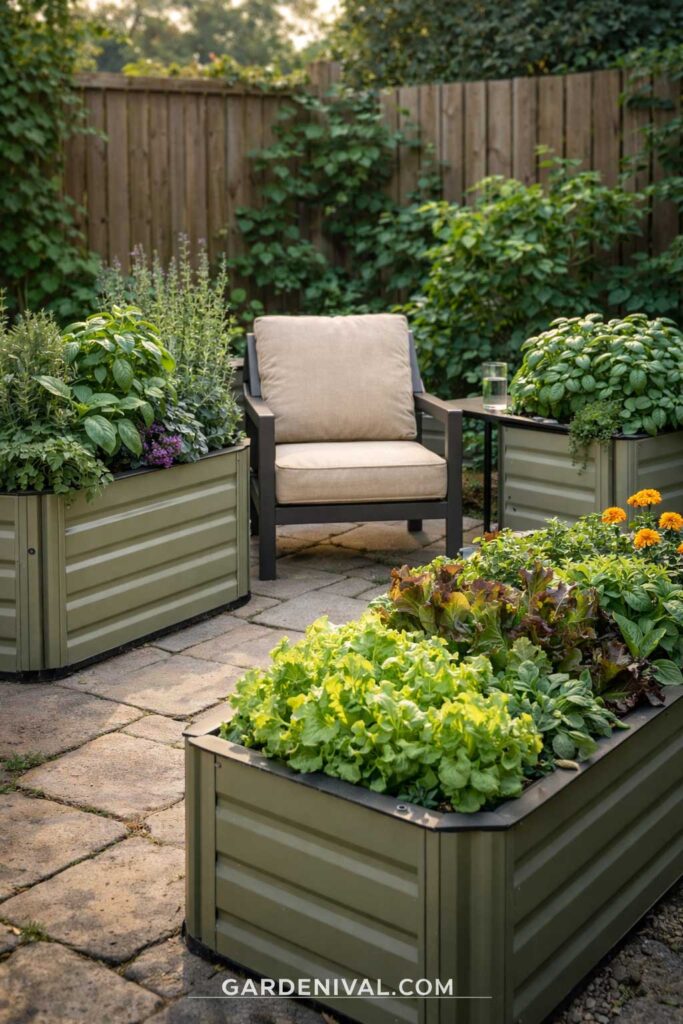
Edible garden lounge in the afternoon
Idea 10 – Layered Herb and Vegetable Corner with Lighting
If you want a dramatic before and after effect, lighting is the final step.
Add:
- Warm solar lanterns
- Low path lights
- Small uplighting behind planters
Lighting turns a functional garden into a relaxing evening space.
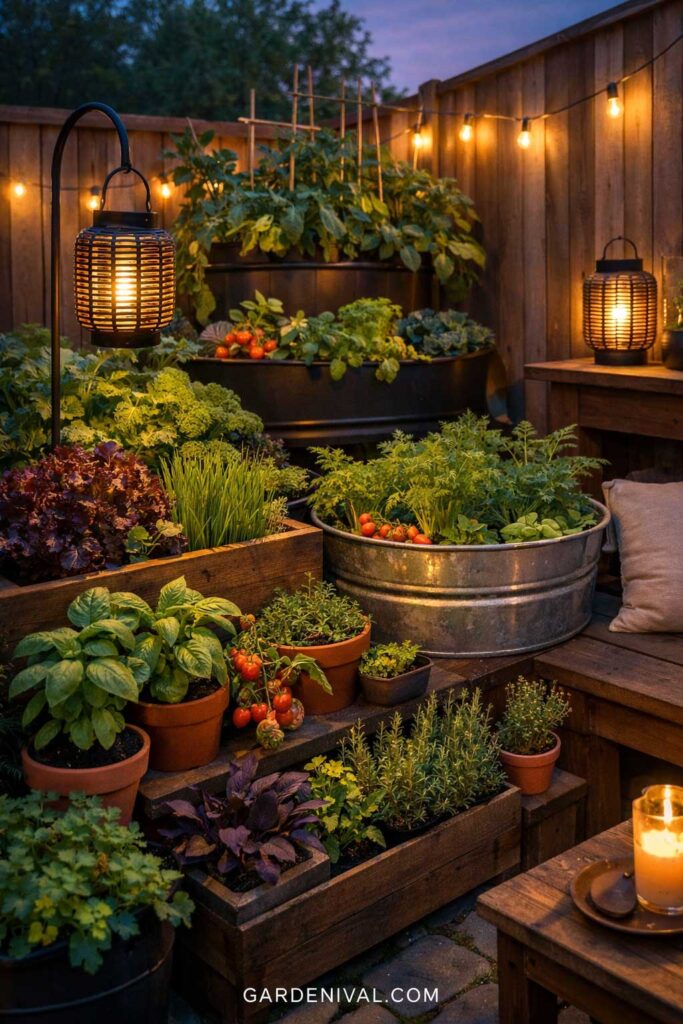
Evening edible garden lighting
How to Design a Small Edible Garden Corner That Looks Organized
A lot of edible gardens fail visually because everything grows at the same height. When plants sit in a flat line, the space feels messy even if it is productive.
Instead, think in layers just like interior design.
The Three Layer Rule for Edible Garden Styling
| Layer | What to Plant | Visual Effect |
|---|---|---|
| Low Layer | Lettuce, thyme, strawberries | Soft ground texture |
| Mid Layer | Basil, peppers, kale | Balanced greenery |
| Tall Layer | Tomatoes, trellis beans, sunflowers | Vertical focus |
This layering instantly gives your garden structure. It also makes maintenance easier because each plant gets its own space.
One small trick I personally love is repeating the same plant in groups of three. Designers use repetition indoors, and it works just as well in edible landscaping.
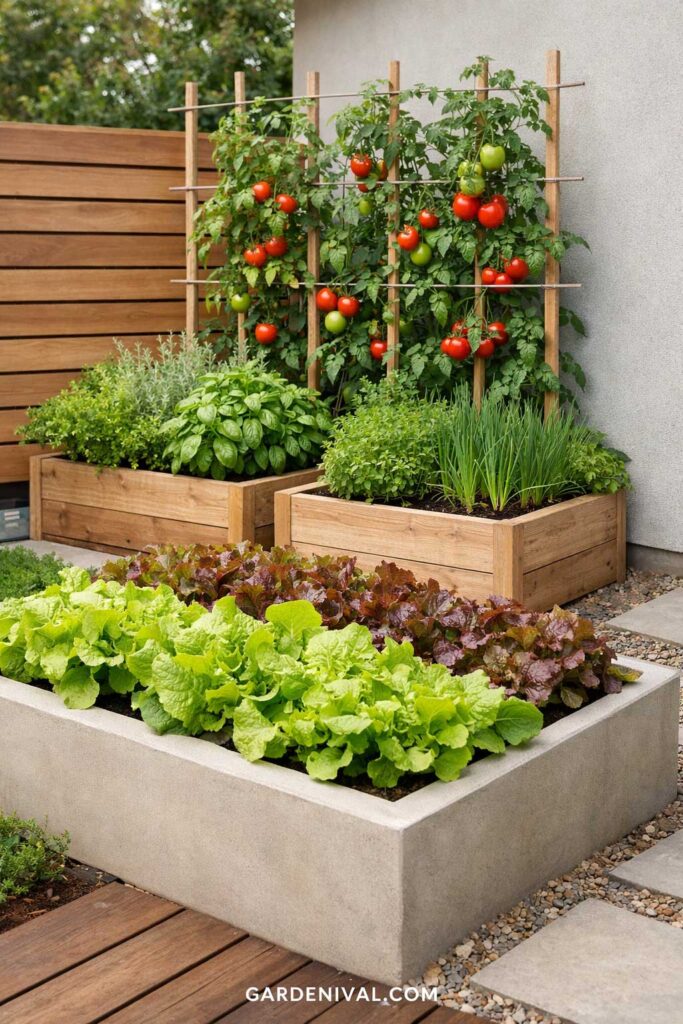
Layered edible garden heights
Which Plants Look Beautiful and Edible at the Same Time
Not every vegetable looks decorative, and that is completely normal. The key is choosing plants that naturally bring color or texture.
Here are some beginner friendly aesthetic edible plants:
- Purple basil for dramatic color contrast
- Rainbow chard for bold stems
- Rosemary for structured greenery
- Strawberries for soft trailing shapes
- Kale for sculptural leaves
Combining these with edible flowers like nasturtium or calendula adds brightness without feeling chaotic.
Many modern edible landscaping designs focus on plants that already look ornamental, which saves time because you do not need extra decor.
Low Maintenance Tips That Keep Edible Corners Looking Clean
Aesthetic gardens are not about constant work. They are about smart setup.
Simple habits that reduce maintenance
- Use self watering containers so plants stay hydrated evenly
- Mulch soil with bark or straw to prevent messy surfaces
- Choose slow growing herbs for cleaner shapes
Products like the EarthBox Sub Irrigated Planter are popular because they reduce watering mistakes and keep the layout tidy without daily effort.
Lighting Ideas That Make Edible Gardens Feel Cozy at Night
Lighting changes everything. During the day, your edible corner grows food. At night, it becomes a relaxing outdoor space.
Warm lighting works best because it highlights textures without feeling harsh.
Try these ideas:
- Solar lanterns between containers
- Soft string lights along a railing
- Small uplights behind tall plants
Even one small light source can make a balcony garden feel like an intentional design feature.
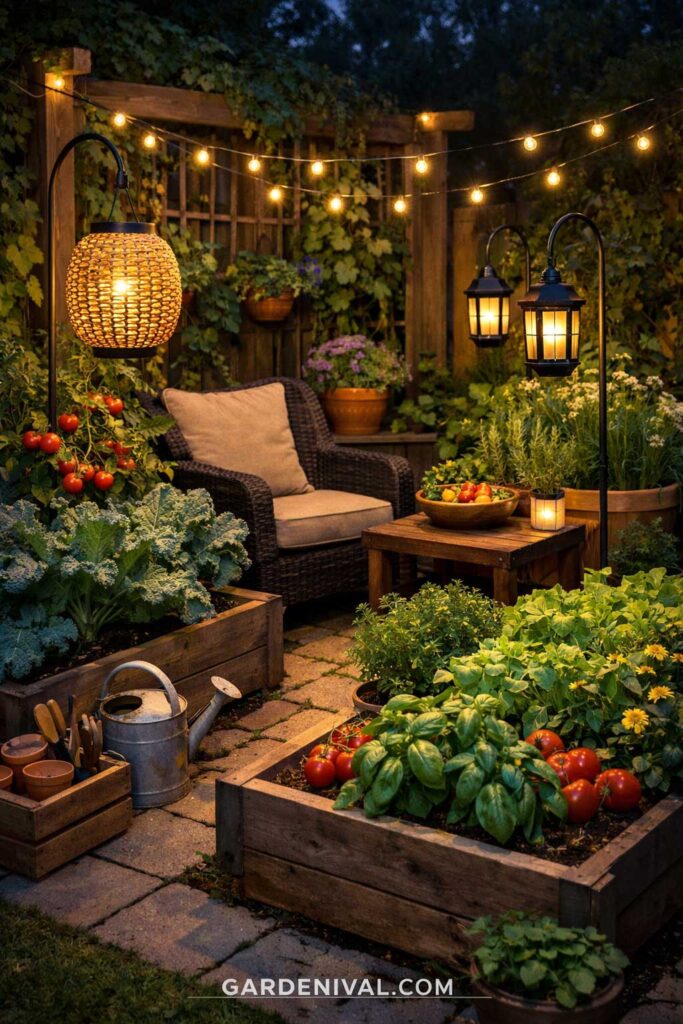
Warm edible garden lighting setup
Container Choices That Make Edible Gardens Look Modern
The fastest way to upgrade your edible garden visually is choosing consistent containers.
Avoid mixing too many colors or shapes. Instead, stick to one palette like:
- Warm terracotta tones
- Neutral stone colors
- Matte black modern planters
Consistency makes the entire garden feel designed rather than improvised.
Designers often use modular raised bed kits because they create structured lines that feel architectural.
How to Combine Flowers and Vegetables Without Clutter
A common question people ask is how to mix edible flowers with vegetables without making the garden feel chaotic.
Here is a simple formula:
- Choose one dominant vegetable
- Add one herb variety
- Add one edible flower for color
This keeps the space balanced while still feeling lively.
For example:
- Lettuce + basil + nasturtium
- Kale + thyme + calendula
- Tomatoes + parsley + marigolds
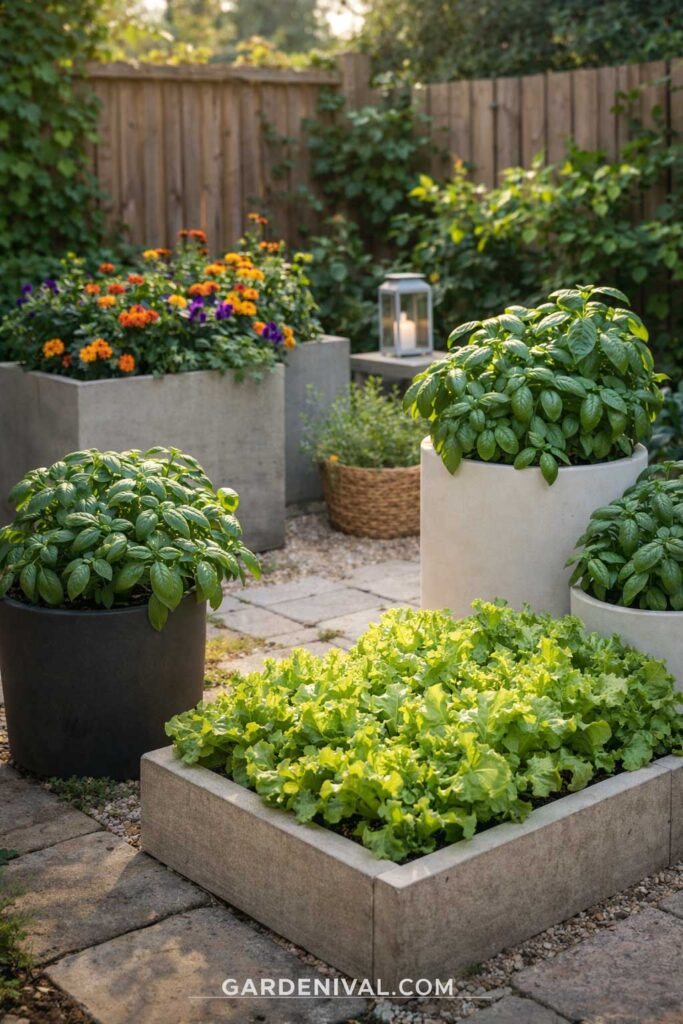
Edible flower vegetable mix
Common Mistakes That Make Edible Garden Corners Look Messy
Even beautiful plants can feel disorganized if a few key mistakes happen.
Mistakes to avoid
- Using too many different pot styles
- Planting without spacing between containers
- Overcrowding herbs in small planters
- Ignoring height variation
One of the biggest issues I see is people placing containers randomly. Try creating a visual triangle shape with your tallest plants to guide the eye naturally.
Product Recommendations for Aesthetic Edible Garden Corners
1. Earth Box Sub Irrigated Planter
This planter simplifies watering while keeping layouts clean and modern. It works beautifully on balconies or patios where maintenance time is limited.
2. Modular Raised Garden Bed Kit such as Vego Garden Raised Bed
Modular raised beds allow you to create structured shapes and organized layouts. They improve soil health while giving edible gardens a designer feel.
Frequently Asked Questions About Aesthetic Edible Garden Corners
What are aesthetic edible garden corners and how do they work
They combine decorative landscaping with edible plants, turning small spaces into both functional gardens and stylish outdoor decor areas.
Can edible garden corners work on balconies or patios
Yes. Container gardening and vertical layouts make them perfect for compact homes or apartments.
Which herbs grow well in decorative garden corners
Basil, thyme, rosemary, mint, and parsley are popular because they grow easily and look visually appealing.
How do I make an edible garden look modern and minimalist
Use neutral containers, repeat plant varieties, and leave space between items so the layout feels calm and organized.
What lighting works best for edible garden corners
Warm solar lanterns or soft string lights create a cozy atmosphere without overwhelming the plants.
How do I keep edible garden corners low maintenance
Choose self watering containers, mulch soil surfaces, and grow hardy herbs that require less trimming.
Can I mix flowers with vegetables in a small edible space
Yes. Edible flowers like nasturtium or calendula add color while supporting pollinators and improving biodiversity.
Conclusion
Creating aesthetic edible garden corners is less about having a huge yard and more about thoughtful design. When you combine edible plants with intentional layouts, layered heights, and warm lighting, your garden becomes part of your home’s style instead of just a food source.
The beauty of foodscaping is that it allows you to grow fresh herbs, vegetables, and flowers while creating a calm space that feels curated. Even a tiny balcony or patio corner can become a cozy edible retreat when you focus on structure, repetition, and natural textures.
Start small. Choose a corner. Add layers, neutral containers, and a few beautiful edible plants. Over time, you will notice that your garden not only feeds you but also transforms the atmosphere of your home.