 Posted by
 Introduction
If you have ever noticed that some plants grow better together while others struggle side by side, you have already experienced the idea behind companion planting for vegetables.
Gardeners have used companion planting for centuries to improve plant health, reduce pests, and increase vegetable yields naturally. Instead of relying on chemicals or complicated gardening techniques, companion planting simply pairs plants that help each other grow.
Think of it as teamwork in your garden. Some plants protect others from insects. Some improve the soil. Others attract beneficial pollinators that help vegetables produce more fruit.
For small gardens, raised beds, or backyard vegetable patches, this method can be incredibly powerful. When you choose the right vegetable garden planting combinations, your garden becomes healthier, more productive, and easier to maintain.
In this guide, we will explore 6 companion planting combos that help vegetables grow better naturally, along with practical tips that beginners can use immediately.
Quick Summary Table
| Companion Plant Combo | Main Benefit | Best For |
|---|---|---|
| Tomatoes and Basil | Improves flavor and repels pests | Tomato gardens |
| Carrots and Onions | Natural pest protection | Root vegetable beds |
| Corn Beans and Squash | Classic Three Sisters method | Raised bed gardens |
| Cucumbers and Nasturtiums | Pest protection | Small vegetable gardens |
| Lettuce and Radishes | Space saving growth | Early season planting |
| Peppers and Marigolds | Natural insect control | Container gardens |

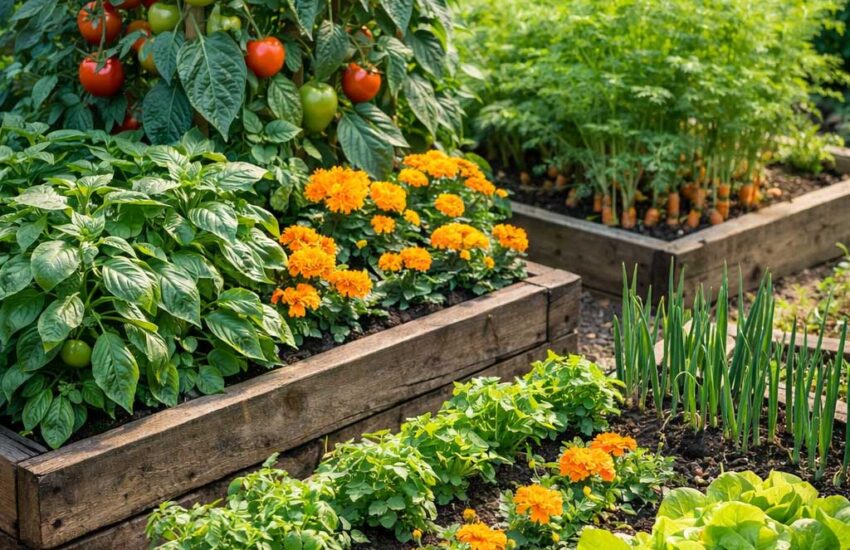
Companion Planting Vegetable Garden
What Is Companion Planting for Vegetables
Before exploring the combinations, it helps to understand what companion planting really means.
Companion planting for vegetables is the practice of planting certain crops together so they benefit each other.
These benefits can include:
- Natural pest control
- Improved soil nutrients
- Better pollination
- Increased vegetable yield
- More efficient use of garden space
Instead of growing vegetables in isolated rows, companion planting encourages diversity in the garden.
This approach is common in organic vegetable gardening and sustainable backyard gardens.
How Companion Planting Helps Vegetable Gardens
Companion planting works through several natural garden interactions.
Natural Pest Control
Some plants release scents that confuse or repel harmful insects.
For example:
- Basil helps protect tomatoes from pests
- Marigolds repel many soil insects
Attracting Beneficial Insects
Flowers and herbs attract pollinators like bees and ladybugs.
These insects help plants grow better and control garden pests.
Improving Soil Health
Certain plants add nutrients to the soil.
Beans and peas, for example, add nitrogen that helps nearby plants grow.
Maximizing Garden Space
Growing compatible plants together allows gardeners to use every inch of soil.
This is especially useful for companion planting for small vegetable gardens.
1. Tomatoes and Basil
One of the most famous vegetable companion planting combinations is tomatoes and basil.
These plants thrive together and are commonly grown side by side in vegetable gardens.
Why this combo works
| Benefit | Explanation |
|---|---|
| Pest protection | Basil repels flies and mosquitoes |
| Improved flavor | Some gardeners believe basil enhances tomato flavor |
| Efficient space use | Both plants thrive in similar conditions |
Plant basil around the base of tomato plants for the best results.

Tomato Basil Companion Planting
2. Carrots and Onions
Carrots and onions create one of the most effective natural pest control companion planting pairs.
Each plant helps protect the other from insects.
Why they work together
Carrots attract carrot flies, while onions produce a strong scent that repels them.
At the same time, carrot plants help confuse onion pests.
Planting tip
Alternate rows of carrots and onions in the same garden bed.
This strategy works well in raised bed companion planting ideas.
3. Corn Beans and Squash
This combination is known as the Three Sisters method, used by Native American farmers for centuries.
Each plant provides a unique benefit.
| Plant | Role |
|---|---|
| Corn | Provides structure for beans to climb |
| Beans | Add nitrogen to soil |
| Squash | Covers soil and prevents weeds |
This trio is one of the most powerful examples of organic companion planting vegetables.

Three Sisters Companion Garden
Designer Tip
Experienced gardeners often recommend mixing vegetables, herbs, and flowers in the same garden bed.
This increases biodiversity and helps create a balanced garden ecosystem.
For example:
- Marigolds repel pests
- Basil protects vegetables
- Nasturtiums attract beneficial insects
A diverse garden is often healthier and more productive.
4. Cucumbers and Nasturtiums
Cucumbers are often attacked by beetles and aphids.
Nasturtiums act as a trap plant, attracting these insects away from cucumber vines.
Benefits of this combination
- Protects cucumber plants from pests
- Attracts pollinators
- Adds color to vegetable gardens
This pairing works beautifully in vegetable garden companion planting layouts.
5 Lettuce and Radishes
Lettuce and radishes are an excellent example of space saving companion planting for small vegetable gardens.
These plants grow well together because they mature at different speeds and use soil space differently.
Why this combo works
| Benefit | Explanation |
|---|---|
| Fast harvest | Radishes grow quickly and are harvested before lettuce spreads |
| Efficient soil use | Radish roots grow deeper while lettuce grows near the surface |
| Early season planting | Both crops thrive in cooler temperatures |
Planting tip
Plant radishes between rows of lettuce. By the time lettuce leaves expand, radishes are already ready to harvest.
This makes it one of the easiest companion planting combinations for beginners.

Lettuce and Radish Companion Planting
6. Peppers and Marigolds
Marigolds are famous for their ability to protect vegetables from pests.
When planted around peppers, marigolds help deter insects and nematodes that damage roots.
Benefits of this combination
- Natural pest control companion planting
- Attracts beneficial insects
- Adds colorful flowers to the garden
Marigolds are often used in organic vegetable gardening tips because they help protect crops without chemicals.
Layout suggestion
Plant marigolds around the edges of pepper beds or containers to create a protective border.

Pepper and Marigold Companion Garden
Companion Planting Chart for Vegetables
Gardeners often use charts to quickly see which vegetables grow well together.
Below is a simplified vegetable companion planting chart.
| Vegetable | Good Companion Plants |
|---|---|
| Tomatoes | Basil, carrots, onions |
| Carrots | Onions, lettuce, peas |
| Cucumbers | Nasturtiums, radishes |
| Peppers | Marigolds, basil |
| Lettuce | Radishes, carrots |
| Corn | Beans, squash |
These pairings are some of the most widely used best companion plants for vegetables.
Common Companion Planting Mistakes
Even though companion planting is simple, beginners sometimes make mistakes.
Avoid these common issues
Planting incompatible vegetables
Some vegetables compete for nutrients or attract similar pests.
Ignoring plant spacing
Even compatible plants need enough room to grow.
Overcrowding raised beds
Too many plants can reduce airflow and increase disease risk.
Forgetting about sunlight needs
Make sure taller plants do not block sunlight from smaller vegetables.
Following basic vegetable garden layout companion planting principles helps prevent these problems.
Designer Tip
Experienced gardeners often design vegetable gardens like ecosystems rather than simple rows of crops.
A balanced garden includes:
- Vegetables
- Herbs
- Flowers
- Pollinator plants
This diversity helps create natural pest control and improves soil health.
Many modern organic vegetable gardening strategies rely on this approach.
Product Recommendations
1. Burpee Organic Coconut Coir Concentrated Seed
Why it is highly relevant
Companion planting works best when gardeners grow a variety of vegetables, herbs, and flowers together. A seed collection makes it easier to plant compatible combinations.
Key Benefits
- Multiple vegetable varieties
- Ideal for companion planting layouts
- Organic gardening friendly
- Beginner friendly seed collection
Best For
Home vegetable gardens, Companion planting layouts, Organic backyard gardens
2. Garden Grid Watering System | Raised Garden Bed Drip Irrigation System
Why it is highly relevant
Raised beds make it easier to organize companion planting patterns and spacing.
Key Benefits
- Helps organize plant spacing
- Perfect for square foot gardening
- Simplifies companion planting layouts
- Reusable planting guide
Best For
Raised bed vegetable gardens, small backyard gardens, Beginner gardeners
Frequently Asked Questions
What is companion planting for vegetables
Companion planting is the practice of growing certain plants together so they benefit each other through pest control, improved soil nutrients, or better growth.
Which vegetables grow well together in companion planting
Tomatoes and basil, carrots and onions, cucumbers and nasturtiums, and peppers with marigolds are common combinations.
What vegetables should not be planted together
Some plants compete for nutrients or attract the same pests. For example, tomatoes and potatoes should generally not be grown close together.
Does companion planting improve vegetable yield
Yes. Companion planting can improve pollination, reduce pests, and create healthier soil conditions that increase harvests.
Can herbs be used as companion plants for vegetables
Many herbs such as basil, dill, and mint help repel insects or attract beneficial pollinators.
Is companion planting useful in raised beds
Raised beds are excellent for companion planting because they make it easier to control plant spacing and layout.
What mistakes should beginners avoid in companion planting
Avoid overcrowding plants, ignoring sunlight requirements, and pairing vegetables that compete for nutrients.
Conclusion
Companion planting is one of the simplest and most effective ways to improve your vegetable garden naturally.
By pairing plants that help each other grow, you can reduce pests, improve soil health, and increase vegetable yields without relying on chemicals.
From classic combinations like tomatoes and basil to protective pairings like peppers and marigolds, these companion planting for vegetables strategies help create healthier and more productive gardens.
With thoughtful planning and a few well-chosen plant combinations, your vegetable garden can thrive season after season.